

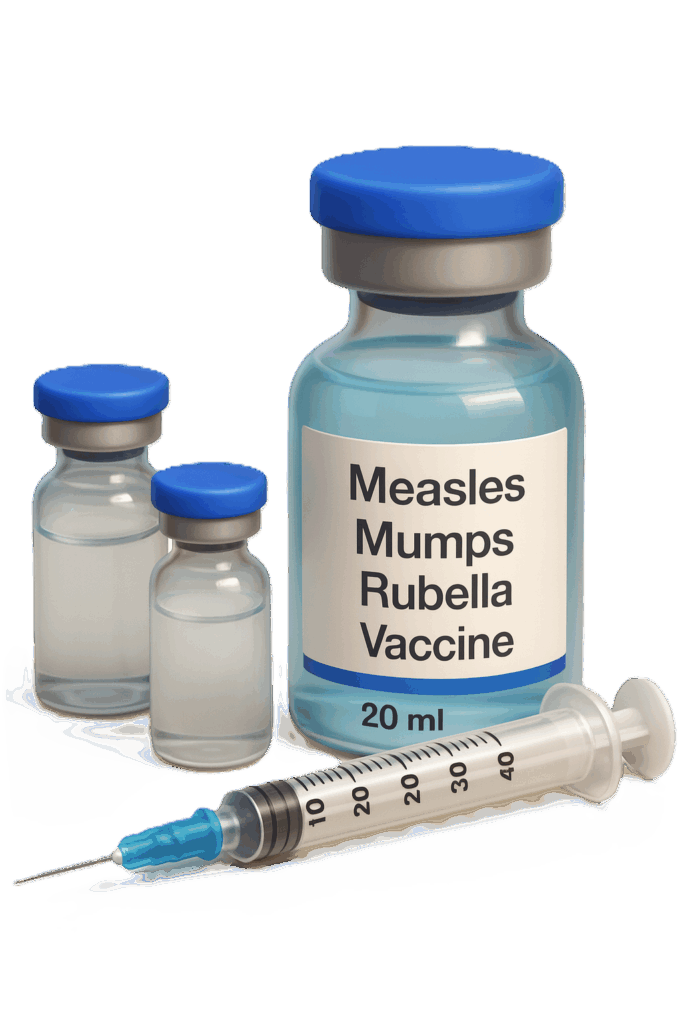
The MMR vaccine is a combination of three vaccines in one shot. It helps protect you from measles, mumps and rubella, three potentially serious viral illnesses. Healthcare providers recommend two doses. Kids usually get one dose between the ages of 12 and 15 months and another between the ages of 4 and 6.
- Why get vaccinated?
- MMR vaccine
- Talk with your health care provider
- Risks of a vaccine reaction
- What if there is a serious problem?
MMR vaccine can prevent measles, mumps, and rubella.
- MEASLES (M) causes fever, cough, runny nose, and red, watery eyes, commonly followed by a rash that covers the whole body. It can lead to seizures (often associated with fever), ear infections, diarrhea, and pneumonia. Rarely, measles can cause brain damage or death.
- MUMPS (M) causes fever, headache, muscle aches, tiredness, loss of appetite, and swollen and tender salivary glands under the ears. It can lead to deafness, swelling of the brain and/or spinal cord covering, painful swelling of the testicles or ovaries, and, very rarely, death.
- RUBELLA (R) causes fever, sore throat, rash, headache, and eye irritation. It can cause arthritis in up to half of teenage and adult women. If a woman gets rubella while she’s pregnant, she could have a miscarriage or the baby could be born with serious birth defects.
Most people who are vaccinated with MMR will be protected for life.
Children need 2 doses of MMR vaccine, usually:
- First dose at age 12 through 15 months
- Second dose at age 4 through 6 years
All international travelers should be fully vaccinated against measles with the measles-mumps-rubella (MMR) vaccine, including an early dose for infants 6–11 months, according to CDC’s measles vaccination recommendations for international travel. These children should still get 2 additional doses at the recommended ages for long-lasting protection.
Older children, adolescents, and adults also need 1 or 2 doses of MMR vaccine if they are not already immune to measles, mumps, and rubella. Your health care provider can help you determine how many doses you need.
A third dose of MMR might be recommended for certain people in mumps outbreak situations.
MMR vaccine may be given at the same time as other vaccines. Children 12 months through 12 years of age might receive MMR vaccine together with varicella vaccine in a single shot, known as MMRV. Your health care provider can give you more information.
Tell your vaccination provider if the person getting the vaccine:
- Has had an allergic reaction after a previous dose of MMR or MMRV vaccine, or has any severe, life-threatening allergies
- Is pregnant or thinks she might be pregnant–pregnant women should not get MMR vaccine
- Has a weakened immune system, or has a parent, brother, or sister with a history of hereditary or congenital immune system problems
- Has ever had a condition that makes him or her bruise or bleed easily
- Has recently had a blood transfusion or received other blood products
- Has tuberculosis
- Has gotten any other vaccines in the past 4 weeks
In some cases, your health care provider may decide to postpone MMR vaccination until a future visit.
People with minor illnesses, such as a cold, may be vaccinated. People who are moderately or severely ill should usually wait until they recover before getting MMR vaccine.
Your health care provider can give you more information.
- Sore arm from the injection or redness where the shot is given, fever, and a mild rash can happen after MMR vaccination.
- Swelling of the glands in the cheeks or neck or temporary pain and stiffness in the joints (mostly in teenage or adult women) sometimes occur after MMR vaccination.
- More serious reactions happen rarely. These can include seizures (often associated with fever) or temporary low platelet count that can cause unusual bleeding or bruising.
- In people with serious immune system problems, this vaccine may cause an infection that may be life-threatening. People with serious immune system problems should not get MMR vaccine.
People sometimes faint after medical procedures, including vaccination. Tell your provider if you feel dizzy or have vision changes or ringing in the ears.
As with any medicine, there is a very remote chance of a vaccine causing a severe allergic reaction, other serious injury, or death.
An allergic reaction could occur after the vaccinated person leaves the clinic. If you see signs of a severe allergic reaction (hives, swelling of the face and throat, difficulty breathing, a fast heartbeat, dizziness, or weakness), call 911 and get the person to the nearest hospital.
For other signs that concern you, call your health care provider.
The MMR vaccine greatly reduces your risk of getting measles, mumps and rubella. These are highly contagious viral infections that can cause serious, life-threatening health conditions.
Side effects could include:
- Soreness, bruising, redness and swelling at the injection site
- Mild rash
- Fever
- Joint stiffness
- Swollen lymph nodes (glands)
- Diarrhea
- Fatigue
Rare but serious side effects include:
- Severe allergic reaction (anaphylaxis)
- Seizures (usually due to high fever)
- Unusual bleeding or bruising (caused by low platelet count)
Seek immediate medical attention if you experience an allergic reaction or any of these side effects. Symptoms of an allergic reaction include hives, low blood pressure and swelling of your face, lips or tongue.
Talk to your provider or your child’s provider if you have any questions about the MMR vaccine. Let them know right away if you have concerning side effects.
Most people who receive the MMR vaccine are protected for life against measles and rubella. While the vaccine is also effective at protecting against mumps, some people may lose immunity to the disease over time. You may need an additional dose during a mumps outbreak.
Vaccine – HPV; Immunization – HPV; Gardasil; HPV2; HPV4; Vaccine to prevent cervical cancer; Genital warts – HPV vaccine; Cervical dysplasia – HPV vaccine; Cervical cancer – HPV vaccine; Cancer of the cervix – HPV vaccine; Abnormal Pap smear – HPV vaccine; Vaccination – HPV vaccine
Additional Common Questions
References
Centers for Disease Control and Prevention website. Vaccine information statements (VISs): MMR vaccine (measles, mumps, and rubella): What you need to know. www.cdc.gov/vaccines/hcp/current-vis/mmr.html. Updated January 31, 2025. Accessed April 28, 2025.
Related Topics

Other Specialities
Stay away from good habits
-
Find a healthcare provider near you
-
Call for support
-
Feel free to message us!
About Us
Curafile is a Medical Cyclopedia, biggest Healthcare Curated Network Globally, serves citizens, service providers in one place.
- Estonia - Qatar
Jordan - Saudi Arabia