

Anorexia
- Home
- Mental Health
- Anorexia
Anorexia nervosa, often simply called anorexia, is a treatable eating disorder in which people have a low body weight based on personal weight history. Although many people with anorexia look very thin, some may not look thin and others may look overweight. But they’ve actually lost weight or failed to gain needed weight.
People who have anorexia often have a strong fear of gaining weight and may think they’re overweight, even when they’re thin. To prevent weight gain or continue to lose weight, people with anorexia often limit the amount or type of food they eat. They place a high value on controlling their weight and shape and use extreme efforts that can greatly harm their lives.
Anorexia can cause changes in the brain due to very poor nutrition, also called malnutrition. This is when people don’t get the nutrients that their bodies need to stay healthy. So it’s not a choice to continue the risky and damaging behavior.
If left untreated, weight loss can get to a point where people with anorexia are at high risk of serious physical harm or death. Anorexia has the second-highest death rate of any mental illness, surpassed only by opioid overdoses. Most deaths related to anorexia stem from heart conditions and suicide.
Anorexia, like other eating disorders, can take over people’s lives and be very hard to overcome. Because it’s related to changes in the brain, anorexia behaviors are not choices, and the illness is not really about food or looking a certain way. With proven treatment, people with anorexia can return to a healthy weight, develop more-balanced eating habits, and reverse some of anorexia’s serious medical and mental health complications.
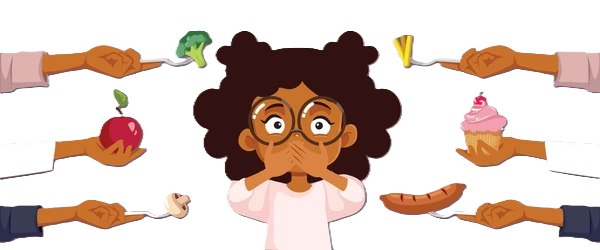
The exact causes of anorexia are not known. Many factors may be involved. Genes and hormones may play a role. Social attitudes that promote very thin body types may also be involved.
Risk factors for anorexia include:
- Being more worried about, or paying more attention to, weight and body shape
- Having an anxiety disorder as a child
- Having a negative self-image
- Having eating problems during infancy or early childhood
- Having certain social or cultural ideas about health and beauty
- Trying to be perfect or overly focused on rules
Anorexia often begins during the pre-teen or teen years or young adulthood. It is more common in females, but may also be seen in males.
A person with anorexia usually:
- Has an intense fear of gaining weight or becoming fat, even when underweight.
- Refuses to keep their weight at what is considered normal for their age and height (15% or more below the normal weight).
- Has a body image that is very distorted, is very focused on body weight or shape, and refuse to admit the danger of weight loss.
People with anorexia may severely limit the amount of food they eat. Or they eat and then make themselves throw up. Other behaviors include:
- Cutting food into small pieces or moving them around the plate instead of eating
- Exercising all the time, even when the weather is bad, they are hurt, or their schedule is busy
- Going to the bathroom right after meals
- Refusing to eat around other people
- Using pills to make themselves urinate (water pills, or diuretics), have a bowel movement (enemas and laxatives), or decrease their appetite (diet pills)
Other symptoms of anorexia may include:
- Blotchy or yellow skin that is dry and covered with fine hair
- Confused or slow thinking, along with poor memory or judgment
- Depression
- Dry mouth
- Extreme sensitivity to cold (wearing several layers of clothing to stay warm)
- Thinning of the bones (osteoporosis)
- Wasting away of muscle and loss of body fat
Tests should be done to help find the cause of weight loss, or see what damage the weight loss has caused. Many of these tests will be repeated over time to monitor the person.
These tests may include:
- Albumin (serum)
- Bone density test to check for thin bones (osteoporosis)
- Complete blood count (CBC)
- Electrocardiogram (ECG)
- Electrolytes
- Kidney function tests
- Liver function tests
- Total protein (serum)
- Thyroid function tests
- Urinalysis
Talk to your health care provider if someone you care about is:
- Too focused on weight
- Over-exercising
- Limiting the food he or she eats
- Very underweight
- Showing suicidal thinking or behavior
Getting medical help right away can make an eating disorder less severe.
The biggest challenge in treating anorexia nervosa is helping the person recognize that they have an illness. Most people with anorexia deny that they have an eating disorder. They often seek treatment only when their condition is serious.
Goals of treatment are to restore normal body weight and eating habits. A weight gain of 1 to 3 pounds (lb) or 0.5 to 1.5 kilograms (kg) per week is considered a safe goal.
Different programs have been designed to treat anorexia. These may include any of the following measures:
- Increasing social activity
- Reducing the amount of physical activity
- Using schedules for eating
To start, a short hospital stay may be recommended. This is followed by a day treatment program.
A longer hospital stay may be needed if:
- The person has lost a lot of weight (being below 70% of their ideal body weight for their age and height). For severe and life-threatening malnutrition, the person may need to be fed through a vein or stomach tube.
- Weight loss continues, even with treatment.
- Medical complications, such as heart problems, confusion, or low potassium levels develop.
- The person has severe depression or thinks about committing suicide.
Care providers who are usually involved in these programs include:
- Nurse practitioners
- Physicians
- Physician assistants
- Dietitians
- Mental health care providers
Treatment is often very difficult. People and their families must work hard. Many therapies may be tried until the disorder is under control.
People may drop out of programs if they have unrealistic hopes of being cured with therapy alone.
Different kinds of talk therapy are used to treat people with anorexia:
- Cognitive behavioral therapy (a type of talk therapy), group therapy, and family therapy have all been successful.
- Goal of therapy is to change a person’s thoughts or behavior to encourage them to eat in a healthier way. This kind of therapy is more useful for treating younger people who have not had anorexia for a long time.
- If the person is young, therapy may involve the whole family. The family is seen as a part of the solution, instead of the cause of the eating disorder.
- Support groups may also be a part of treatment. In support groups, people with anorexia and their families meet and share what they have been through.
Medicines such as antidepressants, antipsychotics, and mood stabilizers may help some people when given as part of a complete treatment program. These medicines can help treat depression or anxiety. Although medicines may help, none has been proven to decrease the desire to lose weight.
Anorexia can be dangerous. It may lead to serious health problems over time, including:
- Bone weakening
- Decrease in white blood cells, which leads to increased risk of infection
- A low potassium level in the blood, which may cause dangerous heart rhythms
- Severe lack of water and fluids in the body (dehydration)
- Lack of protein, vitamins, minerals, and other important nutrients in the body (malnutrition)
- Seizures due to fluid or sodium loss from repeated diarrhea or vomiting
- Thyroid gland problems
- Tooth decay
- Suicidal thinking or behavior
Anorexia is a serious condition that can be life threatening. Treatment programs can help people with the condition return to a normal weight. But it is common for the disease to relapse.
Women who develop this eating disorder at an early age have a better chance of recovering completely. Most people with anorexia will continue to prefer a lower body weight and be very focused on food and calories.
Weight management may be hard. Long-term treatment may be needed to stay at a healthy weight.
Eating disorder – anorexia nervosa
References
American Psychiatric Association. Feeding and eating disorders. Diagnostic and Statistical Manual of Mental Disorders. 5th ed. Text Revision (DSM-5-TR), Washington, DC: American Psychiatric Association Publishing; 2022.
Attia E, Marian T-K, Walsh BT. Eating disorders. In: Goldman L, Cooney KA, eds. Goldman-Cecil Medicine. 27th ed. Philadelphia, PA: Elsevier; 2024:chap 200.
Kim YR, Murray HB, Thomas JJ, Eddy KT. Eating disorders: evaluation and management. In: Stern TA, Wilens TE, Fava M, eds. Massachusetts General Hospital Comprehensive Clinical Psychiatry. 3rd ed. Philadelphia, PA: Elsevier; 2025:chap 35.
Lock J, La Via MC; American Academy of Child and Adolescent Psychiatry (AACAP) Committee on Quality Issues (CQI). Practice parameter for the assessment and treatment of children and adolescents with eating disorders. J Am Acad Child Adolesc Psychiatry. 2015;54(5):412-425. PMID 25901778 pubmed.ncbi.nlm.nih.gov/25901778/.
Starr TB, Kreipe RE. Eating disorders. In: Kliegman RM, St. Geme JW, Blum NJ, eds. Nelson Textbook of Pediatrics. 22nd ed. Philadelphia, PA: Elsevier; 2025:chap 41.
Related Topics

Other Specialities
Stay away from bad habbits
Mental Health
Mental health includes our emotional, psychological, and social well-being. It affects how we think, feel, and act as we cope with life.
Book your appointment TODAY!
Search on the closest Doctor to your location and book based on specialty. EARN 10 POINTS more with CuraPOINT.
BOOK-
Find a healthcare provider near you
-
Call for support
-
Feel free to message us!
About Us
Curafile is a Medical Cyclopedia, biggest Healthcare Curated Network Globally, serves citizens, service providers in one place.
- Estonia - Qatar
Jordan - Saudi Arabia
