

If your weight is healthy, work to maintain that weight. If you need to lose weight, ask a healthcare professional about healthy ways to lower your weight. Eat fewer calories and slowly increase the amount of exercise.
Kidney Cancer
- Home
- Kidneys and Urinary System
- Kidney Cancer
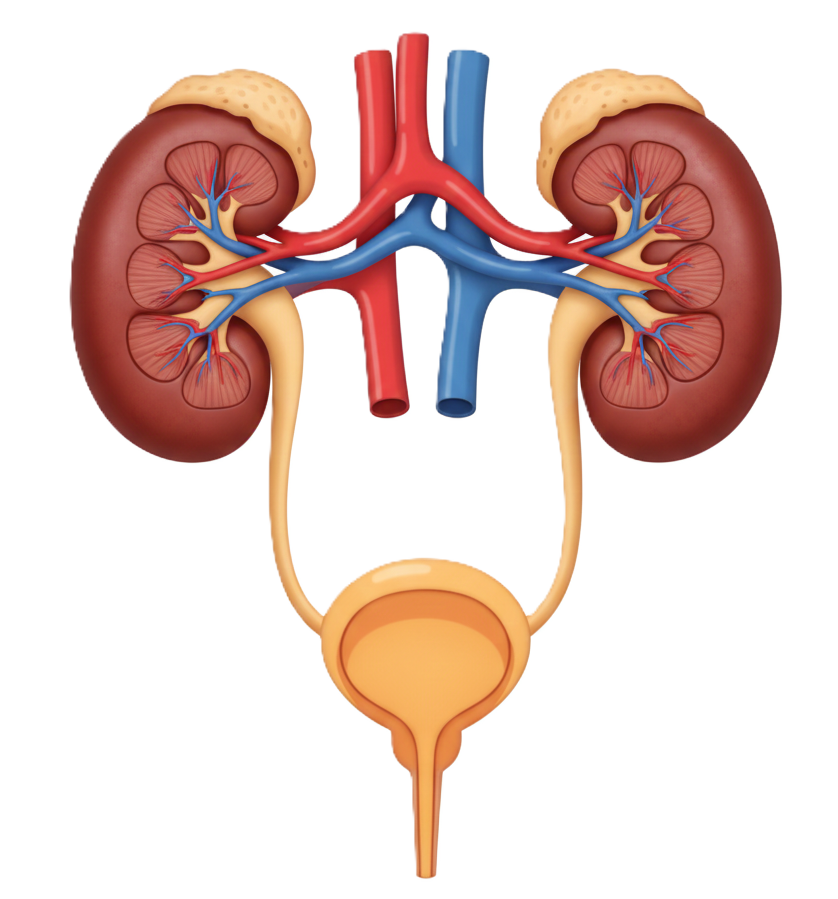
Kidney cancer is a growth of cells that starts in the kidneys. The kidneys are two bean-shaped organs, each about the size of a fist. They’re located behind the abdominal organs, with one kidney on each side of the spine.
In adults, renal cell carcinoma is the most common type of kidney cancer. Other, less common types of kidney cancer can happen. Young children are more likely to develop a kind of kidney cancer called Wilms tumor.
The number of kidney cancers diagnosed each year seems to be increasing. One reason for this may be the fact that imaging techniques such as CT scans are being used more often. These tests may lead to the incidental discovery of more kidney cancers. Kidney cancer is often found when the cancer is small and confined to the kidney.
Kidney cancer doesn’t usually cause symptoms at first. In time, signs and symptoms may develop, including:
- Blood in the urine, which may appear pink, red or cola colored.
- Loss of appetite.
- Pain in the side or back that doesn’t go away.
- Tiredness.
- Unexplained weight loss.
It’s not clear what causes most kidney cancers.
Kidney cancer happens when cells in the kidney develop changes in their DNA. A cell’s DNA holds the instructions that tell the cell what to do. In healthy cells, the DNA gives instructions to grow and multiply at a set rate. The instructions tell the cells to die at a set time. In cancer cells, the DNA changes give different instructions. The changes tell the cancer cells to make many more cells quickly. Cancer cells can keep living when healthy cells would die. This causes too many cells.
The cancer cells form a mass called a tumor. The tumor can grow to invade and destroy healthy body tissue. In time, cancer cells can break away and spread to other parts of the body. When cancer spreads, it’s called metastatic cancer.
Factors that may increase the risk of kidney cancer include:
- Older age. The risk of kidney cancer increases with age.
- Smoking tobacco. People who smoke have a greater risk of kidney cancer than those who don’t. The risk decreases after quitting.
- Obesity. People who are obese have a higher risk of kidney cancer than people who are considered to have a healthy weight.
- High blood pressure. High blood pressure, also called hypertension, increases the risk of kidney cancer.
- Certain inherited conditions. People who are born with certain inherited conditions may have an increased risk of kidney cancer. These conditions may include von Hippel-Lindau disease, Birt-Hogg-Dube syndrome, tuberous sclerosis complex, hereditary papillary renal cell carcinoma and familial renal cancer.
- Family history of kidney cancer. The risk of kidney cancer is higher if a blood relative, such as a parent or sibling, has had the disease.
Kidney cancer diagnosis often begins with a physical exam and a discussion of your health history. Blood and urine tests as well as imaging tests may be used. A sample of tissue may be taken for lab testing.
Tests and procedures used to diagnose kidney cancer include:
- Blood and urine tests
- Imaging tests
- Biopsy
- Kidney cancer staging
Tests of your blood and urine may give your healthcare team clues about what’s causing your symptoms. Blood tests may check for the number of red blood cells in the body. Urine tests may look for substances in the urine, such as blood, bacteria and cancer cells.
Imaging tests make pictures of the body. They can show the location and size of a kidney cancer. Tests might include ultrasound, CT or MRI.
A biopsy is a procedure to remove a sample of tissue for testing in a lab. For kidney cancer, a thin needle is inserted into the kidney or other body part such as the lymph nodes. A healthcare professional uses the needle to remove a sample of tissue. A biopsy may not be needed if imaging tests show enough information to make a diagnosis.
If you’re diagnosed with kidney cancer, the next step is to determine the cancer’s extent, called the stage. Your healthcare team uses the cancer staging test results to help create your treatment plan. Staging tests for kidney cancer may include additional CT and MRI scans.
The stages of kidney cancer range from 1 to 4. A stage 1 kidney cancer is small and confined to the kidney. As the cancer gets larger, the stages get higher. A stage 4 kidney cancer has grown beyond the kidney or spread to other parts of the body.
Kidney cancer treatment sometimes begins with surgery to remove the cancer. For cancers confined to the kidney, this may be the only treatment needed. Sometimes medicine is given after surgery to lower the risk that the cancer will come back. If the cancer has spread beyond the kidney, surgery might not be possible. Other treatments may be recommended.
Your healthcare team considers many factors when creating a treatment plan. These factors may include your overall health, the type and stage of your cancer, and your preferences.
- Surgery
- Cryoablation
- Radiofrequency ablation
- Radiation therapy
- Targeted therapy
- Immunotherapy
- Chemotherapy
- Palliative care
For most cancers confined to the kidney, surgery is the first treatment. The goal of surgery is to remove the cancer while preserving kidney function, when possible. Operations used to treat kidney cancer include:
Removing the affected kidney. A complete nephrectomy, also known as a radical nephrectomy, involves removing the entire kidney and a border of healthy tissue around it. Nearby tissues such as the lymph nodes, adrenal gland or other structures also may be removed.
The surgeon may perform a nephrectomy through a single incision in the abdomen or side, called an open nephrectomy. The surgeon also may use a series of small incisions in the abdomen, known as laparoscopic or robot-assisted laparoscopic nephrectomy.
Removing the cancer from the kidney. A partial nephrectomy involves removing the cancer and a small margin of healthy tissue that surrounds it rather than the entire kidney. This procedure also is called kidney-sparing or nephron-sparing surgery. It can be done as an open procedure, laparoscopically or with robotic assistance.
Kidney-sparing surgery is a common treatment for small kidney cancers and it may be an option if you have only one kidney. When possible, kidney-sparing surgery is generally preferred over a complete nephrectomy to preserve kidney function. It also may reduce the risk of later complications, such as kidney disease and the need for dialysis.
The type of surgery you have is based on your cancer and its stage, as well as your overall health.
Cryoablation is a treatment to freeze cancer cells. During cryoablation, a special hollow needle is inserted through the skin and into the kidney cancer using ultrasound or other image guidance. Cold gas in the needle is used to freeze the cancer cells.
Cryoablation can treat small kidney cancers in certain situations. It might be used in people who have other health concerns that make surgery risky.
Radiofrequency ablation is a treatment to heat cancer cells. During radiofrequency ablation, a special probe is inserted through the skin and into the kidney cancer using ultrasound or other imaging to guide placement of the probe. An electrical current is run through the needle and into the cancer cells. This causes the cells to heat up or burn.
Radiofrequency ablation can treat small kidney cancers in certain situations. It might be used in people who have other health concerns that make surgery risky.
Radiation therapy treats cancer with powerful energy beams. The energy can come from X-rays, protons or other sources. During radiation therapy, you lie on a table while a machine moves around you. The machine directs radiation to precise points on your body.
Radiation therapy can be used on the kidney to kill the cancer cells. It also can help control or reduce symptoms of kidney cancer that has spread to other areas of the body, such as the bones and brain.
Targeted therapy for cancer is a treatment that uses medicines that attack specific chemicals in the cancer cells. By blocking these chemicals, targeted treatments can cause cancer cells to die.
Immunotherapy for cancer is a treatment with medicine that helps the body’s immune system kill cancer cells. The immune system fights off cancer and other cells that shouldn’t be in the body. Cancer cells survive by hiding from the immune system. Immunotherapy helps the immune system cells find and kill the cancer cells.
For kidney cancer, immunotherapy may be used after surgery to kill any cancer cells that might remain. It also may be used when the cancer grows very large or spreads to other parts of the body.
Chemotherapy treats cancer with strong medicines. Many chemotherapy medicines exist. Most are given through a vein. Usually, kidney cancers are resistant to chemotherapy. However, it may be used for certain rare types of kidney cancer.
Palliative care is a special type of healthcare that helps you feel better when you have a serious illness. If you have cancer, palliative care can help relieve pain and other symptoms. A healthcare team that may include doctors, nurses and other specially trained health professionals provides palliative care. The care team’s goal is to improve quality of life for you and your family.
Palliative care specialists work with you, your family and your care team. They provide an extra layer of support while you have cancer treatment. You can have palliative care at the same time you’re getting strong cancer treatments, such as surgery, chemotherapy, immunotherapy, targeted therapy or radiation therapy.
The use of palliative care with other proper treatments can help people with cancer feel better and live longer.
There’s no sure way to prevent kidney cancer, but you may reduce your risk if you:
- Drink alcohol in moderation, if at all
- Eat more fruits and vegetables
- Exercise most days of the week
- Maintain a healthy weight
- Stop smoking
- Control high blood pressure
If you choose to drink alcohol, do so in moderation. For healthy adults, that means up to one drink a day for women and up to two drinks a day for men.
Choose a healthy diet with a variety of fruits and vegetables. Food sources of vitamins and nutrients are best. Avoid taking large doses of vitamins in pill form, as they may be harmful.
Aim for at least 30 minutes of exercise on most days of the week. If you haven’t been active lately, ask your healthcare professional whether it’s OK and start slowly.
Talk with your healthcare team about strategies and aids that can help you quit. Options include nicotine replacement products, medicines and support groups. If you’ve never smoked, don’t start.
Ask your healthcare professional to check your blood pressure at your next appointment. If your blood pressure is high, you can discuss options for lowering your numbers. Lifestyle measures such as exercise, weight loss and diet changes can help. Some people may need to add medicines to lower their blood pressure. Discuss your options with your healthcare team.
References
- Kidney cancer. National Comprehensive Cancer Network. https://www.nccn.org/guidelines/guidelines-detail?category=1&id=1440. Accessed May 8, 2024.
- Kidney cancer. Cancer.Net. https://www.cancer.net/cancer-types/kidney-cancer/view-all. Accessed May 8, 2024.
- Niederhuber JE, et al., eds. Cancer of the kidney. In: Abeloff’s Clinical Oncology. 6th ed. Elsevier; 2020. https://www.clinicalkey.com. Accessed May 8, 2020.
- Renal cell cancer treatment (PDQ) – Patient version. National Cancer Institute. https://www.cancer.gov/types/kidney/patient/kidney-treatment-pdq. Accessed May 8, 2024.
- Distress management. National Comprehensive Cancer Network. https://www.nccn.org/guidelines/guidelines-detail?category=3&id=1431. Accessed May 8, 2024.
- Alt AL, et al. Survival after complete surgical resection of multiple metastases from renal cell carcinoma. Cancer. 2011; doi:10.1002/cncr.25836.
- Lyon TD, et al. Complete surgical metastasectomy of renal cell carcinoma in the post-cytokine era. The Journal of Urology. 2020; doi:10.1097/JU.0000000000000488.
- Dong H, et al. B7-H1, a third member of the B7 family, co-stimulates T-cell proliferation and interleukin-10 secretion. Nature Medicine. 1999; doi:10.1038/70932.
- Peyronnet B, et al. Impact of hospital volume and surgeon volume on robot-assisted partial nephrectomy outcomes: A multicenter study. BJU International. 2018; doi:10.1111/bju.14175.
- Hsu RCJ, et al. Impact of hospital nephrectomy volume on intermediate- to long-term survival in renal cell carcinoma. BJU International. 2020; doi:10.1111/bju.14848.
- Member institutions. National Comprehensive Cancer Network. https://www.nccn.org/home/member-institutions. Accessed May 17, 2024.
- COG institution locations. Children’s Oncology Group. https://www.childrensoncologygroup.org/apps/instmap/default.aspx. Accessed May 17, 2024.
- Palliative care. National Comprehensive Cancer Network. https://www.nccn.org/guidelines/guidelines-detail?category=3&id=1454. Accessed May 14, 2024.
- Alcohol. Cancer.Net. https://www.cancer.net/navigating-cancer-care/prevention-and-healthy-living/alcohol. Accessed May 20, 2024.
- Body weight and cancer risk. Cancer.Net. https://www.cancer.net/navigating-cancer-care/prevention-and-healthy-living/body-weight-and-cancer-risk. Accessed May 20, 2024.
- Managing high blood pressure and heart disease when you have cancer. Cancer.Net. https://www.cancer.net/navigating-cancer-care/when-cancer-not-your-only-health-concern/managing-high-blood-pressure-and-heart-disease-when-you-have-cancer. Accessed May 20, 2024.

Ad
Women have unique health issues. And some of the health issues that affect both men and women can affect women differently.
Check the latest Healthcare NEWS!
Nothing more important than keeping yourself updated with the latest in Health!
Go to NEWS-
Find a healthcare provider near you
-
Call for support
-
Feel free to message us!
About Us
Curafile is a Medical Cyclopedia, biggest Healthcare Curated Network Globally, serves citizens, service providers in one place.
- Estonia - Qatar
Jordan - Saudi Arabia
