

Kidney Transplantation
- Home
- Transplantation and Donation
- Kidney Transplantation
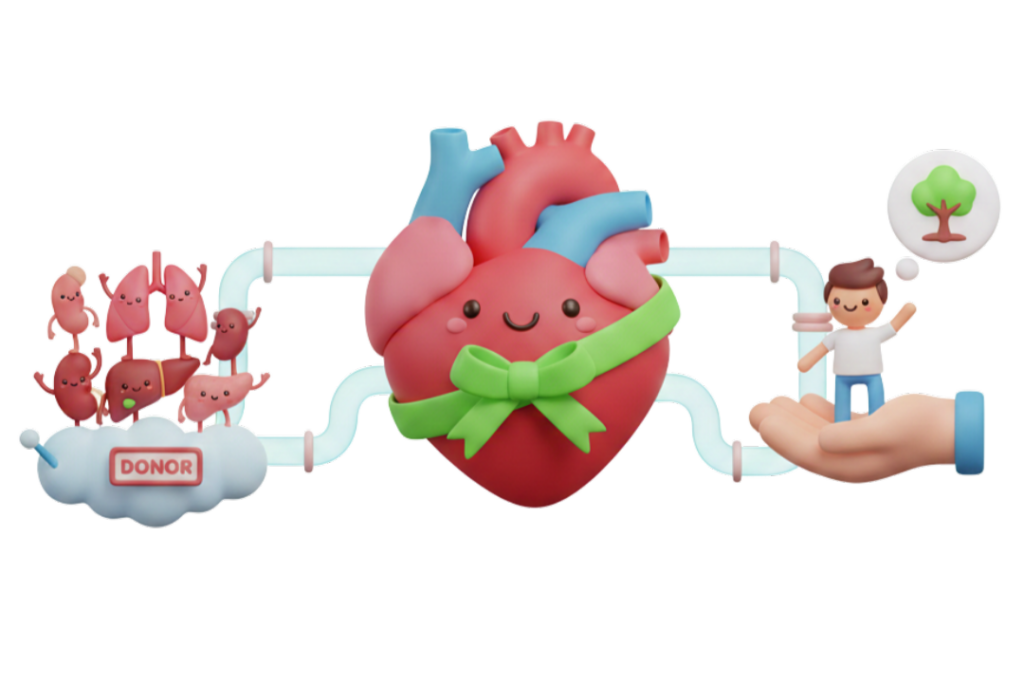
A kidney transplant is a surgery to place a healthy kidney from a living or deceased donor into a person whose kidneys no longer work properly.
The kidneys are two bean-shaped organs located on each side of the spine just below the rib cage. Each is about the size of a fist. The main job of the kidneys is to filter and remove waste, minerals and fluid from the blood by producing urine.
When kidneys lose this filtering ability, harmful levels of fluid and waste collect in the body. This can raise blood pressure and result in kidney failure, also known as end-stage renal disease. End-stage renal disease happens when the kidneys have lost about 90% of their ability to work properly.
Common causes of end-stage renal disease include:
- Diabetes.
- Ongoing, uncontrolled high blood pressure.
- Ongoing glomerulonephritis — an inflammation and eventual scarring of the tiny filters within the kidneys.
- Lupus nephritis.
- Polycystic kidney disease.
People with end-stage renal disease need to have a kidney transplant or dialysis to stay alive. Dialysis removes waste from the bloodstream using a machine.
- Deceased-donor kidney transplant
- Living-donor kidney transplant
- Preemptive kidney transplant
A kidney transplant is often the treatment of choice for kidney failure, compared with a lifetime on dialysis. A kidney transplant can treat ongoing kidney disease or end-stage renal disease to help you feel better and live longer.
Compared with dialysis, kidney transplant is linked to:
- Better quality of life.
- Lower risk of death.
- Fewer dietary restrictions.
- Lower treatment cost.
Some people also may benefit from receiving a kidney transplant before needing to go on dialysis. This procedure is known as a preemptive kidney transplant.
But for certain people with kidney failure, a kidney transplant may be riskier than dialysis. Conditions that may prevent you from being eligible for a kidney transplant include:
- Advanced age.
- Severe heart disease.
- Active or recently treated cancer.
- Dementia or poorly controlled mental illness.
- Alcohol or drug misuse.
- Anything else that could prevent you from safely having the procedure and taking the medicines needed afterward to prevent rejection.
Kidney transplant can treat advanced kidney disease and kidney failure, but the surgery isn’t a cure. Some forms of kidney disease may return after a transplant.
The health risks linked to a kidney transplant include those associated directly with the surgery and rejection of the donor organ. Risks also include the side effects of taking antirejection medicines, called immunosuppressants, needed to prevent the body from rejecting the donated kidney.
Deciding whether a kidney transplant is right for you is a personal decision that deserves careful thought and consideration of the serious risks and benefits. Talk through your decision with your family, friends and other trusted advisers.
- Complications of the procedure
- Antirejection medicine side effects
Kidney transplant surgery carries a risk of significant complications, including:
- Blood clots and bleeding.
- Leaking from or blockage of the tube that links the kidney to the bladder, called the ureter.
- Infection.
- Failure or rejection of the donated kidney.
- An infection or cancer that can be passed on from the donated kidney.
- Heart attack, stroke or death.
After a kidney transplant, you’ll take medicines to help prevent your body from rejecting the donor kidney. These medicines can cause a variety of side effects, including:
- Bone thinning and bone damage.
- Diabetes.
- Excessive hair growth or hair loss.
- High blood pressure.
- High cholesterol.
Other side effects may include:
- Increased risk of cancer, particularly skin cancer and lymphoma.
- Infection.
- Puffiness.
- Weight gain.
- Acne.
- Choosing a transplant center
- Evaluation
If your healthcare professional recommends a kidney transplant, you’ll be referred to a transplant center. You’re also free to select a transplant center on your own or choose a center from your insurance company’s list of preferred providers.
When considering transplant centers, you may want to:
- Learn about the number and type of transplants the center performs each year.
- Ask about the transplant center’s kidney transplant survival rates.
- Compare transplant center statistics through the database maintained by the Scientific Registry of Transplant Recipients.
- Find out if the center offers different donation programs that might increase your chances of receiving a living-donor kidney.
You also may consider:
- The costs you may have before, during and after the transplant. Costs can include tests, organ procurement, surgery, hospital stays, and transportation to and from the center for the procedure and follow-up appointments.
- Other services provided by the transplant center, such as support groups, travel arrangements, local housing during the recovery period and referrals to other resources.
- The center’s commitment to keeping up with the latest transplant technology and techniques, which means that the program is growing.
After you’ve selected a transplant center, you’ll be evaluated to determine whether you meet the center’s eligibility requirements for a kidney transplant.
The team at the transplant center should assess whether you:
- Are healthy enough to have surgery and tolerate lifelong post-transplant medicines.
- Have any medical conditions that would interfere with transplant success.
- Are willing and able to take medicines as directed and follow the suggestions of the transplant team.
The evaluation process may take several days and includes:
- A thorough physical exam.
- Imaging studies, such as X-ray, MRI or CT scans.
- Blood tests.
- Psychological evaluation.
- Any other necessary testing as determined by the transplant team.
After your evaluation, the transplant team will discuss the results with you and tell you whether you’ve been accepted as a kidney transplant candidate. Each transplant center has its own eligibility criteria. If you aren’t accepted at one transplant center, you may apply to others.
- Before the procedure
- Living kidney donation
- Staying healthy
- During the procedure
- After the procedure
Finding a match
A kidney donor can be living or deceased, related or not related to you. Your transplant team considers several factors when evaluating whether a donor kidney may be a good match for you.
Tests to determine whether a donated kidney may be suitable for you include:
Blood typing. It’s preferable to get a kidney from a donor whose blood type matches or is compatible with your own.
Transplants that involve a donor and recipient with incompatible blood types also are possible but require more medical care before and after transplant to reduce the risk of organ rejection. These transplants are known as ABO incompatible kidney transplants.
- Tissue typing. If your blood type is compatible, the next step is a tissue typing test called human leukocyte antigen (HLA) typing. This test compares genetic markers that increase the likelihood the transplanted kidney will last a long time. A good match means it’s less likely that your body will reject the organ.
Crossmatch. The third and final matching test involves mixing a small sample of your blood with the donor’s blood in the lab. The test determines whether antibodies in your blood will react against specific antigens in the donor’s blood.
A negative crossmatch means the bloods are compatible, and your body isn’t as likely to reject the donor kidney. Positive crossmatch kidney transplants also are possible but require more medical treatment before and after the transplant to reduce the risk of your antibodies reacting to the donor organ.
Other factors your transplant team may consider in finding the best donor kidney for you include matching age, kidney size and infection exposure.
You may be able to find a willing living kidney donor rather than waiting for a compatible kidney from a deceased donor.
Family members are often the most likely to be compatible living kidney donors. But successful living-donor transplants also are common with kidneys donated from people who are not related, such as friends, co-workers or faith community members.
Paired donation is another type of living kidney donation. Paired donation may be an option for you if an organ from a living donor isn’t compatible or doesn’t match well for other reasons. Rather than donating a kidney directly to you, your donor may give a kidney to someone who may be a better match. Then you receive a compatible kidney from that recipient’s donor.
In some cases, more than two pairs of donors and recipients may be linked with a living kidney donor who hasn’t named a specific person to receive the kidney, called a nondirected donor. The pairs form a donation chain, and several recipients benefit from the nondirected donor’s gift.
If a compatible living donor isn’t available, your name will be placed on a waiting list for a deceased-donor kidney. Because there are fewer available kidneys than there are people waiting for a transplant, the waiting list is growing. The waiting time for a deceased-donor kidney is usually a few years.
Whether you’re waiting for a donated kidney or your transplant surgery is already scheduled, work to stay healthy. Being healthy and as active as you’re able can make it more likely you’ll be ready for the transplant surgery when the time comes. It also may help speed your recovery from surgery. Work to:
- Take your medicines as prescribed.
- Follow your diet and exercise guidelines.
- Keep all appointments with your healthcare team.
Stay in touch with your transplant team and let your team know of any significant changes in your health. If you’re waiting for a donated kidney, make sure the transplant team knows how to reach you at all times. Keep your packed hospital bag ready and make plans for transportation to the transplant center.
Kidney transplants are performed with general anesthesia, so you’re not awake during the procedure. The surgical team monitors your heart rate, blood pressure and blood oxygen level throughout the procedure.
During the surgery:
- The surgeon makes an incision in the lower part of one side of the abdomen and places the new kidney into the body. Unless your own kidneys are causing complications such as high blood pressure, kidney stones, pain or infection, they are left in place.
- The blood vessels of the new kidney are attached to blood vessels in the lower part of the abdomen, just above one of your legs.
- The new kidney’s ureter — the tube that links the kidney to the bladder — is connected to the bladder.
After a kidney transplant, you can expect to:
Spend several days to a week in the hospital. Healthcare professionals monitor your condition in the hospital’s transplant recovery area to watch for signs of complications.
Your new kidney will make urine like your own kidneys did when they were healthy. Often this starts immediately. Sometimes it may take several days. You may need temporary dialysis until your new kidneys begin to work properly.
Expect soreness or pain around the incision site while you’re healing. Most kidney transplant recipients can return to work and other regular activities within eight weeks after transplant. Avoid lifting objects weighing more than 10 pounds or exercising other than walking until the wound has healed. The wound usually heals within about six weeks after surgery.
Have frequent checkups as you continue recovering. After you leave the hospital, close monitoring is necessary for a few weeks to check how well your new kidney is working and to make sure your body is not rejecting it.
You may need to have blood tests several times a week and have your medicines adjusted in the weeks following your transplant. During this time, if you live in another town, you may need to make arrangements to stay near the transplant center.
- Take medicines for the rest of your life. You’ll take a number of medicines after your kidney transplant. Immunosuppressant medicines help keep your immune system from attacking and rejecting your new kidney. Other medicines help reduce the risk of other complications, such as infection, after your transplant.
Results
After a successful kidney transplant, your new kidney will filter your blood, and you will no longer need dialysis.
To prevent your body from rejecting your donor kidney, you’ll need medicines to suppress your immune system. Because these antirejection medicines make your body more vulnerable to infection, your healthcare professional also may prescribe antibacterial, antiviral and antifungal medicines.
It is important to take all your medicines as your healthcare professional prescribes. Your body may reject your new kidney if you skip your medicines even for a short period of time. Contact your transplant team immediately if you have side effects that prevent you from taking the medicines.
After the transplant, be sure to perform skin self-checks and get checkups with a dermatologist to screen for skin cancer. Also, staying up to date with other cancer screening is strongly advised.
Kidney transplant success rates
Survival rates among kidney transplant recipients in U.S. transplant centers can be found online at the Scientific Registry of Transplant Recipients website.
If your new kidney fails, you can resume dialysis or consider a second transplant. You also may choose to discontinue treatment. If you decide to discontinue treatment, your healthcare professional can give you medicines to help relieve your symptoms. This decision depends on your current health, your ability to withstand surgery and your expectations for maintaining a certain quality of life.
References
- Kidney transplant. National Kidney Foundation. https://www.kidney.org/kidney-topics/kidney-transplant. Accessed Jan. 8, 2025.
- Kidney. UNOS Transplant Living. https://transplantliving.org/kidney/. Accessed Jan. 8, 2025.
- Johnson RJ, et al. Kidney transplantation surgery. In: Comprehensive Clinical Nephrology. 7th ed. Elsevier; 2024. https://www.clinicalkey.com. Accessed Jan. 8, 2025.
- Matching donors and recipients. Health Resources & Services Administration. https://www.organdonor.gov/learn/process/matching. Accessed Jan. 8, 2025.
- Yu ASL, et al., eds. Clinical management of the adult kidney transplant recipient. In: Brenner & Rector’s The Kidney. 11th ed. Elsevier; 2020. https://www.clinicalkey.com. Accessed Jan. 8, 2025.
- Staying healthy after a kidney transplant. NHS Blood and Transplant. https://www.nhsbt.nhs.uk/organ-transplantation/kidney/living-with-a-kidney-transplant/staying-healthy-after-a-kidney-transplant/. Accessed Jan. 20, 2025.
- McAdams DeMarco M, et al. Kidney transplantation in adults: Physical activity in kidney transplant recipients. https://www.uptodate.com/contents/search. Accessed Jan. 8, 2025.
- After the transplant: Frequently asked questions. UNOS Transplant Living. https://transplantliving.org/after-the-transplant/frequently-asked-questions/. Accessed Jan. 8, 2025.
- Rossi AP, et al. Kidney transplantation in adults: Evaluation of the potential kidney transplant recipient. https://www.uptodate.com/contents/search. Accessed Jan. 8, 2025.
- Huang E, et al. Kidney transplantation in adults: HLA-incompatible transplantation. https://www.uptodate.com/contents/search. Accessed Jan. 8, 2025.
- Chandraker A, et al. Overview of care of the adult kidney transplant recipient. https://www.uptodate.com/contents/search. Accessed Jan. 8, 2025.
- Brennan DC, et al. Kidney transplantation in adults: Timing of transplantation and issues related to dialysis. https://www.uptodate.com/contents/search. Accessed Jan. 8, 2025.
- Warady BA, et al. Overview of kidney replacement therapy for children with chronic kidney disease. https://www.uptodate.com/contents/search. Accessed Jan. 8, 2025.
- Kidney failure. National Kidney Foundation. https://www.kidney.org/kidney-topics/kidney-failure. Accessed Jan. 8, 2025.
- Medical review (expert opinion). Mayo Clinic. April 10, 2025.
- The organ transplant process. Health Resources & Services Administration. https://www.organdonor.gov/learn/process/transplant-process. Accessed Jan. 8, 2025.
- Before the transplant: Frequently asked questions. UNOS Transplant Living. https://transplantliving.org/before-the-transplant/frequently-asked-questions/. Accessed Jan. 8, 2025.
- Glomerulonephritis. National Kidney Foundation. https://www.kidney.org/kidney-topics/glomerulonephritis. Accessed Jan. 8, 2025.
- Living donation. UNOS. https://unos.org/transplant/living-donation/. Accessed Jan. 8, 2025.
- The kidney transplant waitlist. National Kidney Foundation. https://www.kidney.org/kidney-topics/kidney-transplant-waitlist. Accessed Jan. 8, 2025.
- Vella J. Kidney transplantation in adults: Risk factors for graft failure. https://www.uptodate.com/contents/search. Accessed Jan. 8, 2025.
- Knechtle SJ, et al. Kidney Transplantation: Principles and Practice. 8th ed. Elsevier; 2020. https://www.clinicalkey.com. Accessed Jan. 8, 2025.
- Marks WH, et al. Safety and efficacy of eculizumab in the prevention of antibody-mediated rejection in living-donor kidney transplant recipients requiring desensitization therapy: A randomized trial. American Journal of Transplantation. 2019; doi:10.1111/ajt.15364.
- Diet after kidney transplant. National Kidney Foundation. https://www.kidney.org/kidney-topics/diet-after-kidney-transplant. Accessed Jan. 20, 2025.
- Emotional aspects of waiting. UNOS Transplant Living. https://transplantliving.org/before-the-transplant/waiting-for-your-transplant/emotional-aspects-of-waiting/. Accessed Jan. 8, 2025.
- Becoming a living donor. National Kidney Foundation. https://www.kidney.org/kidney-topics/becoming-living-donor. Accessed Jan. 8, 2025.
- Orandi BJ, et al. Survival benefit with kidney transplants from HLA-incompatible live donors. New England Journal of Medicine. 2016; doi:10.1056/NEJMoa1508380.
- Organ Procurement Organization statistics. Scientific Registry of Transplant Recipients. https://www.srtr.org/reports/opo-specific-reports/interactive-report. Accessed Jan. 8, 2025.

Ad
Women have unique health issues. And some of the health issues that affect both men and women can affect women differently.
Book your appointment TODAY!
Search on the closest Doctor to your location and book based on specialty. EARN 10 POINTS more with CuraPOINT.
BOOK-
Find a healthcare provider near you
-
Call for support
-
Feel free to message us!
About Us
Curafile is a Medical Cyclopedia, biggest Healthcare Curated Network Globally, serves citizens, service providers in one place.
- Estonia - Qatar
Jordan - Saudi Arabia