AI in HealthCare
Through Innovation Digital Space

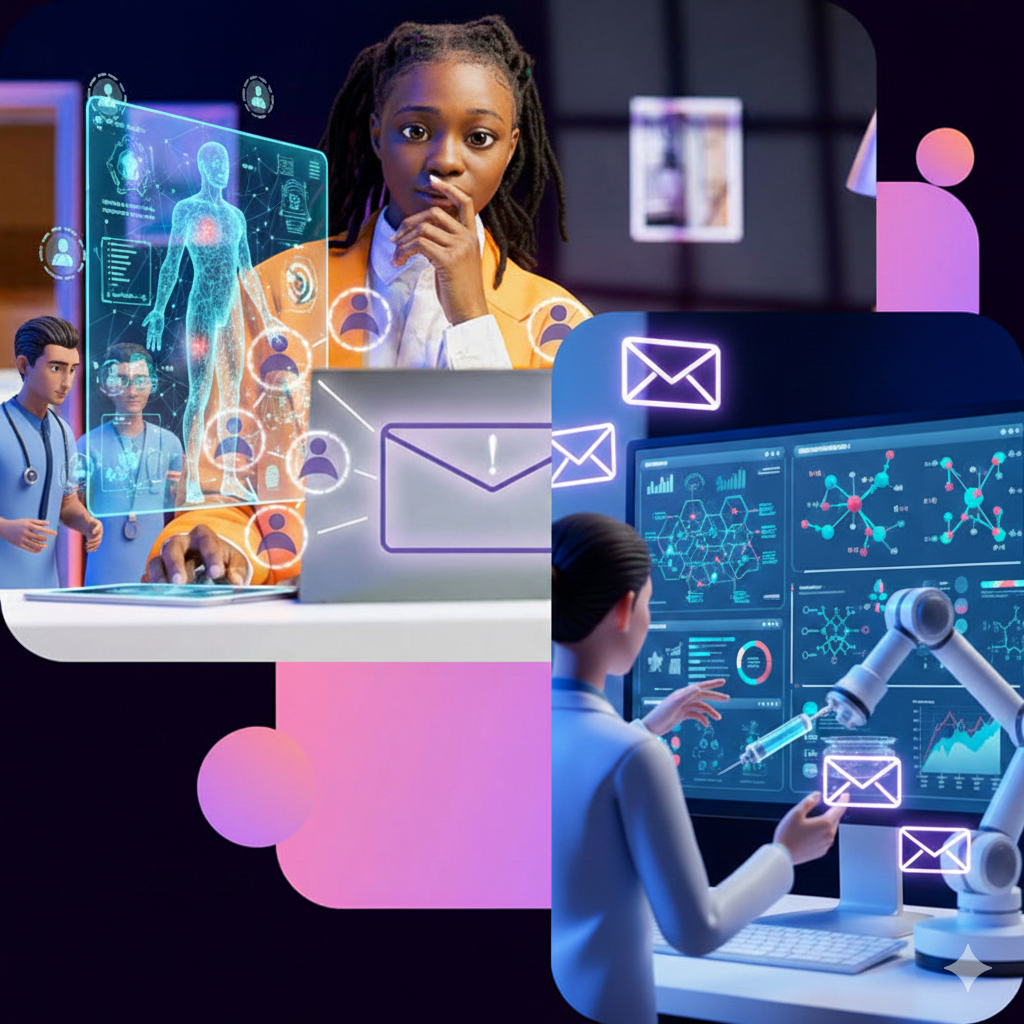
Artificial Intelligence (AI) is transforming healthcare by enhancing how diseases are prevented, diagnosed, and treated. By analyzing vast amounts of medical data, AI supports clinicians in making faster, more accurate decisions, improving patient outcomes, and increasing the efficiency of healthcare systems worldwide.

About

AI in health care

Artificial Intelligence, or AI, is a kind of computer technology used to do things that normally need human thinking, like learning new information or solving problems.

How AI is being used in health care

  • Cancer Screening

    analyses images to detect cervical, breast and prostate cancer

  • AI in Medical Records

    analyses risks to patients to predict bed usage or surges on the healthcare system

  • skin checks

    analyses photographs to check skin health, detect melanoma or other skin cancers

  • chatbots

    assists in finding information on healthcare websites

How It Works

Transforming Healthcare with AI in 4 Key Phases

Data Collection & Integration

AI gathers patient data from records, scans, and medical devices.

Intelligent Analysis

Algorithms analyze data to detect patterns and health risks.

Clinical Decision Support

AI assists doctors with accurate, data-driven decisions.

Continuous Monitoring & Improvement

AI tracks patient health in real time for better outcomes.

Innovations

Artificial Intelligence in Prosthetics

Prosthetics have been around for centuries, but the advancements in biomedical engineering have transformed the way we think about them. Prosthetics have evolved from simple wooden or metal limbs to complex bionic systems that can restore the abilities of amputees and even enhance human capabilities. 

Accuracy
0 %
Faster Diagnosis
0 %
Better Patient Outcomes
0 %
Of Clinicians Report Benefit
0 %

A Comprehensive Suite of AI Healthcare Solutions

AI-driven technologies are transforming healthcare by enhancing clinical decisions, improving patient care, and streamlining medical operations. From diagnosis to daily workflows, AI empowers healthcare systems to deliver faster, smarter, and more personalized care.

Clinical Decision Support

AI systems help doctors make faster, evidence-based decisions by analyzing patient data and highlighting potential treatment options or risks.

Predictive Analytics & Early Detection

AI tools predict patient deterioration, identify high-risk cases, and detect diseases earlier than traditional methods.

Virtual Health Assistants & Chatbots

AI chatbots handle routine inquiries, support 24/7 patient engagement, and reduce waiting times for basic healthcare information.

News

AI in Healthcare News

Topics

Key Topics in AI-Driven Healthcare

Artificial Intelligence is reshaping healthcare by enabling smarter diagnosis, predictive care, personalized treatment, and efficient medical operations. These topics highlight the core areas where AI is transforming how healthcare services are delivered and experienced.

Healthcare Robotics

Transforming Patient Care Through Intelligent Machines

Healthcare robotics is redefining modern medicine by combining artificial intelligence (AI), advanced sensors, and autonomous systems to support clinicians, improve patient outcomes, and streamline hospital workflows. From delivery robots that transport medicines and supplies to surgical systems that enhance precision in complex procedures, robots are playing an increasingly vital role across medical environments. Whether assisting with surgery, logistics, rehabilitation, or patient interaction, these systems help reduce workload, minimize human error, and elevate the standard of care.

AI helps healthcare professionals make faster and more accurate diagnoses, personalize treatment plans, monitor patients remotely, and even predict diseases before they occur, leading to better patient outcomes and reduced medical errors.

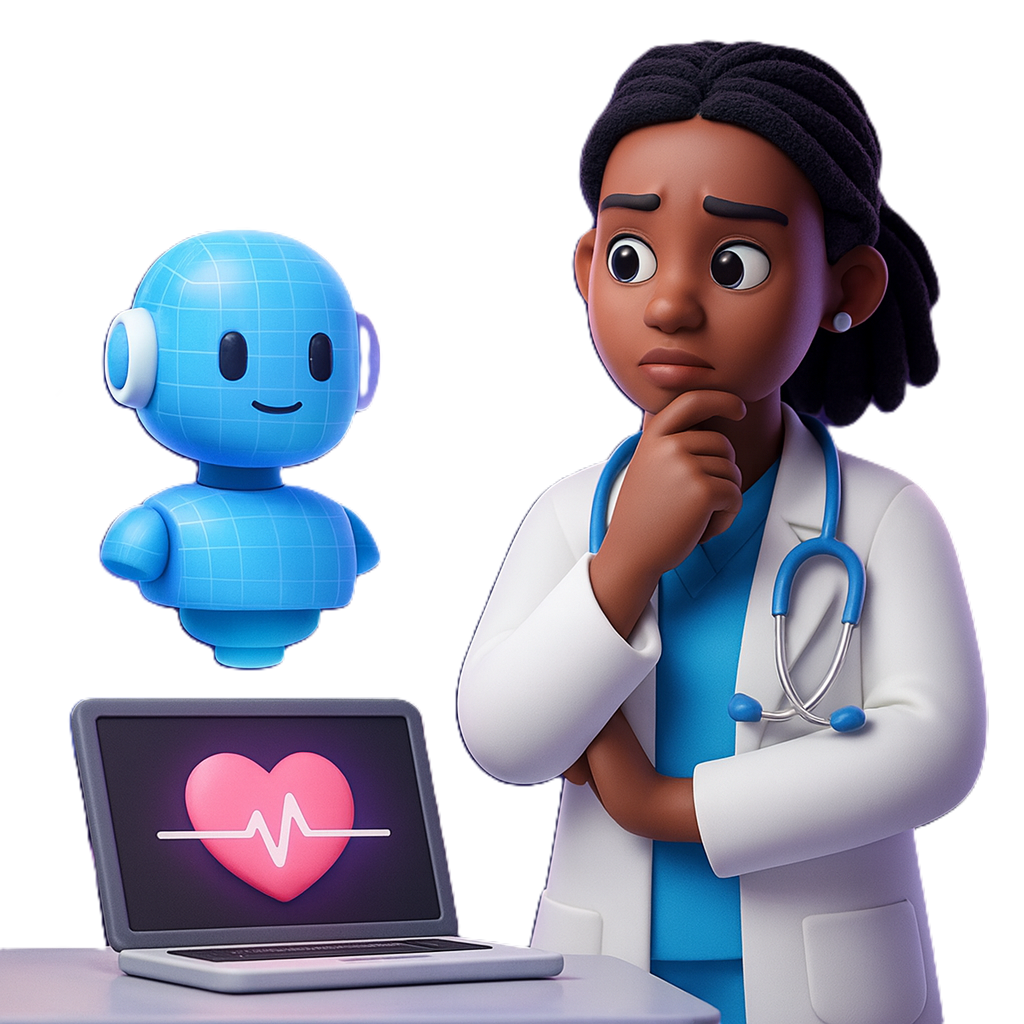
No. AI is designed to assist doctors and medical staff, not replace them. It handles repetitive tasks, analyzes complex data, and provides recommendations, allowing healthcare professionals to focus on critical decision-making and patient interaction.

Common applications include medical imaging analysis, virtual health assistants, predictive analytics for patient risk, robotic surgery, drug discovery, and hospital workflow automation.

Healthcare uses various AI types, including machine learning for analyzing medical data, natural language processing for understanding clinical notes, computer vision for medical imaging, and robotics for surgical assistance and hospital automation.