

Ignoring Health Symptoms
- Home
- Ignoring Health Symptoms
Ignoring Health Symptoms
No one can keep perfect track of their health at all times. And of course, not every headache or upset stomach is a sign of some awful underlying issue. However, there are certain aspects of your health that deserve more attention than they typically get.
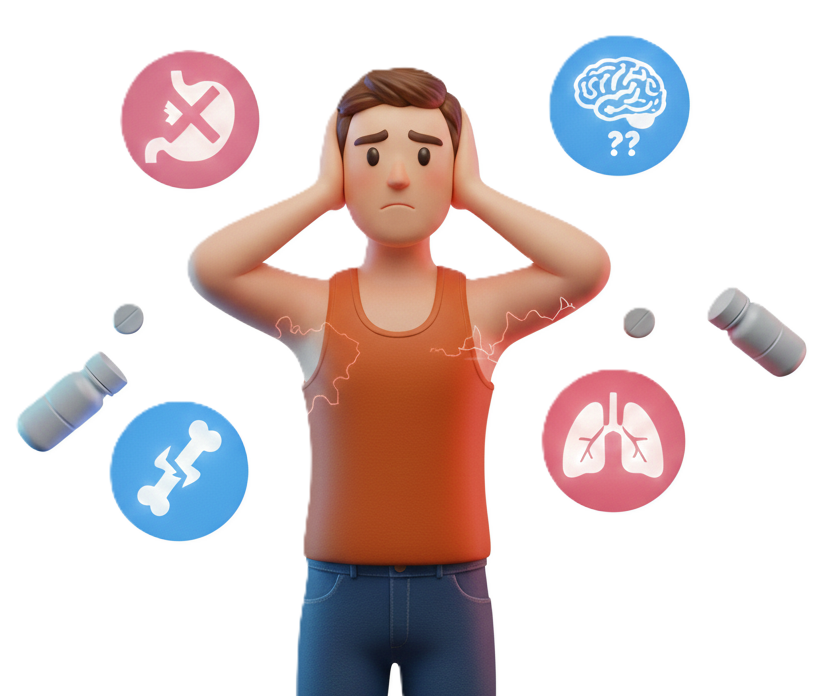
It’s easy to focus on huge health issues while ignoring the seemingly more mundane ones. However, neglecting a minor problem for too long can allow it to develop into something truly serious. To reduce your chances of dealing with this, take the time to check on these less immediately important aspects of your health:
- Sleep
- Mental Health
- Skin
- Back
- Hearing
- Sight
A few nights of bad sleep won’t kill you, but an ongoing pattern of sleep deprivation is bad news. Both your physical and mental health will suffer. Being tired during the day will also affect your ability to work or take care of yourself. If you struggle with sleeping and waking up refreshed, talk to your doctor about possible solutions.
Mental health receives much more attention today than it has in the past, and rightly so. However, too many people neglect it even unconsciously. And since mental health and physical health are deeply interconnected, neglecting mental health can harm you in other ways. Don’t brush your mental struggles under the rug–they deserve attention! Talk to your doctor about any concerns you may have.
The word “skincare” usually conjures up images of fancy, expensive lotions, and anti-aging creams. While there’s certainly a place for both, the most important day-to-day part of skincare is sun protection. Sunscreen or other skincare products with an SPF rating both help prevent skin cancer and reduce some visible signs of aging. Remember, your skin is your largest organ. Take care of it!
Anyone who has dealt with a back injury knows how important this one is. Back problems can severely hinder mobility, which causes other aspects of your life to suffer and can eventually spawn other health problems. The best approach to back health is preventive. Focus on core-strengthening exercises, improve your posture, and maintain an at least semi-active lifestyle.
Hearing loss can turn your world upside down. Not only will communication be more difficult, but depending on how the hearing loss occurred, you may also have balance problems (since the vestibular system, the part of your body that controls balance, is found in the inner ear). Once again, the best way to take care of your hearing is to take preventive measures. Bring earplugs or noise-canceling headphones to very loud environments and keep the volume low when you wear earbuds.
Finally, losing your sight can be devastating. Even if you don’t completely lose your sight, hampered vision affects your daily life in multiple ways. Visit an eye doctor regularly for vision checkups and ensure you get the right prescription for any glasses you may need. If you notice any concerning changes in your vision, schedule an appointment as soon as possible.
Your body is a well-oiled machine, and each part of that machine connects to many others. Damage to one part can mean hindered function for anything connected to it. Treat your body like the amazing machine it is and take good care of it for a healthy life.
- 1. Unexplained weight loss
- 2. Persistent or high fever
- 3. Shortness of breath
- 4. Unexplained changes in bowel habits
- 5. Confusion or personality changes
- 6. Feeling full after eating very little
- 7. Flashes of light
Losing weight without trying may be a sign of a health problem. An unexplained drop in weight could be caused by many conditions. These include overactive thyroid (hyperthyroidism), diabetes, depression, liver disease, cancer or disorders that interfere with how your body absorbs nutrients (malabsorption disorders).
If you’ve lost more than 5% of your body weight during the past 6 to 12 months talk to your health care provider.
Fever seems to play a key role in fighting infection. Persistent fever can mean you have an infection, including COVID-19. If you have a fever and other symptoms, such as cough and fatigue, contact your health care provider right away for medical advice. Your health care provider will likely recommend that you get tested for COVID-19. If you have emergency COVID-19 symptoms, such as trouble breathing, seek care immediately. If you need to go to a hospital, call ahead. Then health care providers can take steps to ensure that others aren’t exposed.
A fever can also be a symptom of many other infectious diseases, from a urinary tract infection to tuberculosis. Some drugs can cause a fever.
Call your health care provider if your temperature is 103 F (39.4 C) or higher. And call your provider if you’ve had a fever for more than three days.
Strenuous exercise, extreme temperatures, obesity and high altitude all can cause shortness of breath. Shortness of breath also could be a sign of another health problem. If you have unexplained shortness of breath, especially if it comes on suddenly and is severe, seek emergency medical care.
Causes for breathlessness might include chronic obstructive pulmonary disease, bronchitis, asthma, pneumonia or a blood clot in the lung (pulmonary embolism). Other causes include heart and lung problems. Difficulty breathing can also occur with a panic attack — a sudden episode of intense anxiety that triggers severe physical reactions when there is no real danger or clear cause.
What’s considered typical for bowel movements varies widely. Consult your health care provider if you notice unusual or unexplained changes in your bowel movements, such as:
- Bloody, black or tarry-colored stools
- Persistent diarrhea or constipation
- Pain in the stomach that doesn’t go away
Changes in bowel habits could be a sign of a bacterial infection — such as campylobacter or salmonella infection — or a viral or parasitic infection. Other possible causes include irritable bowel disease and colon cancer.
Seek medical attention if you have sudden:
- Poor thinking skills
- Difficulty focusing or paying attention
- Behavior changes
These changes could be caused by many problems, such as infection, dehydration, poor nutrition, mental health conditions or drugs.
If you usually feel full too soon or after eating less than usual, get checked by your health care provider. You might have this feeling, known as early satiety, along with nausea, vomiting, bloating or weight loss. If so, be sure to tell your health care provider about these symptoms as well.
Possible causes of early satiety include gastroesophageal reflux disease, commonly known as GERD, and peptic ulcers. In some cases, a more serious problem — such as stomach cancer — could be a factor.
Bright spots or flashes of light can sometimes be a sign of a migraine. In other cases, sudden flashes of light could be a sign of a serious condition in which a thin layer of tissue at the back of the eye pulls away from its position (retinal detachment). Immediate medical care can help prevent permanent vision loss.
References
What Happens When You Ignore Health Problems? – mainstreetclinics – https://www.mainstreetclinics.com/blog/preventive-health/what-happens-when-you-ignore-health-problems/
- Unintentional weight loss. National Health Service. https://www.nhs.uk/conditions/unintentional-weight-loss/. Accessed April 1, 2022.
- Goldman L, et al., eds. Malnutrition: assessment and support. In: Goldman-Cecil Medicine. 26th ed. Elsevier; 2020. https://www.clinicalkey.com. Accessed April 1, 2022.
- Fever. Merck Manual Professional Version. https://www.merckmanuals.com/professional/infectious-diseases/biology-of-infectious-disease/fever. Accessed April 1, 2022.
- Goldman L, et al., eds. Approach to fever or suspected infection in the normal host. In: Goldman-Cecil Medicine. 26th ed. Elsevier; 2020. https://www.clinicalkey.com. Accessed April 1, 2022.
- Francis J Jr, et al. Diagnosis of delirium and confusional states. https://www.uptodate.com/contents/search. Accessed April 1, 2022.
- Dyspnea. Merck Manual Professional Version. https://www.merckmanuals.com/professional/pulmonary-disorders/symptoms-of-pulmonary-disorders/dyspnea. Accessed April 1, 2022.
- Goldman L, et al., eds. Functional gastrointestinal disorders: Irritable bowel syndrome, dyspepsia, esophageal chest pain, and heartburn. In: Goldman-Cecil Medicine. 26th ed. Elsevier; 2020. https://www.clinicalkey.com. Accessed April 1, 2022.
- Diagnosing and treating shortness of breath. American Lung Association. https://www.lung.org/lung-health-diseases/warning-signs-of-lung-disease/shortness-of-breath/diagnosing-treating. Accessed April 1, 2022.
- What are floaters and flashes. American Academy of Ophthalmology. https://www.aao.org/eye-health/diseases/what-are-floaters-flashes. Accessed April 1, 2022.
- Diarrhea. National Institute of Diabetes and Digestive and Kidney Diseases. https://www.niddk.nih.gov/health-information/digestive-diseases/diarrhea. Accessed April 1, 2022.
- What is inflammatory bowel disease (IBD)? Centers for Disease Control and Prevention. https://www.cdc.gov/ibd/what-is-IBD.htm. Accessed April 1, 2022.
- Constipation. National Institute of Diabetes and Digestive and Kidney Diseases. https://www.niddk.nih.gov/health-information/digestive-diseases/constipation. Accessed April 1, 2022.
- Indigestion (dyspepsia). National Institute of Diabetes and Digestive and Kidney Diseases. https://www.niddk.nih.gov/health-information/digestive-diseases/indigestion-dyspepsia. Accessed April 1, 2022.
- COVID-19: What to do if you are sick. Centers for Disease Control and Prevention. https://www.cdc.gov/coronavirus/2019-ncov/if-you-are-sick/steps-when-sick.html. Accessed April 1, 2022.
- Schwartzstein RM. Approach to the patient with dyspnea. https://www.uptodate.com/contents/search. Accessed April 1, 2022.
- Flashes of light. American Academy of Ophthalmology. https://www.aao.org/eye-health/symptoms/flashes-of-light. Accessed April 1, 2022.
- Gupta R, et al. Approach to the patient with unintentional weight loss. https://www.uptodate.com/contents/search. Accessed April 1, 2022.
- Evaluation of the gastrointestinal patient. Merck Manual Professional Version. Accessed https://www.merckmanuals.com/professional/gastrointestinal-disorders/approach-to-the-gastrointestinal-patient/evaluation-of-the-gastrointestinal-patient. April 1, 2022.
| Read More |
|---|

Ad
Women have unique health issues. And some of the health issues that affect both men and women can affect women differently.
Book your appointment TODAY!
Search on the closest Doctor to your location and book based on specialty. EARN 10 POINTS more with CuraPOINT.
BOOK-
Find a healthcare provider near you
-
Call for support
-
Feel free to message us!
About Us
Curafile is a Medical Cyclopedia, biggest Healthcare Curated Network Globally, serves citizens, service providers in one place.
- Estonia - Qatar
Jordan - Saudi Arabia