

Alzheimer’s Disease
- Home
- Brain and Nerves
- Alzheimer’s Disease
Alzheimer’s disease is the most common cause of dementia. Alzheimer’s disease is the biological process that begins with the appearance of a buildup of proteins in the form of amyloid plaques and neurofibrillary tangles in the brain. This causes brain cells to die over time and the brain to shrink.
About 6.9 million people in the United States age 65 and older live with Alzheimer’s disease. Among them, more than 70% are age 75 and older. Of the more than 55 million people in the world with dementia, 60% to 70% are estimated to have Alzheimer’s disease.
Early symptoms of Alzheimer’s disease include forgetting recent events or conversations. Over time, Alzheimer’s disease leads to serious memory loss and affects a person’s ability to do everyday tasks.
There is no cure for Alzheimer’s disease. In advanced stages, loss of brain function can cause dehydration, poor nutrition or infection. These complications can result in death.
But medicines may improve symptoms or slow the decline in thinking. Programs and services can help support people with the disease and their caregivers.
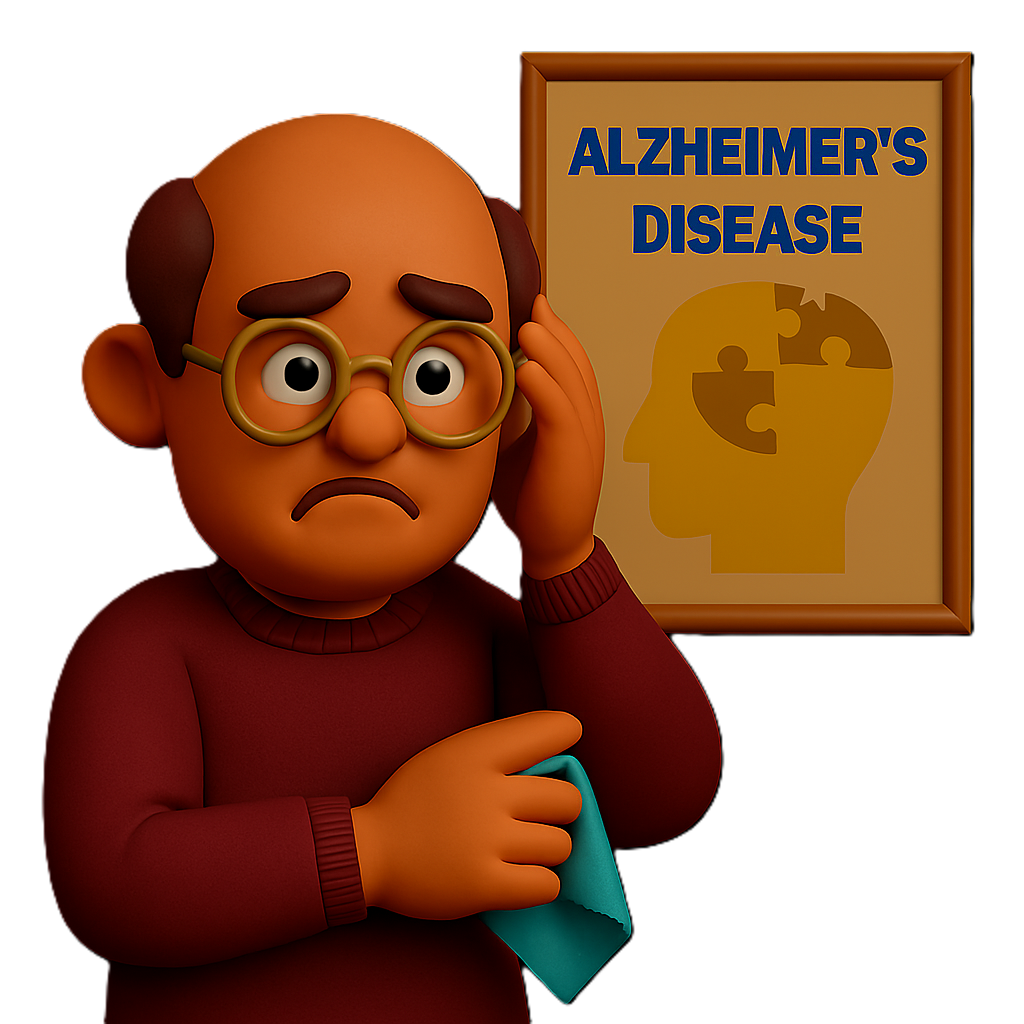
The exact causes of Alzheimer’s disease aren’t fully understood. But at a basic level, brain proteins don’t function as usual. This disrupts the work of brain cells, also known as neurons, and triggers a series of events. The neurons become damaged and lose connections to each other. They eventually die.
Scientists believe that for most people, Alzheimer’s disease is caused by a combination of genetic, lifestyle and environmental factors that affect the brain over time. In less than 1% of people, Alzheimer’s is caused by specific genetic changes that almost guarantee a person will develop the disease. For people in this group, the disease usually begins in middle age.
The disease begins years before the first symptoms. The damage most often starts in the region of the brain that manages memory. The loss of neurons spreads in a somewhat predictable pattern to other regions of the brain. By the late stage of the disease, the brain has shrunk.
Researchers trying to understand the cause of Alzheimer’s disease are focused on the role of two proteins:
- Plaques. Beta-amyloid is a fragment of a larger protein. When these fragments clump together, they affect communication between brain cells. The clumps form larger deposits called amyloid plaques.
- Tangles. Tau proteins play a part in a brain cell’s internal support and transport system to carry nutrients and other essential materials. In Alzheimer’s disease, tau proteins change mshape and organize into structures called neurofibrillary tangles. The tangles disrupt the transport system and cause damage to cells.
Memory loss is the key symptom of Alzheimer’s disease. Early in the disease, people may have trouble remembering recent events or conversations. Over time, memory gets worse and other symptoms occur.
At first, someone with the disease may be aware of having trouble remembering things and thinking clearly. As signs and symptoms get worse, a family member or friend may be more likely to notice the issues.
Brain changes from Alzheimer’s disease lead to the following symptoms that get worse over time.
Memory
Everyone has trouble with memory at times, but the memory loss related to Alzheimer’s disease is lasting. Over time, memory loss affects the ability to function at work and at home.
People with Alzheimer’s disease may:
- Repeat statements and questions over and over.
- Forget conversations, appointments or events.
- Misplace items, often putting them in places that don’t make sense.
- Get lost in places they used to know well.
- Forget the names of family members and everyday objects.
- Have trouble finding the right words, expressing thoughts or having conversations.
Thinking and reasoning
Alzheimer’s disease causes trouble concentrating and thinking, especially about abstract concepts such as numbers. Doing more than one task at once is especially hard. It may be challenging to manage finances, balance checkbooks and pay bills on time. Eventually people with Alzheimer’s disease may not recognize numbers.
Making judgments and decisions
Alzheimer’s disease makes it hard to make sensible decisions and judgments. People with Alzheimer’s disease may make poor choices in social settings or wear clothes for the wrong type of weather. Everyday problems may be hard to solve. Someone with Alzheimer’s disease may not know how to handle food burning on the stove or how to make decisions when driving.
Planning and performing familiar tasks
Routine activities that involve completing steps in a certain order also can be hard for people with Alzheimer’s disease. They may have trouble planning and cooking a meal or playing a favorite game. As Alzheimer’s disease becomes advanced, people forget how to do basic tasks such as dressing and bathing.
Changes in personality and behavior
Brain changes that occur in Alzheimer’s disease can affect moods and behaviors. Symptoms may include:
- Depression.
- Loss of interest in activities.
- Social withdrawal.
- Mood swings.
- Not trusting others.
- Anger or aggression.
- Changes in sleeping habits.
- Wandering.
- Loss of inhibitions.
- Delusions, such as believing something has been stolen when it hasn’t.
Preserved skills
Despite major changes to memory and skills, people with Alzheimer’s disease are able to keep some skills even as symptoms get worse. These are known as preserved skills. They may include reading or listening to books, telling stories, sharing memories, singing, listening to music, dancing, drawing, or doing crafts.
Preserved skills may last longer because they’re managed by parts of the brain affected in later stages of the disease.
Several conditions can cause memory loss or other dementia symptoms. Some of those conditions can be treated. If you are concerned about your memory or other thinking skills, talk to your healthcare professional.
If you are concerned about the thinking skills you notice in a family member or friend, ask about going together to talk to a healthcare professional.
Risk factors for Alzheimer’s disease include age, family history, lifestyle and other factors.
Older age
Older age is the strongest known risk factor for Alzheimer’s disease. Alzheimer’s isn’t a part of typical aging. But as you grow older, the chances of getting the disease goes up.
One study found that there were four new diagnoses per 1,000 people ages 65 to 74 every year. Among people ages 75 to 84, there were 32 new diagnoses per 1,000 people. For those 85 and older, there were 76 new diagnoses per 1,000 people.
Family history and genetics
The risk of getting Alzheimer’s disease is higher if a first-degree relative such as a parent or sibling was diagnosed with the disease. How genes among families affect the risk is largely not understood. The genetic factors are likely complex.
A better understood genetic factor is a form of the apolipoprotein E (APOE) gene. Having the form of the gene known as APOE e4 increases the risk of Alzheimer’s disease. About 25% to 30% of the population carries APOE e4. But not everyone with this form of the gene develops the disease. Having two copies of APOE e4 increases the risk of Alzheimer’s disease more than having one copy.
Scientists have found rare changes in three genes that virtually guarantee a person who inherits one of them will develop Alzheimer’s. But these changes account for less than 1% of people with Alzheimer’s disease.
Down syndrome
Many people with Down syndrome develop Alzheimer’s disease. This is likely related to having three copies of chromosome 21. Chromosome 21 is the gene involved in the production of the protein that leads to the creation of beta-amyloid. Beta-amyloid fragments can become plaques in the brain. Symptoms tend to appear 10 to 20 years earlier in people with Down syndrome than they do for the general population.
Sex assigned at birth
Overall there are more women with the disease because they tend to live longer than men.
Mild cognitive impairment
Someone with mild cognitive impairment, also called MCI, has a bigger decline in memory or other thinking skills than is usual for the person’s age. But the decline doesn’t prevent the person from functioning at work or socially.
However, people with MCI have a higher risk of getting dementia than are people who don’t have mild cognitive impairment. When MCI affects mainly memory, the condition is more likely to progress to dementia due to Alzheimer’s disease. A diagnosis of MCI offers people the chance to focus on healthy lifestyle changes and to come up with strategies to make up for memory loss. They also can schedule regular healthcare appointments to monitor symptoms.
Head injury
Several large studies found that people age 50 or older who had a traumatic brain injury, also called TBI, had a higher risk of getting dementia and Alzheimer’s disease. The risk is even higher in people with serious TBIs or multiple TBIs.
Air pollution
Studies in animals have found that air pollution particulates can speed the breakdown of the nervous system. Human studies have found that air pollution exposure — especially from traffic exhaust and burning wood — is linked to a higher risk of dementia.
Heavy alcohol use
Drinking large amounts of alcohol has long been known to cause brain changes. Several large studies and reviews found that alcohol misuse is linked to a higher risk of dementia, especially early-onset dementia.
Poor sleep patterns
Research has shown that poor sleep patterns, such as trouble falling asleep or staying asleep, are linked to a raised risk of Alzheimer’s disease. Sleep apnea also may raise the risk of dementia.
Lifestyle and heart health
Research has shown that the same risk factors for heart disease also may increase the risk of dementia. It’s not clear if these factors raise risk by worsening Alzheimer’s changes in the brain or by leading to blood vessel changes in the brain. The factors include:
- Lack of exercise.
- Obesity.
- Smoking or exposure to secondhand smoke.
- High blood pressure.
- High cholesterol.
- Poorly managed type 2 diabetes.
High levels of low-density lipoprotein, known as LDL, cholesterol in middle age, in particular, raises the risk of dementia. Research has found that people younger than 65 with high LDL cholesterol levels have a higher risk of dementia. But taking medicines to lower LDL cholesterol didn’t raise the risk.
These factors can all be modified, so changing lifestyle habits can to some degree alter your risk. For example, regular exercise and a healthy low-fat diet rich in fruits and vegetables are related to a lower risk of Alzheimer’s disease.
Hearing loss
Studies have found that people who have hearing loss are at risk of dementia. The worse the hearing loss, the higher the risk. However, wearing hearing aids protects against getting dementia.
Vision loss that is not treated
Newer research suggests vision loss that isn’t treated is a risk factor for cognitive impairment and dementia. The link may be due to a disease such as diabetes that can increase the risk of both vision loss and dementia. But some research suggests vision loss itself may increase the risk of dementia.
Lifelong learning and social engagement
Studies have found that being social and doing activities that stimulate the mind throughout life can lower the risk of Alzheimer’s disease. Low education levels — less than a high school education — appear to be a risk factor for Alzheimer’s disease.
Alzheimer’s disease can lead to a variety of complications. Symptoms such as memory loss, language loss, impaired judgment and other brain changes can make it harder to manage other health conditions. A person with Alzheimer’s disease may not be able to:
- Tell someone about being in pain.
- Explain symptoms of another illness.
- Follow a treatment plan.
- Explain medicine side effects.
As Alzheimer’s disease moves into its last stages, brain changes begin to affect physical functions. The changes can affect the ability to swallow, balance, and manage stool and bladder movements. These effects can lead to other health issues such as:
- Inhaling food or liquid into the lungs.
- Flu, pneumonia and other infections.
- Falls.
- Fractures.
- Bedsores.
- Poor nutrition or dehydration.
- Constipation or diarrhea.
Alzheimer’s disease can’t be prevented. But making lifestyle changes can lower your risk of getting the disease.
Research suggests that taking steps that lower your risk of cardiovascular disease may reduce the risk of dementia, as well. To follow heart-healthy lifestyle choices that may lower the risk of dementia:
- Exercise regularly.
- Eat a diet of fresh produce, healthy oils and foods low in saturated fat, such as a Mediterranean diet.
- Work with your healthcare professional to manage high blood pressure, diabetes and high cholesterol. Pay particular attention to your levels of low-density lipoprotein, known as LDL, cholesterol. High levels of LDL cholesterol in people younger than 65 raises the risk of dementia. But taking medicines to lower LDL cholesterol doesn’t raise the risk.
- If you smoke, ask your healthcare professional for help to quit.
One large, long-term study done in Finland found that making lifestyle changes helped reduce cognitive decline among people who were at risk of dementia. Those in the study were given individual and group sessions that focused on diet, exercise and social activities.
Several studies have found that following a Mediterranean diet leads to better cognitive function and a slower cognitive decline with age. A Mediterranean diet focuses on plant-based foods such as fruits, vegetables, grains, fish, poultry, nuts and olive oil. The diet includes less foods that are high in saturated fats and trans fats, such as butter, margarine, cheese, red meat, fried food and pastries.
It’s also important to treat vision loss and hearing loss. Studies have found that vision loss that isn’t treated is a risk factor for cognitive impairment and dementia. Studies also have found that people who have hearing loss are at higher risk of dementia. But wearing hearing aids made people less likely to get dementia.
Other studies have shown that staying engaged mentally and socially is linked to preserved thinking skills later in life and a lower risk of Alzheimer’s disease. This includes going to social events, reading, dancing, playing board games, creating art, playing an instrument and other activities.
An important part of diagnosing Alzheimer’s disease includes being able to explain your symptoms. It may help to get input from a close family member or friend about your symptoms and their impact on your daily life. Tests of memory and thinking skills also help diagnose Alzheimer’s disease.
Blood and imaging tests can rule out other potential causes of your symptoms. They also can check for proteins in the brain that are linked to Alzheimer’s disease. The tests may help your healthcare team better identify the disease causing dementia symptoms.
In the past, Alzheimer’s disease was diagnosed for certain only after death when plaques and tangles were found while looking at the brain with a microscope. Today, healthcare professionals and researchers are able to diagnose Alzheimer’s disease during life with more certainty.
They do this by using a combination of tests that may include tests for biomarkers. Biomarkers can detect if plaques and tangles are present in the brain. Biomarker tests include specific types of positron emission tomography, also known as PET, scans of the brain. Amyloid and tau proteins also can be measured in the fluid part of the blood or in the fluid that surrounds the brain and spinal cord, known as cerebrospinal fluid. Recently, blood biomarker tests have become accurate enough to tell if someone is likely to have amyloid in the brain.
Biomarker tests were mainly used in clinical trials until recently. But healthcare professionals have started using them along with other tests to help diagnose Alzheimer’s disease. Biomarker tests also can let healthcare professionals know if the disease is in the early or later stages.
Diagnosing Alzheimer’s disease would likely include the following tests:
Physical and neurological exam
A healthcare professional gives you a physical and neurological exam. This may include testing:
- Reflexes.
- Muscle tone and strength.
- Ability to get up from a chair and walk across the room.
- Sense of sight and hearing.
- Coordination.
- Balance.
Lab tests
Blood tests may help rule out other potential causes of memory loss and confusion, such as a thyroid disorder or vitamin levels that are too low.
Newer blood tests can measure levels of beta-amyloid protein and tau protein. But these tests aren’t available everywhere and may not be covered by insurance.
Mental status and neuropsychological testing
Your healthcare professional may give you a brief mental status test to check your memory and other thinking skills. Longer forms of this type of test may provide more details about mental function that can be compared with people of a similar age and education level. These tests can help establish a diagnosis and serve as a starting point to track symptoms in the future.
Brain imaging
Images of the brain look for visible changes related to conditions other than Alzheimer’s disease that may cause similar symptoms, such as strokes, injury or tumors. Newer imaging tests can help detect specific brain changes caused by Alzheimer’s disease, such as amyloid plaques and neurofibrillary tangles. These newer tests are mainly used in major medical centers or in clinical trials.
Imaging of brain structures include:
- Magnetic resonance imaging (MRI). MRI uses radio waves and a strong magnetic field to produce detailed images of the brain. They may show shrinkage of some brain regions linked to Alzheimer’s disease. MRI scans also can rule out other conditions that may be causing symptoms. An MRI is generally preferred to a CT scan to evaluate dementia. MRIs also are done before starting certain Alzheimer’s medicines and throughout treatment to monitor for potential side effects.
- Computerized tomography (CT). A CT scan, a specialized X-ray technology, produces cross-sectional images of your brain. It’s usually used to rule out tumors, strokes and head injuries.
A PET scan test can capture images of the disease process. During a PET scan, a low-level radioactive tracer is injected into the blood to reveal a particular feature in the brain. PET imaging may include:
- Fluorodeoxyglucose, also called FDG, PET imaging scans show areas of the brain where nutrients aren’t properly being used for energy, known as metabolism. Finding patterns in the areas of low metabolism can help distinguish between Alzheimer’s disease and other types of dementia.
- Amyloid PET imaging can measure amyloid plaques in the brain. This test is mainly used in research but may be used if a person has unusual or very early onset of dementia symptoms.
- Tau PET imaging measures neurofibrillary tangles in the brain.
Sometimes other tests may be used to measure amyloid and tau in the cerebrospinal fluid. This may be done if symptoms are quickly getting worse or if dementia is affecting someone at a younger age.
Future of diagnostic tests
Research has established that biomarker tests can measure biological signs of disease in the brain. The tests can be used with other tools to help diagnose Alzheimer’s disease after symptoms begin. Although these tests can look for signs of Alzheimer’s before symptoms begin, the tests aren’t being used in people without symptoms. The availability of biomarker tests may vary widely.
Genetic tests aren’t recommended for most people who might have Alzheimer’s disease. But people with a family history of early-onset Alzheimer’s disease may consider being tested. Meet with a genetic counselor to talk about the risks and benefits before getting a genetic test.
Treatments for Alzheimer’s disease include medicines that can help with symptoms and newer medicines that can help slow decline in thinking and functioning. These newer medicines are approved for people with early Alzheimer’s disease.
Medicines
Alzheimer’s medicines can help with memory symptoms and other cognitive changes. Two types of medicines used to treat symptoms include:
Cholinesterase inhibitors. These medicines work by boosting levels of cell-to-cell communication. The medicines preserve a chemical messenger that is depleted in the brain by Alzheimer’s disease. These are usually the first medicines tried, and most people see modest improvements in symptoms.
Cholinesterase inhibitors may improve symptoms related to behavior, such as agitation or depression. The medicines are taken by mouth or through a patch on the skin. Commonly prescribed cholinesterase inhibitors include donepezil (Aricept, Adlarity), galantamine and rivastigmine transdermal patch (Exelon).
The main side effects of these medicines include diarrhea, nausea, loss of appetite and trouble with sleep. In people with certain heart conditions, serious side effects may include an irregular heartbeat.
- Memantine (Namenda). This medicine works in another brain cell communication network and slows the progression of symptoms with moderate to severe Alzheimer’s disease. It’s sometimes used in combination with a cholinesterase inhibitor. Relatively rare side effects include dizziness and confusion.
Other medicines have been approved by the Food and Drug Administration, also called FDA, to slow declines in thinking and functioning caused by Alzheimer’s disease. The medicines prevent amyloid plaques in the brain from clumping. They’re prescribed for people with mild Alzheimer’s disease and mild cognitive impairment due to Alzheimer’s disease.
These medicines include:
- Lecanemab-irmb (Leqembi). This medicine is given as an IV infusion every two weeks. Side effects may include infusion-related reactions such as fever, flu-like symptoms, nausea, vomiting, dizziness, changes in heart rate and trouble breathing.
- Donanemab-azbt (Kisunla). This medicine is given as an IV infusion every four weeks. Side effects may include flu-like symptoms, nausea, vomiting, headache, trouble breathing and changes in blood pressure.
People taking lecanemab or donanemab may have swelling in the brain or may get small bleeds in the brain. Rarely, brain swelling can be serious enough to cause seizures and other symptoms. Also in rare instances, bleeding in the brain can cause death. The FDA recommends getting a brain MRI before starting treatment and regularly during treatment to monitor for symptoms of brain swelling or bleeding.
People who carry a certain form of a gene known as APOE e4 appear to have a higher risk of these serious side effects. The FDA recommends testing for this gene before starting treatment.
If you take a blood thinner or have other risk factors for brain bleeding, talk to your healthcare professional before taking lecanemab or donanemab. Blood-thinning medicines may increase the risk of bleeds in the brain.
More research is being done on the potential risks of taking lecanemab and donanemab. Other research is looking at how effective the medicines may be for people at risk of Alzheimer’s disease, including people who have a first-degree relative, such as a parent or sibling, with the disease.
Sometimes other medicines such as antidepressants may be prescribed to help manage the behavioral symptoms linked to Alzheimer’s disease.
Creating a safe and supportive environment
An important part of any treatment plan is to adapt to the needs of a person with Alzheimer’s disease. Create routine habits and cut down on tasks that require memory. These steps can make life much easier.
These are ways to support a person’s sense of well-being and ability to function:
- Keep keys, wallets, mobile phones and other valuables in the same place at home so they don’t become lost.
- Keep medicines in a secure location. Use a daily checklist to keep track of doses.
- Arrange for finances to be on automatic payment and automatic deposit.
- Have the person with Alzheimer’s carry a mobile phone with location tracking. Program important phone numbers into the phone.
- Install alarm sensors on doors and windows.
- Make sure regular appointments are on the same day at the same time as much as possible.
- Use a calendar or whiteboard to track daily schedules. Build the habit of checking off completed items.
- Remove furniture, clutter and throw rugs that aren’t needed.
- Install sturdy handrails on stairs and in bathrooms.
- Ensure that shoes and slippers are comfortable and provide good traction.
- Reduce the number of mirrors. People with Alzheimer’s may find images in mirrors confusing or scary.
- Make sure that the person with Alzheimer’s carries ID or wears a medical alert bracelet.
- Keep photos and other objects with meaning around the house.
References
- Jankovic J, et al., eds. Alzheimer disease and other dementias. In: Bradley and Daroff’s Neurology in Clinical Practice. 8th ed. Elsevier; 2022. https://www.clinicalkey.com. Accessed Aug. 23, 2024.
- Alzheimer’s disease fact sheet. National Institute on Aging. https://www.nia.nih.gov/health/alzheimers-disease-fact-sheet. Accessed Aug. 23, 2024.
- Livingston G, et al. Dementia prevention, intervention and care: 2024 report of the Lancet standing Commission. Lancet. 2024; doi:10.1016/S0140-6736(24)01296-0.
- Chen L, et al. Plasma tau proteins for the diagnosis of mild cognitive impairment and Alzheimer’s disease: A systematic review and meta-analysis. Frontiers in Aging Neuroscience. 2022; doi:10.3389/fnagi.2022.942629.
- Dementia. World Health Organization. https://www.who.int/news-room/fact-sheets/detail/dementia. Accessed Aug. 23, 2024.
- Alzheimer’s disease and related dementias. Centers for Disease Control and Prevention. https://www.cdc.gov/aging/aginginfo/alzheimers.htm. Accessed Aug. 23, 2024.
- What is dementia? Symptoms, types, and diagnosis. National Institute on Aging. https://www.nia.nih.gov/health/diagnosing-dementia. Accessed Aug. 23, 2024.
- How biomarkers help diagnose dementia. National Institute on Aging. https://www.nia.nih.gov/health/biomarkers-dementia-detection-and-research. Accessed Aug. 23, 2024.
- Middle-stage caregiving. Alzheimer’s Association. https://www.alz.org/help-support/caregiving/stages-behaviors/middle-stage. Accessed Aug. 23, 2024.
- Kellerman RD, et al. Alzheimer’s disease. In: Conn’s Current Therapy 2024. Elsevier; 2024. https://www.clinicalkey.com. Accessed Aug. 23, 2024.
- Ferri FF. Alzheimer disease. In: Ferri’s Clinical Advisor 2025. Elsevier; 2025. https://www.clinicalkey.com. Accessed Aug. 23, 2024.
- Early-stage caregiving. Alzheimer’s Association. https://www.alz.org/help-support/caregiving/stages-behaviors/early-stage. Accessed Aug. 23, 2024.
- Alzheimer’s disease at a glance. National Center for Complementary and Integrative Health. https://nccih.nih.gov/health/alzheimer/ataglance. Accessed Aug. 23, 2024.
- Budson AE, et al. Memory Loss, Alzheimer’s Disease, and Dementia. 3rd ed. Elsevier; 2022. https://www.clinicalkey.com. Accessed Aug. 23, 2024.
- Care in the late stages of Alzheimer’s disease. National Institute on Aging. https://www.nia.nih.gov/health/coping-late-stage-alzheimers-disease. Accessed Aug. 23, 2024.
- Graff-Radford J, et al. New insights into atypical Alzheimer’s disease in the era of biomarkers. The Lancet. Neurology. 2021; doi:10.1016/S1474-4422(20)30440-3.
- Naureen Z, et al. Dietary supplements in neurological diseases and brain aging. Journal of Preventve Medicine and Hygience. 2022; doi:10.15167/2421-4248/jpmh2022.63.2S3.2759.
- Is Alzheimer’s genetic? Alzheimer’s Association. https://www.alz.org/alzheimers-dementia/what-is-alzheimers/causes-and-risk-factors/genetics. Accessed Aug. 23, 2024.
- Nimmagadda R. Allscripts EPSi. Mayo Clinic. July 17, 2024.
- Alzheimer’s disease research centers. National Institute on Aging. https://www.nia.nih.gov/health/alzheimers-disease-research-centers#minnesota. Accessed Aug. 23, 2024.
- About the Alzheimer’s Consortium. Arizona Alzheimer’s Consortium. https://azalz.org/about/#institutes. Accessed Aug. 23, 2024.
- Lewis JE, et al. The effects of twenty-one nutrients and phytonutrients on cognitive function: A narrative review. Journal of Clinical and Translational Research. 2021; doi:10.15167/2421-4248/jpmh2022.63.2S3.2759.
- Home safety. Alzheimer’s Association. https://www.alz.org/help-support/caregiving/safety/home-safety. Accessed Aug. 27, 2024.
- Argyriou S, et al. Beyond memory impairment: The complex phenotypic landscape of Alzheimer’s disease. Trends in Molecular Medicine. 2024; doi:10.1016/j.molmed.2024.04.016.
- Grant WB, et al. Diet’s role in modifying risk of Alzheimer’s disease: History and present understanding. Journal of Alzheimer’s Disease. 2023; doi:10.3233/JAD-230418.
- Wolk DA, et al. Clinical features and diagnosis of Alzheimer disease. https://www.uptodate.com/contents/search. Accessed Aug. 30, 2024.
- Jack Jr. CR, et al. Revised criteria for diagnosis and staging of Alzheimer’s disease: Alzheimer’s Association Workgroup. Alzheimer’s & Dementia. 2024; doi:10.1002/alz.13859.
- 2024 Alzheimer’s disease facts and figures. Alzheimer’s Association. https://www.alz.org/alzheimers-dementia/facts-figures. Accessed Aug. 26, 2024.
- Rosenberg A, et al. Multidomain interventions to prevent cognitive impairment, Alzheimer’s disease and dementia: From FINGER to World-Wide FINGERS. Journal of Prevention of Alzheimer’s Disease. 2020; doi:10.14283/jpad.2019.41.
- Huang L, et al. Mediterranean-dietary approaches to stop hypertension intervention for neurodegenerative delay (MIND) diet and cognitive function and its decline: A prospective study and meta-analysis of cohort studies. The American Journal of Clinical Nutrition. 2023; doi:10.1016/j.ajcnut.2023.04.025.
- Fortea J, et al. APOE4 homozygozity represents a distinct genetic form of Alzheimer’s disease. Nature Medicine. 2024; doi:10.1038/s41591-024-02931-w.
- Ashton NJ, et al. Diagnostic accuracy of a plasma phosphorylated tau 217 immunoassay for Alzheimer disease pathology. JAMA Neurology. 2024; doi:10.1001/jamaneurol.2023.5319.
- Palmqvist S, et al. Blood biomarkers to detect Alzheimer disease in primary care and secondary care. JAMA. 2024; doi:10.1001/jama.2024.13855.
- Leqembi (approval letter). Biologic License Application 761269. U.S. Food and Drug Administration. https://www.accessdata.fda.gov/scripts/cder/daf/index.cfm?event=overview.process&ApplNo=761269. Accessed Sept. 5, 2024.
- Liu E, et al. Updates in Alzheimer’s disease: From basic research to diagnosis and therapies. Translational Neurodegeneration. 2024; doi:10.1186/s40035-024-00432-x.
- Shi M, et al. Impact of anti-amyloid-β monoclonal antibodies on the pathology and clinical profile of Alzheimer’s disease: A focus on aducanumab and lecanemab. Frontiers in Aging and Neuroscience. 2022; doi:10.3389/fnagi.2022.870517.
- Lecanemab injection. Facts & Comparisons eAnswers. https://fco.factsandcomparisons.com. Accessed Sept. 6, 2024.
- Kisunla (approval letter). Biologic License Application 761248. U.S. Food and Drug Administration. https://www.accessdata.fda.gov/scripts/cder/daf/index.cfm?event=overview.process&ApplNo=761248. Accessed Sept. 6, 2024.
- Donanemab injection. Facts & Comparisons eAnswers. https://fco.factsandcomparisons.com. Accessed Sept. 6, 2024.
- Kang C. Donanemab: First approval. Drugs. 2024; doi:10.1007/s40265-024-02087-4.
- Serafin P, et al. Air pollution: A silent key driver of dementia. Biomedicines. 2023; doi:10.3390/biomedicines11051477.

Ad
Women have unique health issues. And some of the health issues that affect both men and women can affect women differently.
Book your appointment TODAY!
Search on the closest Doctor to your location and book based on specialty. EARN 10 POINTS more with CuraPOINT.
BOOK-
Find a healthcare provider near you
-
Call for support
-
Feel free to message us!
About Us
Curafile is a Medical Cyclopedia, biggest Healthcare Curated Network Globally, serves citizens, service providers in one place.
- Estonia - Qatar
Jordan - Saudi Arabia