
As you get older, you make more choices that affect your body and your health. Choosing healthy foods and drinks, being active, and getting enough sleep are key for your physical and mental health. These choices can help you:

  • Have more energy.
  • Build strong bones and muscles.
  • Reach and stay at a healthy weight.
  • Do better in school.
  • Lower your risk of having weight-related health problems—now and as you get older.


Energy is what helps you grow. The calories you get from foods and drinks give you that energy. How many calories you need each day depends on many factors, such as

  • Your age, sex, height, and weight.
  • How much you are still growing.
  • How physically active you are.


What foods and beverages should I choose?

Your healthy eating plan should include a variety of foods and drinks that are high in nutrients such as vitamins external link, minerals external link, fiber, lean protein, complex carbohydrates external link, and healthy fats External link.1 Try to choose foods and beverages that are low in saturated fats, added sugars, and sodium—a mineral found in table salt and in many packaged or prepared foods.

Below, the advice for teens is from the Dietary Guidelines for Americans, 2020–2025 External link. If you have a health condition that affects your food and drink choices, ask your parent, guardian, or health care professional for advice based on your needs and preferences.

Vegetables

Vegetables External link contribute many valuable nutrients like fiber, potassium external link, and vitamin A external link—which can help you have a healthy heart, kidneys, and eyes, and may protect you from infections. Sometimes it takes a few tries to learn to like a certain vegetable, but changing how it is cooked and seasoned can help. Be creative and work with whoever does the cooking at home to find healthy choices you can enjoy.

Some vegetable choices are

  • Dark green vegetables, including broccoli, spinach, kale, collard greens, and bok choy.
  • Red and orange vegetables, such as carrots, pumpkin, sweet potatoes, red chili peppers, and tomatoes.
  • Beans—such as garbanzo, red, black, or pinto beans—as well as peas and lentils.
  • Starchy vegetables, such as white potatoes, plantains, corn, and yucca.
  • Cauliflower, onions, green beans, and zucchini.

Teens ages 14 to 18 should try to consume about 2 1/2 to 4 cups of vegetables each day.2 Try to eat a mix of different kinds of vegetables. The specific amount of vegetables you should eat depends on how many calories you need each day.

Fruits

Apples, bananas, berries, and other fruits External link are packed with vitamins, minerals, water, and fiber. These nutrients help your mind and body perform at their best. For example, oranges and grapefruits are good sources of vitamin C external link, an important vitamin that helps you grow. It also helps repair your body, heal cuts, and protect you from diseases. Try to have vitamin C every day, because your body can’t make this vitamin—you must get it from the foods and drinks you consume.

Teens ages 14 to 18 need about 1 1/2 to 2 1/2 cups of fruit a day.3 A variety of fruits can help you get essential vitamins, minerals, and other nutrients. Although 100% fruit juice with no added sugar can count toward that goal, try to drink no more than 1 cup a day. At least half of your fruit should come from whole fruit, rather than juice. This can include fresh whole fruits as well as canned, frozen, or dried fruits—like raisins, dried apricots, and prunes—with no added sugar.

Grains

Grains External link such as oats, barley, farro, and brown rice are great sources of fiber and several B vitamins. Minerals like calcium, potassium, and magnesium external link are also found in several grains and help your body build strong bones and muscles.

At least half, or even more, of the grains you eat each day should be whole grains, rather than refined grains—also called processed grains. Eating whole grains that are high in fiber may make you feel full sooner during meals or when having snacks. This might help you consume fewer calories and manage your weight. Refined grains have less fiber and other nutrients and often have added sugar or salt.

Here are a few examples of whole grains and refined grains

  • Whole grains: oatmeal, brown rice, wild rice, whole-wheat bread, whole-wheat pasta.
  • Refined grains: cornflakes or sweetened cereals, instant grits, white rice, white bread, pasta, pizza crust, ramen noodles.


Which nutrients may I be missing?

Good question! Many teens do not consume enough of important nutrients essential for their health.

Calcium

Calcium can help you build strong bones and teeth. This is really important because your body will build a lot of your bone mass before your early twenties. Some sources of calcium are fat-free or low-fat milk, yogurt, and cheese; vegetables such as spinach, taro root, and turnip greens; and plant-based beverages and yogurt products with added calcium.

Vitamin D

Vitamin D also helps to keep bones healthy. Vitamin D is added to several foods and drinks, such as some dairy products, orange juices, and plant-based beverages and yogurt products. Other sources of vitamin D include salmon, mushrooms, and tuna.

Potassium

Potassium helps your kidneys, heart, and muscles work properly. Some sources are beans, baked potatoes, peppers, jackfruit, citrus fruits, berries, and bananas.

Fiber

Fiber helps you have regular bowel movements and feel full. It also may help you have a lower risk for heart and kidney diseases. Dietary fiber is only found in plant foods, such as some whole grains, fruits, and vegetables.

People of all ages should choose foods and beverages that are low in added sugars, saturated fats, and sodium.

Added sugars

Some foods, like fruits, are naturally sweet. Other foods and drinks are sweet because sugar is added to them. Sugar-sweetened foods and drinks have lots of extra calories but no added nutrients.

Some of the most common sources of added sugars include

  • Sugar-sweetened beverages, especially sodas, energy drinks, coffee and tea, and juices with added sugars.
  • Desserts like ice cream, sweet snacks, and candy.

Less than 10% of your daily calories should come from added sugars. For example, if you take in 2,000 calories a day, fewer than 200 of those calories should come from added sugars. One can of soda often has 150 calories from sugar!

Tips for cutting back on added sugars include

  • Reaching for an apple, banana, grapes, or other fruit instead of a candy bar.
  • Limiting or not adding any sugar to foods and beverages.
  • Avoiding or cutting back on flavored coffees, teas, sodas, milkshakes, and other beverages sweetened with sugar, which are sold in many coffee shops and fast-food restaurants.
  • Choosing foods and beverages low in added sugars. You can check the amount of added sugars in packaged foods by reading the Nutrition Facts label
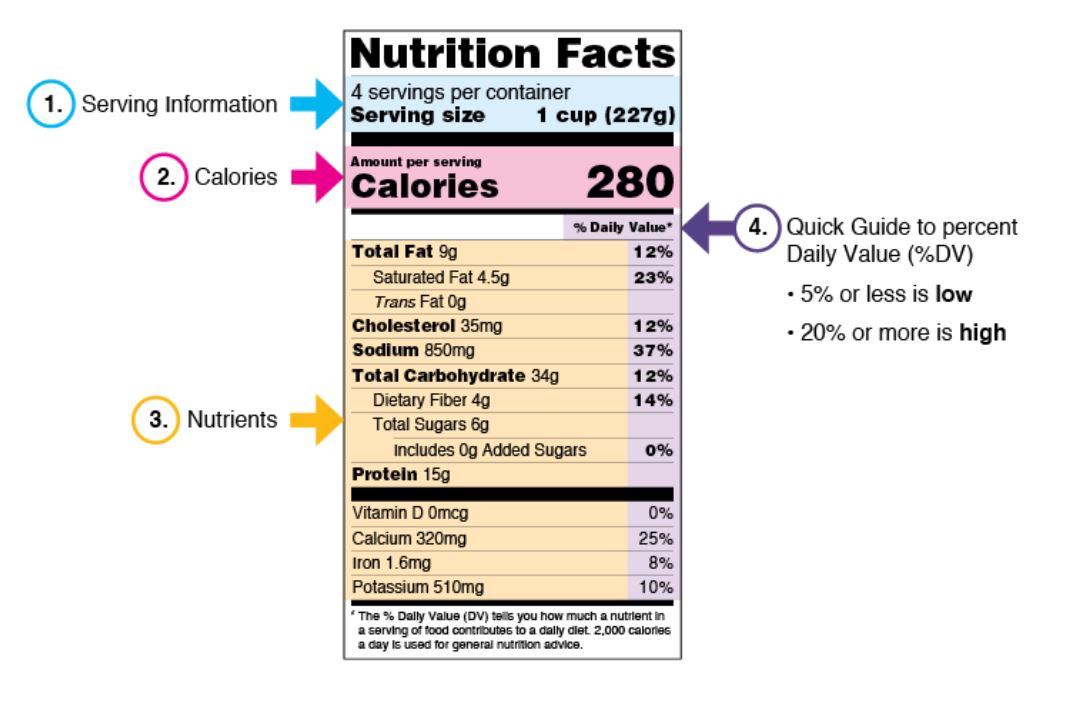
Saturated fat

Some types of fat—like liquid olive oil, canola oil, or other vegetable oils—can be healthy in small amounts. However, saturated fats are not healthy. The Dietary Guidelines for Americans recommend that less than 10% of your daily calories come from saturated fats.1 For example, if you take in 2,000 calories a day, fewer than 200 of those calories should come from saturated fats.

Saturated fat is often solid at room temperature, such as butter and the fat inside or around meat. But some products that are liquid at room temperature, such as coconut oil and whole milk, are also high in saturated fat.

The most common sources of saturated fat include

  • Butter, shortening, lard, some stick margarines, and other fats that are solid at room temperature.
  • Fatty cuts of beef, pork, and lamb.
  • Some processed luncheon meats, including regular bologna, hot dogs, salami, and bacon.
  • Cheese and other dairy products made from whole milk, such as ice cream and cream.
  • Baked goods, including many kinds of doughnuts, cakes, cookies, and other pastries.

Learn how to cut down on saturated fat and still enjoy the foods you love. Here are a few tips for limiting saturated fat in the foods and beverages you consume

  • Cut back on dessert and sweet snacks by choosing smaller portion sizes and eating these foods less often.
  • Read food labels to check for saturated fat content and choose options low in saturated fat.
  • Choose fat-free or low-fat milk instead of 2% or whole milk, and lean meat and lower-fat cheese rather than high-fat meats and regular cheese.
  • Choose products made with healthier dietary fats external link—such as oils made from nuts, seeds, olives, or avocados—rather than butter, shortening, or coconut or palm oils.

Sodium

Your body needs a small amount of sodium each day, but most Americans consume too much. Many snacks, desserts, and meals such as pizza are very high in sodium. Consuming too much sodium can raise your risk of developing high blood pressure, which is unhealthy for your heart and your body in general.

Teens should try to consume less than 2,300 mg of sodium per day, which is just 1 teaspoon of table salt. This amount includes the salt in ready-to-eat food and also the salt you add when cooking or eating your food.

Physical activity should be part of your daily life, whether you play sports, take physical education (P.E.) classes in school, do chores, or get around by biking or public transportation. Taking a walk can be great for your health, if you are able to do so safely. The benefits of regular physical activity can include5

  • Improved health.
  • Stronger bones and muscles.
  • Reaching and maintaining a healthy weight.
  • Better thinking, mood, and school performance.
  • Lower risk of developing many health problems, including obesity, diabetes, and heart disease.

Current physical activity guidelines recommend teens do at least 60 minutes (1 hour) of physical activity every day, including5

  • Aerobic activities on most days, which can be either moderate- or vigorous-intensity aerobic physical activities External link, such as jogging, biking, or dancing.
  • Activities that strengthen your muscles, such as weightlifting or push-ups, at least 3 days a week.
  • Activities that strengthen your bones, such as jumping rope or playing basketball, at least 3 days a week.

You don’t have to do your 60 minutes of activity all at once.

  • In the morning, try walking to the bus stop or to school.
  • At school, try being active with friends in P.E. classes, sports, or other activities.
  • After school, try joining a sports team or taking your dog for a walk.

How can I add more physical activity to my day?

Spend time away from your phone and other screens

Teens spend much of their day sitting down in classes or doing homework. Spending time on your smartphone, on the couch watching TV, or playing video games can add even more hours of inactivity to your day. Try to limit your screen time to less than 2 hours each day, not counting time spent on your homework or your job after school.

Be active with friends and family members

Being active can be more fun with friends and family members.

  • Join a sports team or dance club to be more active and make new friends.
  • Challenge your friends and family members to be healthy with you. When your loved ones are available, sign up for activities together, like charity walks, fun runs, or scavenger hunts.
  • Do activities that get you moving, like walking around a park or in your neighborhood.
  • Have fun outdoors playing basketball, soccer, or flag football.

Try free or low-cost options

You don’t need money or expensive equipment to stay active.

  • You can run and use free community facilities, like school tracks and basketball courts.
  • If you want to play a sport or game that requires equipment, check with your neighbors or friends at school to see if you can borrow or share supplies.
  • If you are interested in joining a sports team, ask your school guidance counselor or a P.E. teacher or coach about costs. They may know if your school waives or reduces fees, or if you could apply for a scholarship for certain activities.
  • Look for dance and other fitness and exercise videos at your local library, online, on social media, or on some TV channels. If you have a gaming system, check out active sports games.

Keep moving

Routine chores, like cleaning your room or taking out the trash, may not get your heart rate up the way biking and running do, but they keep you moving. Fitness apps that you can download onto your computer, smartphone, or other mobile device can help you keep track of how active you are each day.


Like healthy eating and getting enough physical activity, getting enough sleep external link is essential to your physical and mental health. You need to get enough sleep to do well at school and work, drive safely, and fight off infection. Not getting enough sleep may also affect your mood and ability to make decisions, and lead to gaining excess weight.6

Teens should aim for 8 to 10 hours of sleep each night.7 Sometimes it’s hard to get enough sleep, especially if you have a job, help take care of younger brothers or sisters, have limited space and share a bedroom with others, or are busy with other activities after school. Developing healthy sleeping habits external link can help. If you can, try to

  • Go to bed and wake up at the same time every day.
  • Spend time outside every day.
  • Avoid heavy meals within a few hours of bedtime.
  • Avoid watching TV or using your computer or smartphone 1 hour before bedtime.


Young people grow at different rates, so it’s not always easy to tell if a teen has overweight or obesity. If you are worried about your weight, talk with a health care professional. If you don’t have a health care professional you see regularly, ask your parents or guardian to help you find one and make an appointment.

To find out if you are at a healthy weight, a health care professional will consider many factors, such as

  • Your overall health.
  • How fast you are growing
  • whether you have any weight-related health problems.
  • Your body mass index (BMI), a measurement based on your height and weight that can help estimate your weight status.

This online tool External link from the Centers for Disease Control and Prevention lets you calculate your BMI and BMI-for-age percentile, which compares your BMI with growth charts for teens based on your age and sex.

How can I lose weight safely?

If your health care professional advises you to lose weight, work together to develop a plan for reaching and staying at a healthy weight. Depending on your age and how fast you are growing, you may not need to lose weight—only gain weight more slowly. Your health care professional or a specialist in weight loss or healthy eating—such as a registered dietitian—can help you develop a healthy eating plan tailored to your needs and preferences. If you have a lot of excess weight, or if you have health problems because of your weight, your health care professional may also talk with you about additional options for losing weight, such as weight-loss medicines and weight-loss surgery.

Avoid unhealthy approaches

Weight loss is a popular topic. But some methods you may hear about can be harmful if you try them on your own—without being supervised by a health care professional.

During your teen years, your body needs energy, vitamins, and minerals to grow and work properly. Don’t try to lose weight by

  • Eating very little.
  • Cutting out whole groups of foods, like foods with carbohydrates, or “carbs”.
  • Skipping meals.
  • Fasting, which means not eating anything for a certain period of time.

Some approaches to losing weight can lead to a cycle of eating too little and then eating too much because you get too hungry. These methods can also affect your mood and how you grow.

Other unhealthy approaches to weight loss include

  • Making yourself vomit or using laxatives to lose weight, which could harm your health and contribute to an eating disorder external link. If you have been trying to lose weight using either of these approaches, talk with your health care professional or another trusted adult right away.
  • Smoking cigarettes, which is highly addictive and raises your risk for developing many problems. If you smoke or use other tobacco products, stop. Ask for help so you don’t have to do it alone. 

Changing your habits can be challenging. And developing new habits takes time. Use the tips below to stay motivated and meet your goals. You can do it!

Make changes slowly

Don’t expect to change your eating, drinking, physical activity, or sleeping habits overnight. Changing too much too fast may limit your chances of success.

Figure out what’s holding you back

Are unhealthy snack foods at home tempting you? Are the foods and beverages you’re choosing at your school cafeteria or job too high in sodium, saturated fats, and added sugars? Do you overeat to help manage stress related to your family or your future? How can you change these habits?

Set a few realistic goals

If you drink sugar-sweetened beverages every day, try replacing some of them with water. Once you are drinking fewer of these beverages for a while, try cutting out all of them. Then set another goal, like getting more physical activity each day. Once you have reached one goal, add another.

Get help from friends and family

Get a friend at school, someone at home, or a coworker at your job to support your new habits. Ask a friend, brother or sister, parent, guardian, or coworker to help you make changes and stick with your new habits.

[1] US Department of Agriculture and US Department of Health and Human Services. Dietary Guidelines for Americans, 2020–2025. 9th ed. December 2020. Accessed May 10, 2022.
www.dietaryguidelines.gov External link

[2] Vegetables. MyPlate. US Department of Agriculture. Accessed May 23, 2022.
www.myplate.gov/eat-healthy/vegetables External link

[3] Fruits. MyPlate. US Department of Agriculture. Accessed May 23, 2022.
www.myplate.gov/eat-healthy/fruits External link

[4] Dairy. MyPlate. US Department of Agriculture. Accessed May 23, 2022.
www.myplate.gov/eat-healthy/dairy External link

[5] US Department of Health and Human Services, Office of Disease Prevention and Health Promotion. Physical Activity Guidelines for Americans. 2nd ed. US Department of Health and Human Services; 2018. Accessed May 23, 2022. https://health.gov/our-work/nutrition-physical-activity/physical-activity-guidelines/current-guidelines External link

[6] Illingworth G. The challenges of adolescent sleep. Interface Focus. 2020;10(3):1–8. doi:10.1098/rsfs.2019.0080

[7] Hirshkowitz M, Whiton K, Albert SM, et al. National Sleep Foundation’s updated sleep duration recommendations: final report. Sleep Health. 2015;1(4):233–243. doi:10.1016/j.sleh.2015.10.004

[8] Fryar CD, Carroll MD, Afful J. Prevalence of overweight, obesity, and severe obesity among children and adolescents aged 2–19 years: United States, 1963–1965 through 2017–2018. NCHS Health E-Stats. Centers for Disease Control and Prevention; 2020. www.cdc.gov/nchs/data/hestat/obesity-child-17-18/overweight-obesity-child-H.pdf External link(PDF, 352 KB) 

[9] Drozdz D, Alvarez-Pitti J, Wójcik M, et al. Obesity and cardiometabolic risk factors: from childhood to adulthood. Nutrients. 2021;13(11):1–20. doi:10.3390/nu13114176

[10] Reinehr T. Long-term effects of adolescent obesity: time to act. National Reviews Endocrinology. 2018;14(3):183–188. doi:10.1038/nrendo.2017.147

Related Topics

Other Specialities

Stay away from bad habbits

Children Health

As children grow into teenagers, their bodies and minds go through many changes. Each stage brings new health needs from nutrition and sleep to emotional well-being and development.

Book your appointment TODAY!

Search on the closest Doctor to your location and book based on specialty. EARN 10 POINTS more with CuraPOINT.

BOOK
Edit Template