

Hyperthyroidism
- Home
- Endocrine System
- Hyperthyroidism
Hyperthyroidism, or overactive thyroid, happens when your thyroid gland makes more thyroid hormones than your body needs.
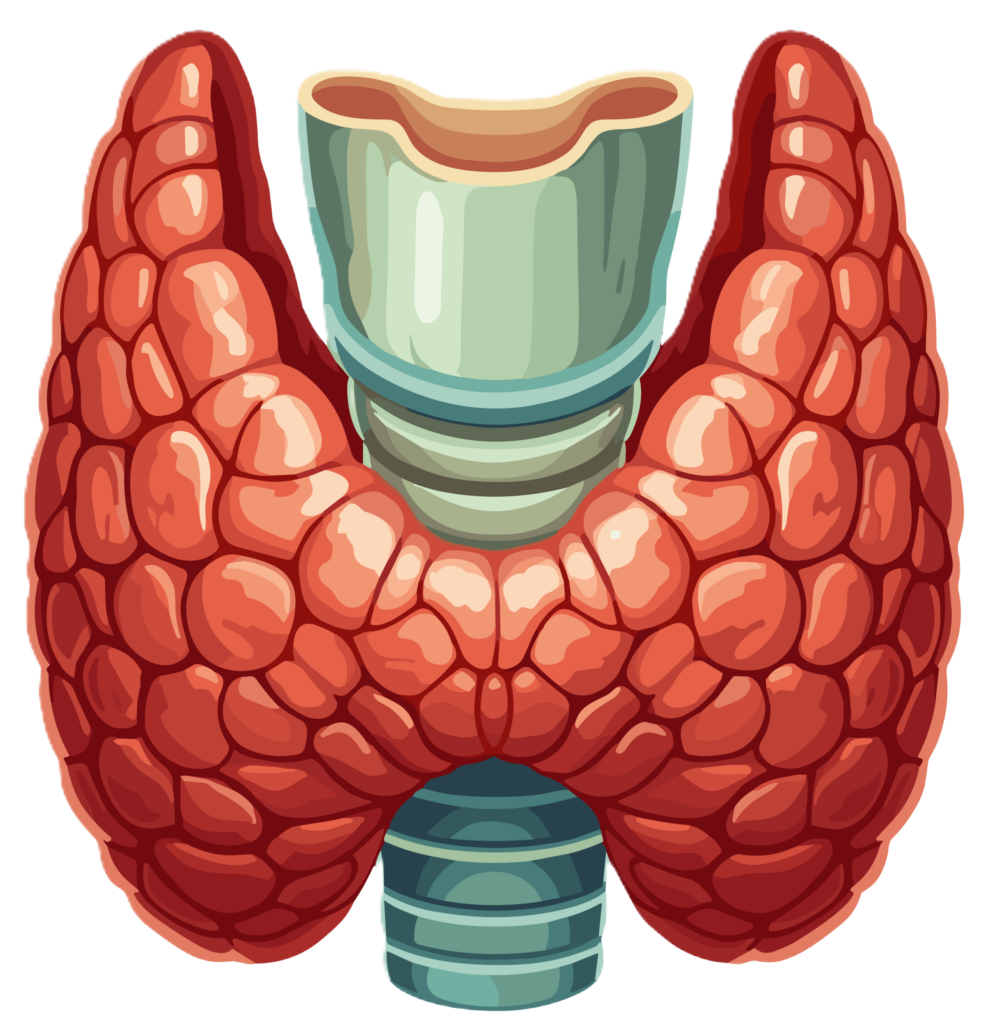
Your thyroid is a small, butterfly-shaped gland in the front of your neck. It makes hormones that control the way the body uses energy. These hormones affect nearly every organ in your body and control many of your body’s most important functions. For example, they affect your breathing, heart rate, weight, digestion, and moods. If not treated, hyperthyroidism can cause serious problems with your heart, bones, muscles, menstrual cycle, and fertility. But there are treatments that can help.
Hyperthyroidism has several causes. They include:
- Graves’ disease, an autoimmune disorder in which your immune system attacks your thyroid and causes it to make too much hormone. This is the most common cause.
- Thyroid nodules, which are growths on your thyroid. They are usually benign (not cancer). But they may become overactive and make too much thyroid hormone. Thyroid nodules are more common in older adults.
- Thyroiditis, inflammation of the thyroid. It causes stored thyroid hormone to leak out of your thyroid gland.
- Too much iodine. Iodine is found in some medicines, cough syrups, seaweed and seaweed-based supplements. Taking too much of them can cause your thyroid to make too much thyroid hormone.
- Too much thyroid medicine. This can happen if people who take thyroid hormone medicine for hypothyroidism (underactive thyroid) take too much of it.
The symptoms of hyperthyroidism can vary from person to person and may include:
- Nervousness or irritability
- Fatigue
- Muscle weakness
- Trouble tolerating heat
- Trouble sleeping
- Tremor, usually in your hands
- Rapid and irregular heartbeat
- Frequent bowel movements or diarrhea
- Weight loss
- Mood swings
- Goiter, an enlarged thyroid that may cause your neck to look swollen. Sometimes it can cause trouble with breathing or swallowing.
Adults over age 60 may have different symptoms than younger adults. For example, they may lose their appetite or withdraw from other people. Sometimes this can be mistaken for depression or dementia.
You are at higher risk for hyperthyroidism if you:
- Are a woman?
- Are older than age 60?
- Have been pregnant or had a baby within the past 6 months?
- Have had thyroid surgery or a thyroid problem, such as goiter?
- Have a family history of thyroid disease?
- Have pernicious anemia, in which the body cannot make enough healthy red blood cells because it does not have enough vitamin B12?
- Have type 1 diabetes or primary adrenal insufficiency, a hormonal disorder?
- Get too much iodine, from eating large amounts of foods containing iodine or using iodine-containing medicines or supplements?
- Medicines
- Radioiodine therapy
- Surgery
- Antithyroid medicines, which cause your thyroid to make less thyroid hormone. You probably need to take the medicines for 1 to 2 years. In some cases, you might need to take the medicines for several years. This is the simplest treatment, but it is often not a permanent cure.
- Beta blocker medicines, which can reduce symptoms such as tremors, rapid heartbeat, and nervousness. They work quickly and can help you feel better until other treatments take effect.
is a common and effective treatment for hyperthyroidism. It involves taking radioactive iodine by mouth as a capsule or liquid. This slowly destroys the cells of the thyroid gland that produce thyroid hormone. It does not affect other body tissues. Almost everyone who has radioactive iodine treatment later develops hypothyroidism. This is because the thyroid hormone-producing cells have been destroyed. But hypothyroidism is easier to treat and causes fewer long-term health problems than hyperthyroidism.
to remove part or most of the thyroid gland is done in rare cases. It might be an option for people with large goiters or pregnant women who cannot take antithyroid medicines. If you have all of your thyroid removed, you will need to take thyroid medicines for the rest of your life. Some people who have part of their thyroid removed also need to take medicines.
Some people with TBI may have permanent disabilities. A TBI can also put you at risk for other health problems such as anxiety, depression, and post-traumatic stress disorder. Treating these problems can improve your quality of life.
Your health care provider may use many tools to make a diagnosis:
- A medical history, including asking about symptoms
- A physical exam
- Thyroid tests, such as
- TSH, T3, T4, and thyroid antibody blood tests
- Imaging tests, such as a thyroid scan, ultrasound, or radioactive iodine uptake test. A radioactive iodine uptake test measures how much radioactive iodine your thyroid takes up from your blood after you swallow a small amount of it.
If hyperthyroidism isn’t treated, it can cause some serious health problems, including:
- An irregular heartbeat that can lead to blood clots, stroke, heart failure, and other heart problems
- An eye disease called Graves’ ophthalmopathy. It can cause double vision, light sensitivity, and eye pain. In rare cases, it can lead to vision loss.
- Thinning bones and osteoporosis
- Fertility problems in women
- Complications in pregnancy, such as premature birth, low birth weight, high blood pressure in pregnancy, and miscarriage
References
Hyperthyroidism – MedlinePlus – https://medlineplus.gov/hyperthyroidism.html

Ad
Women have unique health issues. And some of the health issues that affect both men and women can affect women differently.
Book your appointment TODAY!
Search on the closest Doctor to your location and book based on specialty. EARN 10 POINTS more with CuraPOINT.
BOOK-
Find a healthcare provider near you
-
Call for support
-
Feel free to message us!
About Us
Curafile is a Medical Cyclopedia, biggest Healthcare Curated Network Globally, serves citizens, service providers in one place.
- Estonia - Qatar
Jordan - Saudi Arabia