

Genetic Testing
- Home
- Genetics and Birth Defects
- Genetic Testing
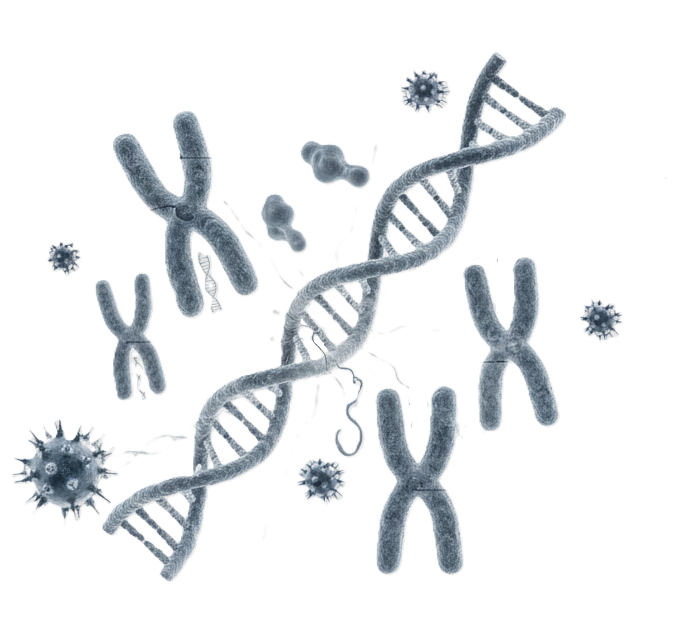
Genetic testing looks for genetic changes, sometimes called mutations or variants, in your DNA. Some genetic changes can cause disease or other health conditions. You inherit your DNA from your parents, so any genetic changes they have can be passed down to you.
Genetic testing can give you information to help guide the decisions you make about the medical care you or your family member receives. For example, genetic testing can provide a diagnosis for a genetic condition such as fragile X syndrome or information about your risk of developing cancer. There are many different kinds of genetic tests. Genetic tests use a blood or spit sample, and results are usually ready in a few weeks.
Because we share DNA with our family members, if testing shows that you have a genetic change, your family members may have the same genetic change. Genetic counseling before genetic testing can help make sure you are the right person in your family to get a genetic test and can help make sure you’re getting the right test. Genetic counseling after genetic testing can help make sure you understand your results.
There are several reasons to consider getting a genetic test, including the following:
- To learn whether you have a genetic condition that runs in your family, before you have symptoms
- To learn whether you could have a child with a genetic condition
- To diagnose a genetic condition if you or your child has symptoms
- To understand and guide your cancer prevention or treatment plan
After learning more about genetic testing, you can decide if it’s right for you.
There are many different kinds of genetic tests. There is no single genetic test that can detect all genetic conditions. Your healthcare provider can help you decide what genetic test is right for you based on your medical and family history and the condition for which you’re being tested.
- Single gene testing
- Genetic testing panels
- Large-scale genomic testing
-
Clinical versus direct-to-consumer
genetic tests
Single gene tests look for genetic changes in only one gene. Your healthcare provider might recommend single gene testing if you or your child have symptoms of a specific condition or syndrome that is usually or always caused by changes in the same gene. Examples include Duchenne muscular dystrophy and sickle cell disease. If there is a known genetic change (mutation) in your family, your healthcare provider might recommend single gene testing to check for that change.
Genetic testing panels look for genetic changes in many genes in the same test. Your healthcare provider might recommend a genetic testing panel if you or your child have symptoms of a disease or condition that can be caused by genetic changes in many different genes. Examples include primary immunodeficiency, cerebral palsy, and epilepsy. Your healthcare provider might also recommend a genetic testing panel to check for genetic changes that make you more likely to develop a disease such as breast cancer or colorectal (colon) cancer, especially if the disease runs in your family but a specific genetic change that might be causing the disease in family members has not yet been identified.
There are two different kinds of large-scale genomic tests, which look for genetic changes throughout a person’s DNA:
- Exome sequencing looks at all the genes in the DNA (whole exome) or just the genes that are related to medical conditions (clinical exome).
- Whole genome sequencing is the largest genetic test and looks at all of a person’s DNA, not just the genes.
Your healthcare provider might recommend exome sequencing or whole genome sequencing if you or your child has a complex medical condition, or if other testing has not found a genetic cause for a disease or condition. For example, your healthcare provider might recommend whole genome sequencing if you have a rare disorder that appears to have a genetic cause, but none has been found using other tests. If your child has autism spectrum disorder, your healthcare provider might recommend whole exome sequencing if other testing does not find a cause.
Large-scale genetic tests can have findings unrelated to why the test was ordered in the first place. These are called secondary findings, and they can include genetic changes related to adult-onset conditions in children. For example, a child may have exome or genome sequencing to provide a genetic diagnosis for autism spectrum disorder, and a secondary finding is that they have a genetic change that makes them more likely to develop breast cancer as an adult.
Clinical genetic tests are different from direct-to-consumer (DTC) genetic tests. Your healthcare provider orders clinical genetic tests for a specific medical reason—you cannot order them on your own. In contrast, you can buy DTC tests online or in a store, for example, to learn more about your ancestry. DTC test results can be used to make decisions about lifestyle choices or identify issues to discuss with your healthcare provider. However, DTC tests cannot determine for certain whether or not you will get a disease. Nor should these tests be used alone to make decisions about your treatment or medical care or in place of clinical genetic testing.
To prevent FASDs, a woman should avoid alcohol if she is pregnant or might be pregnant. This is because a woman could get pregnant and not know for up to 4 to 6 weeks.
It is never too late to stop alcohol use during pregnancy. Because brain growth takes place throughout pregnancy, stopping alcohol use will improve the baby’s health and well-being.
Different FASD diagnoses are based on particular symptoms and include:
Fetal alcohol syndrome (FAS): FAS represents the most involved end of the FASD spectrum. People with FAS have central nervous system (CNS) problems, minor facial features, and growth problems. People with FAS can have problems with learning, memory, attention span, communication, vision, or hearing. They might have a mix of these problems. People with FAS often have a hard time in school and trouble getting along with others.
Partial fetal alcohol syndrome (pFAS): When a person does not meet the full diagnostic criteria for FAS but has a history of prenatal alcohol exposure and some of the facial features, as well as a growth problem or CNS abnormalities, the person is considered to have pFAS.
Alcohol-related neurodevelopmental disorder (ARND): People with ARND might have intellectual disabilities and problems with behavior and learning. They might do poorly in school and have difficulties with math, memory, attention, judgment, and poor impulse control.
Alcohol-related birth defects (ARBD): People with ARBD might have problems with the heart, kidneys, or bones or with hearing. They might have a mix of these.
Neurobehavioral disorder associated with prenatal alcohol exposure (ND-PAE): A child or youth with ND-PAE will have problems in three areas: (1) thinking and memory, where the child may have trouble planning or may forget material he or she has already learned, (2) behavior problems, such as severe tantrums, mood issues (for example, irritability), and difficulty shifting attention from one task to another, and (3) trouble with day-to-day living, which can include problems with bathing, dressing for the weather, and playing with other children. In addition, to be diagnosed with ND-PAE, the mother of the child must have consumed more than minimal levels of alcohol before the child’s birth (defined as more than 13 alcoholic drinks per month of pregnancy or more than 2 alcoholic drinks in one sitting). ND-PAE was introduced into the Diagnostic and Statistical Manual of Mental Disorders-Fifth Edition (DSM-5) in 2013 as a condition for further study and a specifier for intellectual disability.
Areas evaluated for FASD diagnoses
The term FASDs is not meant for use as a clinical diagnosis. If your child is diagnosed with an FASD, the diagnosis will be for a specific condition under the umbrella of FASDs, as listed above.
Diagnosing FASDs can be hard because there is no medical test, like a blood test, for these conditions. And other disorders, such as ADHD (attention-deficit/hyperactivity disorder) and Williams syndrome, have some symptoms like FAS.
To diagnose FASDs, healthcare providers look for:
- Prenatal alcohol exposure, although confirmation is not required for diagnosis
- Central nervous system problems (e.g., small head size, problems with attention and hyperactivity, poor coordination)
- Lower-than-average height, weight, or both
- Abnormal facial features (e.g., smooth ridge between nose and upper lip)
References
About Fetal Alcohol Spectrum Disorders (FASDs) – CDC – https://www.cdc.gov/fasd/about/

Ad
Women have unique health issues. And some of the health issues that affect both men and women can affect women differently.
Book your appointment TODAY!
Search on the closest Doctor to your location and book based on specialty. EARN 10 POINTS more with CuraPOINT.
BOOK-
Find a healthcare provider near you
-
Call for support
-
Feel free to message us!
About Us
Curafile is a Medical Cyclopedia, biggest Healthcare Curated Network Globally, serves citizens, service providers in one place.
- Estonia - Qatar
Jordan - Saudi Arabia