

Huntington Disease
- Home
- Brain and Nerves
- Huntington Disease
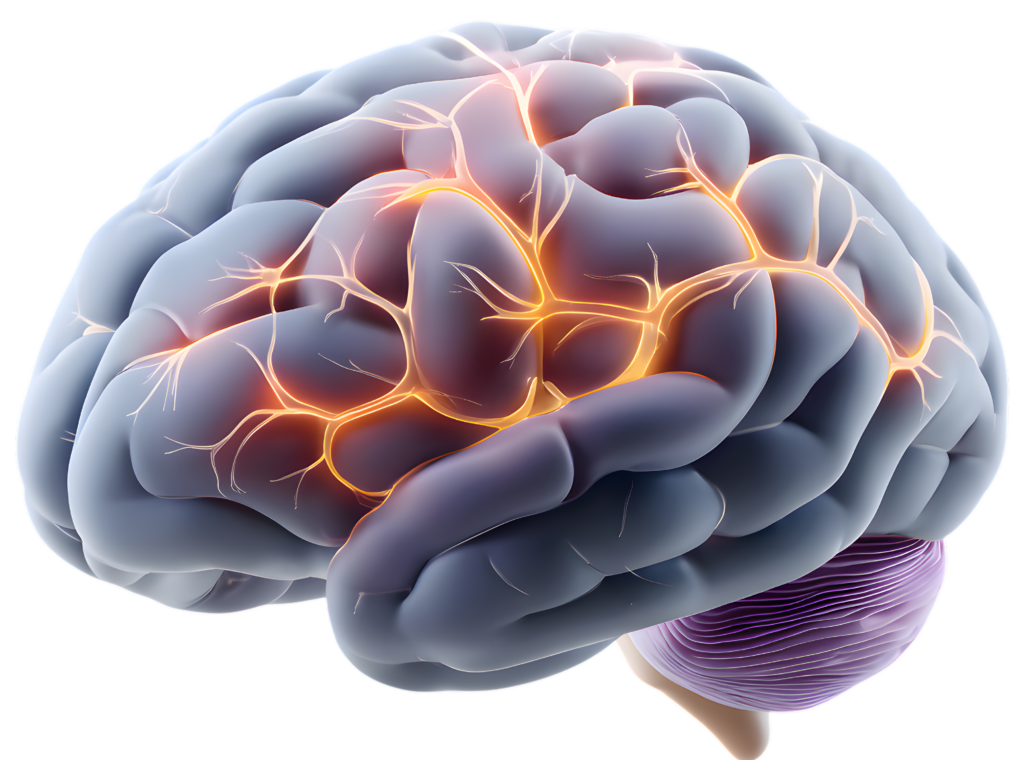
Huntington disease (HD) is a genetic disorder in which nerve cells in certain parts of the brain waste away, or degenerate. The disease is passed down through families.
HD is caused by a genetic variant on chromosome 4. The variant causes a part of your DNA to occur many more times than it is supposed to. This variant is called a CAG repeat. Normally, this section of DNA is repeated 10 to 28 times. But in people with HD, it is repeated 36 to 120 times.
As the gene is passed down through families, the number of repeats tends to get larger. The larger the number of repeats, the higher a person’s chance of developing symptoms at an earlier age. Therefore, as the disease is passed along in families, symptoms develop at younger and younger ages.
There are two forms of HD:
- Adult-onset is the most common. Persons with this form usually develop symptoms in their mid-30s or 40s.
- Early-onset affects a small number of people and begins in childhood or the teens.
If one of your parents has HD, you have a 50% chance of getting the gene. If you get the gene from one of your parents, you can pass it on to your children, who will also have a 50% chance of getting the gene. If you do not get the gene from your parents, you cannot pass the gene on to your children.
-
Abnormal behaviors may occur
before movement problems develop,
and can include: -
Abnormal and unusual movements
include: -
Dementia that slowly gets worse,
including: -
Additional symptoms that may be
associated with this disease include: - Symptoms in children:
- Behavioral disturbances
- Hallucinations
- Irritability
- Moodiness
- Restlessness or fidgeting
- Paranoia
- Psychosis
- Facial movements, including grimaces
- Head turning to shift eye position
- Quick, sudden, sometimes wild jerking movements of the arms, legs, face, and other body parts
- Slow, uncontrolled movements
- Unsteady gait, including “prancing” and a wide walk (also called a wide-based gait)
- Disorientation or confusion
- Loss of judgment
- Loss of memory
- Personality changes
- Speech changes, such as pauses while talking
- Rigidity
- Slow movements
- Tremor
With SMA, the nerves that control feeling (sensory nerves) are not affected. So, a person with the disease can feel things normally.
Your health care provider will perform a physical exam and may ask about your family history and symptoms. An exam of the nervous system will also be done.
Other tests that may show signs of HD include:
- Psychological testing
- Head CT or MRI scan
- PET (isotope) scan of the brain
Genetic testing is available to determine whether a person carries the gene for HD.
There is no cure for HD. There is no known way to stop the disease from getting worse. The goal of treatment is to slow the symptoms and help the person function for as long as possible.
Medicines can be prescribed, depending on the symptoms.
- Dopamine blockers may help reduce abnormal behaviors and movements.
- Medicines such as amantadine and tetrabenazine are used to try to control extra movements.
Depression and suicide are common among persons with HD. People with HD are prone to behavioral problems including aggressive behavior.
It is important for caregivers to monitor for symptoms and seek medical help for the person right away. Behavioral medicine specialists can help affected people cope.
As the disease progresses, the person will need assistance and supervision, and may eventually need 24-hour care.
Genetic counseling is very important for discussing prognosis and family planning.
HD causes disability that gets worse over time. People with HD usually die within 15 to 20 years. The cause of death is often infection. Suicide is also common.
It is important to realize that HD affects people differently. The number of CAG repeats may determine the severity of symptoms. People with few repeats may have mild abnormal movements later in life and slow disease progression. Those with a large number of repeats may be severely affected at a young age.
Contact your provider if you or a family member develops symptoms of HD.
You can also call 911 or the local emergency number or go to the hospital emergency room. DO NOT delay.
If someone you know has attempted suicide, call 911 or the local emergency number right away. DO NOT leave the person alone, even after you have called for help.
Genetic counseling is advised if there is a family history of HD. Experts also recommend genetic counseling for couples with a family history of this disease who are considering having children.
Huntington chorea; Huntington’s disease
References
Caron NS, Wright GEB, Hayden MR. Huntington disease. In: Adam MP, Ardinger HH, Pagon RA, et al, eds. GeneReviews. Seattle, WA: University of Washington. www.ncbi.nlm.nih.gov/books/NBK1305/. Updated June 11, 2020. Accessed April 25, 2025.
Jankovic J, Lang AE. Diagnosis and assessment of Parkinson disease and other movement disorders. In: Jankovic J, Mazziotta JC, Pomeroy SL, Newman NJ, eds. Bradley’s and Daroff’s Neurology in Clinical Practice. 8th ed. Philadelphia, PA: Elsevier; 2022:chap 24.
Okun MS, Ostrem JL. Other movement disorders. In: Goldman L, Cooney KA, eds. Goldman-Cecil Medicine. 27th ed. Philadelphia, PA: Elsevier; 2024:chap 379.
Paulsen JS, Gehl C. Neuropsychology. In: Jankovic J, Mazziotta JC, Pomeroy SL, Newman NJ, eds. Bradley’s and Daroff’s Neurology in Clinical Practice. 8th ed. Philadelphia, PA: Elsevier; 2022:chap 44.

Ad
Women have unique health issues. And some of the health issues that affect both men and women can affect women differently.
Book your appointment TODAY!
Search on the closest Doctor to your location and book based on specialty. EARN 10 POINTS more with CuraPOINT.
BOOK-
Find a healthcare provider near you
-
Call for support
-
Feel free to message us!
About Us
Curafile is a Medical Cyclopedia, biggest Healthcare Curated Network Globally, serves citizens, service providers in one place.
- Estonia - Qatar
Jordan - Saudi Arabia