

Wegener’s Granulomatosis
- Home
- Immune System
- Wegener’s Granulomatosis
Granulomatosis with polyangiitis (GPA) is a rare disease that causes swelling, also called inflammation, of small blood vessels. This condition mainly affects blood vessels in the nose, sinuses, throat, lungs and kidneys. But it can affect any organ.
GPA used to be called Wegener granulomatosis. It’s one of a group of blood vessel diseases called vasculitis. GPA slows blood flow to some organs. The affected tissues can develop inflamed areas called granulomas. Granulomas can damage these organs and affect how they work.
Symptoms of GPA vary. At first, the symptoms can seem like those of a cold. Other symptoms depend on which organs the disease affects. The cause of GPA isn’t clear, but the immune system may play a role.
It’s important for healthcare professionals to find and treat GPA as soon as possible. Early treatment can help people live full lives. Without treatment, the condition can lead to organ damage that sometimes is fatal.
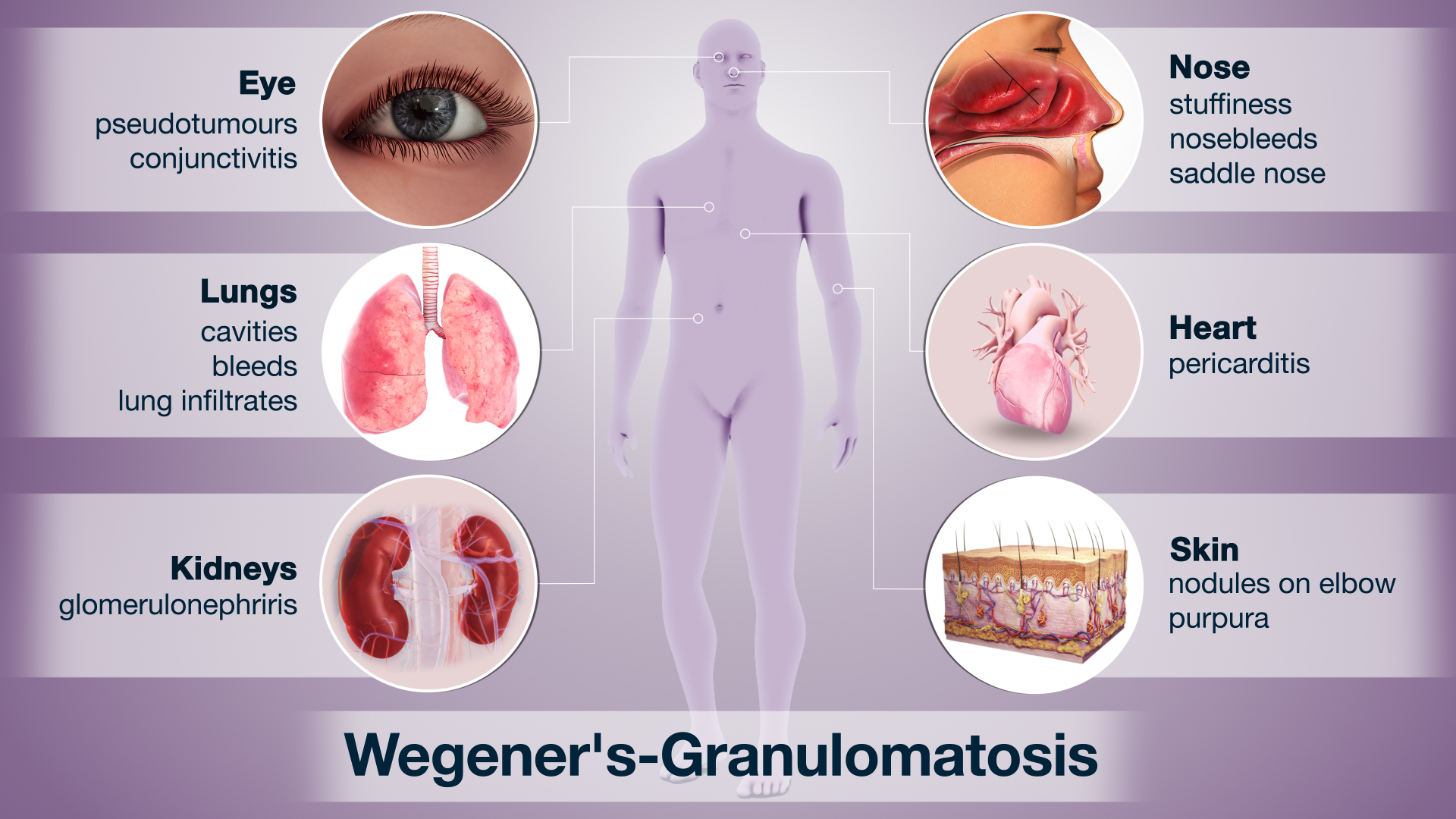
The exact cause of granulomatosis with polyangiitis (GPA) isn’t clear. The immune system may play a role. Some white blood cells may not function as they should, and they may be involved in the disease. The immune system makes proteins called antibodies that protect the body from germs such as viruses and bacteria. GPA has been linked with the presence of certain antibodies that attack healthy cells by mistake.
The condition can lead to inflamed, narrowed blood vessels and harmful, inflamed tissue masses called granulomas. Granulomas can destroy healthy tissue. And narrowed blood vessels lower the amount of blood and oxygen that reaches tissues and organs.
GPA doesn’t spread from person to person. And it likely doesn’t pass from parents to children through genes.
Symptoms of granulomatosis with polyangiitis (GPA) can vary widely from person to person. Symptoms can start quickly, or they can develop over months.
Early on, GPA can cause general symptoms such as:
- Fever.
- Tiredness and not feeling well, also called malaise.
- Weight loss without a clear reason for it.
- Muscle aches and pain.
- Joint stiffness.
Specific symptoms depend on what parts of the body GPA affects.
Ear, nose and throat symptoms
If GPA affects the ears, nose or throat, symptoms can include:
- Pus-like drainage with crusts from the nose.
- Sores in the nose or mouth.
- Stuffiness.
- Sinus infections.
- Nosebleeds.
- Earaches or fluid that drains from the ear.
- Inflammation of the cartilage of the ears or bridge of the nose.
Lung and windpipe symptoms
If GPA affects the lungs or windpipe, symptoms can include:
- Coughing, sometimes with bloody phlegm.
- Shortness of breath or wheezing.
- A high-pitched breathing sound called stridor.
- Hoarse voice.
For some people, the disease affects only the lungs. Without treatment, GPA can lead to lung bleeding and scarring over time.
Kidney symptoms
If GPA affects the kidneys, you might not have symptoms. Or you might have symptoms such as:
- High blood pressure.
- Leg swelling.
- Blood in the urine.
Eye symptoms
If GPA affects the eyes, symptoms can include:
- Eye redness.
- Eye burning or pain.
- Feeling of something being stuck in the eye.
- Blurry vision or double vision.
- Bulging of the eyes.
- Swelling of the eyelids.
Other symptoms
Other symptoms of GPA can include:
- Loss of feeling, tingling, or deep aching in the limbs, fingers or toes due to nerve damage.
- Skin rashes such as purple patches or spots that may be harder to see on Black or brown skin.
- Digestive issues including stomach pain, diarrhea and bloody stool.
GPA symptoms can seem like those of some other health conditions. Early symptoms may feel like a cold or flu and can last for weeks or longer. See your healthcare professional if you have a runny nose that doesn’t get better with cold medicines. Be sure to get a healthcare checkup if you have a runny nose along with:
- Nosebleeds and pus-like fluid.
- Bloody cough.
- Any other symptoms of granulomatosis with polyangiitis.
The disease can become worse quickly. Without treatment, it can lead to other serious health conditions called complications. That’s why it’s important for a healthcare professional to find it and start treatment early.
Age is a risk factor for granulomatosis with polyangiitis. Most often, the disease affects people between the ages of 40 and 65. But it can happen at any age.
Granulomatosis with polyangiitis (GPA) can lead to other health conditions called complications. The complications depend on which organs or body parts the disease affects. They can include:
- Hearing loss.
- A loss of height in the bridge of the nose caused by weakened cartilage.
- Skin sores or scarring.
- Kidney damage or kidney failure.
- Bleeding and scarring of the lungs.
- A blood clot that forms in one or more deep veins, usually in the leg.
- Heart conditions such as swelling of the sac that surrounds the heart.
- Rarely, stroke or vision loss.
References
- AskMayoExpert. Granulomatosis with polyangiitis (GPA) (adult). Mayo Clinic; 2023.
- Granulomatosis with polyangiitis (GPA). National Health Service. https://www.nhs.uk/conditions/granulomatosis-with-polyangiitis/. Accessed June 3, 2024.
- Granulomatosis with polyangiitis (Wegener’s). Vasculitis Foundation. https://www.vasculitisfoundation.org/education/vasculitis-types/granulomatosis-with-polyangiitis/. Accessed June 3, 2024.
- Falk RJ, et al. Granulomatosis with polyangiitis and microscopic polyangiitis: Clinical manifestations and diagnosis. https://www.uptodate.com/contents/search. Accessed June 3, 2024.
- Granulomatosis with polyangiitis (GPA). Merck Manual Professional Version. https://www.merckmanuals.com/professional/musculoskeletal-and-connective-tissue-disorders/vasculitis/granulomatosis-with-polyangiitis-gpa. Accessed June 3, 2024.
- Granulomatosis with polyangiitis. Arthritis Foundation. https://www.arthritis.org/diseases/granulomatosis-with-polyangiitis. Accessed June 4, 2024.


Ad
Women have unique health issues. And some of the health issues that affect both men and women can affect women differently.
Book your appointment TODAY!
Search on the closest Doctor to your location and book based on specialty. EARN 10 POINTS more with CuraPOINT.
BOOK-
Find a healthcare provider near you
-
Call for support
-
Feel free to message us!
About Us
Curafile is a Medical Cyclopedia, biggest Healthcare Curated Network Globally, serves citizens, service providers in one place.
- Estonia - Qatar
Jordan - Saudi Arabia