

Kidney Failure
- Home
- Kidneys and Urinary System
- Kidney Failure
Kidney failure (renal failure) means one or both of your kidneys no longer function well on their own. Kidney failure is sometimes temporary and develops quickly (acute kidney failure). Other times, it’s a long-term condition that slowly gets worse over time (chronic kidney failure).
Kidney failure can worsen to the most severe stage, end-stage kidney disease (ESKD) which is deadly without treatment. If you have end-stage kidney disease, you may survive a few days or weeks without treatment. With the proper treatment, you can have a good quality of life while you manage kidney failure.
- What do the kidneys do?
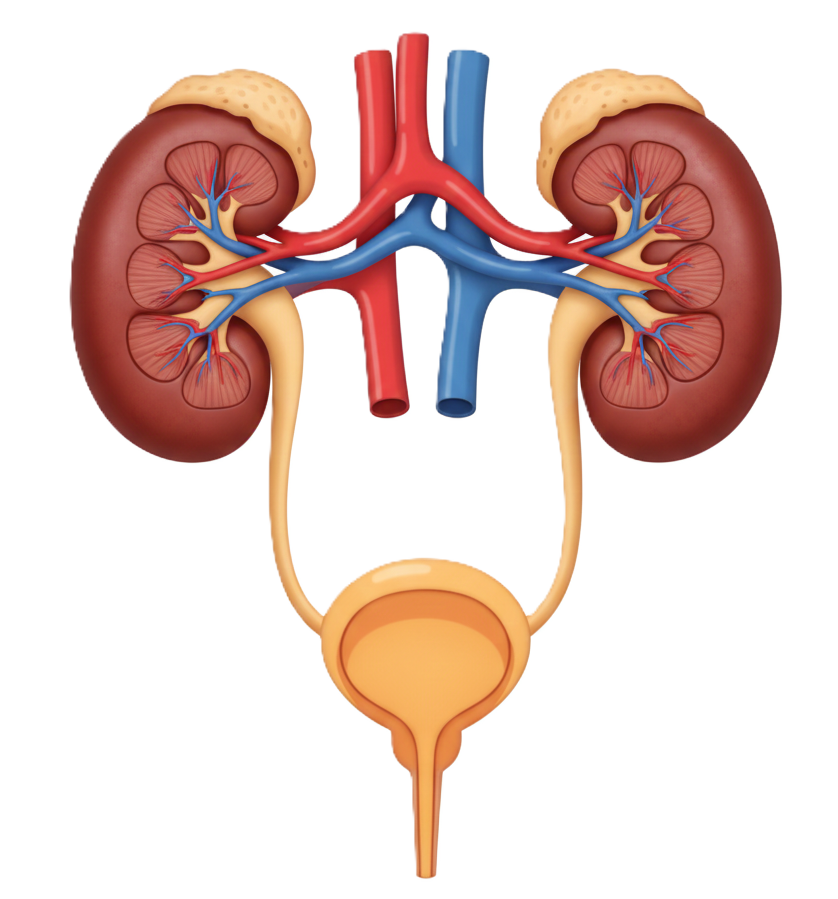
Your kidneys are bean-shaped organs about the size of your fist. They sit under your ribcage, toward your back. Most people have two working kidneys, but you can live well with only one kidney as long as it’s functioning well.
Kidneys have several jobs. One of the most important jobs is helping your body eliminate toxins. Your kidneys filter your blood and send waste products out of your body in urine (pee).
When your kidneys don’t work correctly, waste products build up in your body. If this happens, you’ll feel sick and eventually die without treatment. Many people can manage kidney failure with the proper treatment.
Many people experience few or no symptoms in the early stages of kidney disease. However, chronic kidney disease (CKD) may still cause damage even though you feel fine.
Kidney failure symptoms vary between people. If your kidneys aren’t working properly, you may notice one or more of the following signs:
- Extreme tiredness (fatigue)
- Nausea and vomiting
- Confusion or trouble concentrating
- Swelling (edema), particularly around your hands, ankles or face
- A change in how often you pee
- Cramps (muscle spasms)
- Dry or itchy skin
- Poor appetite, or food may taste metallic
Diabetes and high blood pressure are the most common causes of chronic kidney disease and kidney failure.
Unmanaged diabetes can lead to high blood sugar levels (hyperglycemia). Consistently high blood sugar can damage your kidneys as well as other organs.
High blood pressure means blood travels forcefully through your body’s blood vessels. Over time and without treatment, the extra force can damage your kidneys’ tissue.
Kidney failure usually doesn’t happen quickly. Other causes that may lead to kidney failure include:
- Polycystic kidney disease (PKD). PKD is a condition you inherit from one of your parents that causes fluid-filled sacs (cysts) to grow inside your kidneys.
- Glomerular diseases. Glomerular diseases affect how well your kidneys filter waste.
- Autoimmune kidney diseases. Lupus is an autoimmune disease that can cause organ damage, joint pain, fever and skin rashes.
Kidney failure can also develop quickly because of an unexpected cause. Acute kidney failure (acute kidney injury) is when your kidneys suddenly lose their ability to function. Acute kidney failure may develop within hours or days. It’s often temporary.
Common causes of acute kidney failure include:
- Certain medications
- Severe dehydration
- A urinary tract obstruction
- Untreated systemic diseases, such as heart disease or liver disease
Kidney failure can affect anyone. However, you may be at a higher risk of developing kidney failure if you:
- Have diabetes
- Have high blood pressure (hypertension)
- Have heart disease
- Have a family history of kidney disease
- Have abnormal kidney structure
- Are Black
- Are over 60
- Have a long history of taking pain relievers, including over-the-counter products such as nonsteroidal anti-inflammatory drugs (NSAIDs)
A healthcare provider may use a variety of kidney function tests to evaluate your kidneys and diagnose kidney failure. If the provider suspects you’re at risk of kidney failure, common tests include:
- Blood tests. Blood tests show how well your kidneys remove waste from your blood. A provider will use a thin needle to withdraw a small amount of blood from a vein in your arm. Technicians will then analyze your blood sample at a lab.
- Urine tests. Urine tests measure specific substances in your pee, such as protein or blood. You’ll pee into a special container at a provider’s office or a hospital. Technicians will then analyze your urine sample at a lab.
- Imaging tests. Imaging tests allow a provider to look at your kidneys and the surrounding areas to identify abnormalities or blockages. Common imaging tests include kidney ultrasound, CT urogram and MRI.
Kidney failure treatment depends on the cause and severity of the condition. Healthcare providers can’t cure kidney failure, and the disease is life-threatening. But treatment can help you live longer and manage any symptoms or complications.
If your kidneys gradually stop working, a healthcare provider may use a few different methods to track your health and maintain kidney function as long as possible. These methods may include:
- Regular blood tests
- Blood pressure checks
- Medication
If you’re in end-stage kidney failure, you need treatment to keep you alive. There are two main treatments for kidney failure: dialysis and a kidney transplant.
- Medications for kidney failure
- Dialysis
- Kidney transplant
-
Can you recover from
end-stage kidney failure?
Depending on the cause of your kidney disease, a healthcare provider may prescribe one or more of the following medications:
- Angiotensin-converting enzyme (ACE) inhibitor or angiotensin II receptor blocker (ARB). These medications help lower your blood pressure.
- Diuretics. These help remove extra fluid from your body.
- Statins. These help lower your cholesterol levels.
- Erythropoietin-stimulating agents. These help build red blood cells if you have anemia.
- Vitamin Dand calcitriol. These help prevent bone loss.
- Phosphate binders. These help remove extra phosphorus in your blood.
Dialysis helps your body filter blood. You can think of it as giving your kidneys some relief, so they don’t have to work as hard to do their job. There are two types of dialysis:
- Hemodialysis. In hemodialysis, a machine regularly cleans your blood for you. Most people with kidney failure get hemodialysis three to four days a week at a hospital or dialysis clinic.
- Peritoneal dialysis. In peritoneal dialysis, a provider attaches a bag with a dialysis solution to a catheter in your abdominal lining. The solution flows from the bag into your abdominal lining, absorbs waste products and extra fluids and drains back into the bag. Sometimes, people can receive peritoneal dialysis at home.
A surgeon places a healthy kidney in your body during a kidney transplant to take over for your damaged kidney. The healthy kidney (donor organ) may come from a deceased donor or a living donor. You can live well with one healthy kidney. If you receive a kidney transplant, you’ll be on medications for the rest of your life to prevent any harm to the transplanted kidney.
It depends. With proper treatment, you can continue to live a happy, fulfilling life. But, you can expect to need treatment for the rest of your life. Remember, you can’t reverse kidney disease or kidney failure, you can only slow its progression.
There isn’t a cure for kidney failure. However, with proper diagnosis and treatment, you may still live a long life without drastic changes to your quality of life.
Though kidney failure and CKD aren’t reversible, you can take steps to help preserve your kidney function. Healthy habits and routines may slow down how quickly your kidneys lose their ability to function.
If you have CKD or kidney failure, it’s a good idea to:
- Monitor your kidney function
- Keep your blood sugar levels in the normal range if you have diabetes
- Keep your blood pressure levels in a normal range
- Avoid using tobacco products
- Avoid foods high in potassium and sodium
- Go to every regularly scheduled appointment with your healthcare provider
-
When should I see a
healthcare provider? -
What questions should I ask a
healthcare provider?
Contact a healthcare provider if you have kidney failure risk factors, including:
- High blood pressure
- Changes in your peeing habits
- Brain fog
- Nausea or vomiting
- Diabetes
- A family history of kidney disease
- A past kidney injury
Consider asking your provider the following questions about kidney failure:
- How do you know that I have kidney failure?
- If I don’t have kidney failure, what other condition might I have?
- What’s the cause of my kidney failure?
- Do I need dialysis?
- What kind of dialysis do you recommend?
- Am I a good candidate for a kidney transplant?
- What medications do you recommend?
- Should I make any changes to my diet?
- How often do I need to come in for treatment?
References
- American Kidney Fund. Kidney Failure (ESRD) — Symptoms, Causes and Treatment Options (https://www.kidneyfund.org/all-about-kidneys/kidney-failure-symptoms-and-causes). Last updated 5/2022. Accessed 1/17/2025.
- Bindroo S, Quintanilla Rodriguez BS, Challa HJ. Renal Failure (https://www.ncbi.nlm.nih.gov/books/NBK519012/). 2023 Sep 24. In: StatPearls [Internet]. Treasure Island (FL): StatPearls Publishing; 2025 Jan. Accessed 1/17/2025.
- National Institute of Diabetes and Digestive and Kidney Diseases (U.S.). What is Kidney Failure? (https://www.niddk.nih.gov/health-information/kidney-disease/kidney-failure/what-is-kidney-failure) Last reviewed 1/2018. Accessed 1/17/2025.
- National Kidney Foundation (U.S.). Kidney Failure (https://www.kidney.org/atoz/content/KidneyFailure). Accessed 1/17/2025.

Ad
Women have unique health issues. And some of the health issues that affect both men and women can affect women differently.
Check the latest Healthcare NEWS!
Nothing more important than keeping yourself updated with the latest in Health!
Go to NEWS-
Find a healthcare provider near you
-
Call for support
-
Feel free to message us!
About Us
Curafile is a Medical Cyclopedia, biggest Healthcare Curated Network Globally, serves citizens, service providers in one place.
- Estonia - Qatar
Jordan - Saudi Arabia