

Schizotypal Personality Disorder
- Home
- Mental Health
- Schizotypal Personality Disorder
People with schizotypal personality disorder are often described as odd or eccentric, and they usually have few, if any, close relationships. They generally don’t know how relationships form or how their behavior affects others. They also tend to misinterpret others’ motivations and behaviors and greatly distrust others.
These problems may lead to severe anxiety and a tendency to stay away from social situations. That’s because people with schizotypal personality disorder tend to hold odd beliefs and may find it hard to respond correctly to social cues.
Schizotypal personality disorder usually is diagnosed in early adulthood, although some features of this condition may show up during childhood and the teen years. It’s likely to be a lifelong condition. Treatments, such as medicines and therapy, can make symptoms better.
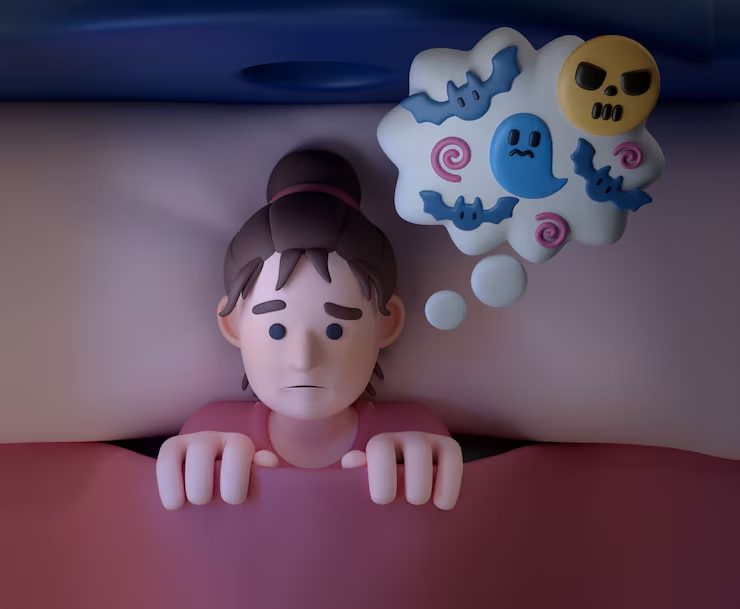
It’s not known what causes schizotypal personality disorder. But it’s likely that changes in the way the brain functions, genetics, environmental influences and learned behaviors play a role.
Schizotypal personality disorder usually includes five or more of these symptoms. The person may:
- Be a loner and lack close friends and other relationships outside of the immediate family.
- Have flat emotions or have emotional responses that are limited or not proper socially.
- Have too much social anxiety, which is ongoing.
- Incorrectly interpret events, such as feeling that something harmless or not offensive has a direct personal meaning.
- Have strange or unusual thinking, beliefs or mannerisms.
- Have suspicious or paranoid thoughts and constant doubts about the loyalty of others.
- Believe in special powers, such as mental telepathy or superstitions.
- Have unusual thoughts, such as sensing an absent person’s presence, or having illusions.
- Dress in odd ways, such as appearing messy or wearing oddly matched clothes.
- Speak in an odd way, such as vague or unusual patterns of speaking, or ramble oddly while speaking.
Symptoms of schizotypal personality disorder, such as more interest in activities done alone or a high level of social anxiety, may be seen in the teen years. The child may not do well in school or appear socially out of step with peers. This may lead to teasing or bullying.
Schizotypal personality disorder vs. schizophrenia
It’s easy to confuse schizotypal personality disorder with schizophrenia, which is a severe mental health condition where people struggle with interpreting and managing reality. This is known as psychosis. People with schizotypal personality disorder may have brief psychotic bouts with delusions or hallucinations. But the bouts aren’t as often, as long or as intense as with schizophrenia.
Another key difference is that people with schizotypal personality disorder usually can be made aware of how their distorted ideas differ from reality. Those with schizophrenia generally can’t be swayed away from their delusions.
Despite the differences, people with schizotypal personality disorder can benefit from treatments like those used for schizophrenia. Sometimes schizotypal personality disorder is thought to be on a spectrum with schizophrenia, with schizotypal personality disorder viewed as less severe.
People with schizotypal personality disorder are likely to seek help only at the urging of friends or family members. Or people with schizotypal personality disorder may seek help for another problem such as depression, anxiety or substance misuse. If you think that a friend or family member may have the condition, consider gently suggesting that the person seek the help of a healthcare professional or mental health professional.
You may be more at risk of schizotypal personality disorder if a relative has schizophrenia or another psychotic disorder.
People with schizotypal personality disorder are more at risk of:
- Depression.
- Anxiety.
- Other personality disorders.
- Schizophrenia.
- Temporary psychotic bouts, usually in response to stress.
- Misuse of alcohol or drugs.
- Suicide attempts.
- Problems with work, school and other social relationships.
People with schizotypal personality disorder may seek help from a healthcare professional because of other symptoms, such as anxiety, depression or problems coping with social situations, or for treatment of substance misuse.
After a physical exam to rule out other medical conditions, your healthcare professional may refer you to a mental health professional for more help to figure out the diagnosis.
Diagnosis of schizotypal personality disorder usually is based on:
- A thorough discussion about your symptoms and any hard times you’re having.
- Your personal and medical history, including treatments that you’ve had.
Treatment for schizotypal personality disorder often includes talk therapy and medicine. Many people can be helped by work and social activities that are a fit for their personality styles.
Talk therapy
Talk therapy, also called psychotherapy, may help people with schizotypal personality disorder begin to trust others and learn coping skills, especially how to manage social relationships and situations. This is done by building a trusting relationship with a therapist.
Psychotherapy may include:
- Cognitive behavioral therapy — Uncovering and challenging negative thought patterns, learning specific social skills, and changing problem behaviors.
- Supportive therapy — Offering encouragement and promoting adaptive skills.
- Family therapy — Involving family members, which may make communication and trust better and make people better able to work together with others in the home.
Medicines
The Food and Drug Administration has not approved any medicines specifically to treat schizotypal personality disorder. But healthcare professionals may prescribe an antidepressant medicine to help ease certain symptoms, such as depression or anxiety. Periodically, some people may need to be prescribed an antipsychotic medicine to address hallucinations or delusions. Some medicines may help people think about things in a new way or more than one way, known as flexible thinking.
References
- Schizotypal personality disorder. In: Diagnostic and Statistical Manual of Mental Disorders DSM-5-TR. 5th ed. American Psychiatric Association; 2022. https://dsm.psychiatryonline.org. Accessed Feb. 15, 2024.
- Schizotypal personality disorder (STPD). Merck Manual Professional Version. https://www.merckmanuals.com/professional/psychiatric-disorders/personality-disorders/schizotypal-personality-disorder-stpd. Accessed Feb. 15, 2024.
- MedLine Plus. Schizotypal personality disorder. https://medlineplus.gov/ency/article/001525.htm. Accessed Feb. 15, 2024.
- Donskov Nielsen K, et al. Psychotherapy for patients with schizotypal personality disorder: A scoping review. Clinical Psychology & Psychotherapy. 2023; doi:10.1002/cpp.2901.
- Dong F, et al. Early life factors of schizotypal personality disorder in adolescents: A systematic review. Journal of Psychiatric and Mental Health Nursing. 2021; doi:10.1111/jpm.12733.
- Skodol A, et al. Approaches to the therapeutic relationship in patients with personality disorders. https://www.uptodate.com/contents/search. Accessed Feb. 15, 2024.
- Rosell DR. Schizotypal personality disorder: Psychotherapy. https://www.uptodate.com/contents/search. Accessed Feb. 15, 2024.
- Talk to someone now. 988 Suicide & Crisis Lifeline. https://988lifeline.org/talk-to-someone-now. Accessed Feb. 15, 2024.
- Rosell DR. Schizotypal personality disorder: Epidemiology, pathogenesis, clinical manifestations, course, and diagnosis. https://www.uptodate.com/contents/search. Accessed Feb. 15, 2024.
- Rosell DR. Schizotypal personality disorder: Treatment overview. https://www.uptodate.com/contents/search. Accessed Feb. 15, 2024.
- Medical review (expert opinion). Mayo Clinic. May 3, 2024.
Related Topics

Other Specialities
Stay away from bad habbits
Mental Health
Mental health includes our emotional, psychological, and social well-being. It affects how we think, feel, and act as we cope with life.
Book your appointment TODAY!
Search on the closest Doctor to your location and book based on specialty. EARN 10 POINTS more with CuraPOINT.
BOOK-
Find a healthcare provider near you
-
Call for support
-
Feel free to message us!
About Us
Curafile is a Medical Cyclopedia, biggest Healthcare Curated Network Globally, serves citizens, service providers in one place.
- Estonia - Qatar
Jordan - Saudi Arabia