

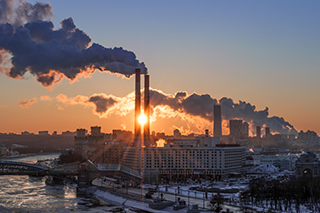
Air pollution is a familiar environmental health hazard. We know what we’re looking at when brown haze settles over a city, exhaust billows across a busy highway, or a plume rises from a smokestack. Some air pollution is not seen, but its pungent smell alerts you.
Air Pollution
Air pollution is a familiar environmental health hazard. We know what we’re looking at when brown haze settles over a city, exhaust billows across a busy highway, or a plume rises from a smokestack. Some air pollution is not seen, but its pungent smell alerts you.
It is a major threat to global health and prosperity. Air pollution, in all forms, is responsible for more than 6.5 million deaths each year globally, a number that has increased over the past two decades.
What Is Air Pollution?
Air pollution is a mix of hazardous substances from both human-made and natural sources.
Vehicle emissions, fuel oils and natural gas to heat homes, by-products of manufacturing and power generation, particularly coal-fueled power plants, and fumes from chemical production are the primary sources of human-made air pollution.
Nature releases hazardous substances into the air, such as smoke from wildfires, which are often caused by people; ash and gases from volcanic eruptions; and gases, like methane, which are emitted from decomposing organic matter in soils.
Traffic-Related Air Pollution (TRAP), a mixture of gasses and particles, has most of the elements of human-made air pollution: ground-level ozone, various forms of carbon, nitrogen oxides, sulfur oxides, volatile organic compounds, polycyclic aromatic hydrocarbons, and fine particulate matter.
Ozone, an atmospheric gas, is often called smog when at ground level. It is created when pollutants emitted by cars, power plants, industrial boilers, refineries, and other sources chemically react in the presence of sunlight.
Noxious gases, which include carbon dioxide, carbon monoxide, nitrogen oxides (NOx), and sulfur oxides (SOx), are components of motor vehicle emissions and byproducts of industrial processes.
Particulate matter (PM) is composed of chemicals such as sulfates, nitrates, carbon, or mineral dusts. Vehicle and industrial emissions from fossil fuel combustion, cigarette smoke, and burning organic matter, such as wildfires, all contain PM.
A subset of PM, fine particulate matter (PM 2.5) is 30 times thinner than a human hair. It can be inhaled deeply into lung tissue and contribute to serious health problems. PM 2.5 accounts for most health effects due to air pollution in the U.S.
Volatile organic compounds (VOC) vaporize at or near room temperature—hence, the designation volatile. They are called organic because they contain carbon. VOCs are given off by paints, cleaning supplies, pesticides, some furnishings, and even craft materials like glue. Gasoline and natural gas are major sources of VOCs, which are released during combustion.
Polycyclic aromatic hydrocarbons (PAH) are organic compounds containing carbon and hydrogen. Of more than 100 PAHs known to be widespread in the environment, 15 are listed in the Report on Carcinogens. In addition to combustion, many industrial processes, such as iron, steel, and rubber product manufacturing, as well as power generation, also produce PAHs as a by-product. PAHs are also found in particulate matter.
Over its 50-plus year history, NIEHS has been a leader in air pollution research. The institute continues to fund and conduct research into how air pollution affects health and the population groups who are most affected.
How does air pollution affect our health?
When the National Ambient Air Quality Standards were established in 1970, air pollution was regarded primarily as a threat to respiratory health. In 1993, NIEHS researchers published the landmark Six Cities Study, which established an association between fine particulate matter and mortality.
Air pollution exposure is associated with oxidative stress and inflammation in human cells, which may lay a foundation for chronic diseases and cancer. In 2013, the International Agency for Research on Cancer of the World Health Organization (WHO) classified air pollution as a human carcinogen.
Many studies have established that short-term exposure to higher levels of outdoor air pollution is associated with reduced lung function, asthma, cardiac problems, emergency department visits, and hospital admissions. Mortality rates related to air pollution are also a concern. Exposure to the air pollutant PM2.5 is associated with an increased risk of death.
A team of researchers, partially funded by NIEHS, found that deaths decreased after air pollution regulations were implemented and coal-powered plants were retired. The study data covered 21 years. More specifically, they found exposure to PM2.5 from coal was associated with a mortality risk that was twice as high as the risk from exposure to PM2.5 from all sources. PM2.5 from coal is high in sulfur dioxide, black carbon, and metals.
Public health concerns related to high air pollution exposures include cancer, cardiovascular disease, respiratory diseases, diabetes mellitus, obesity, and reproductive, neurological, and immune system disorders.
Research on air pollution and health effects continually advances.
Cancer
- A large study of more than 57,000 women found living near major roadways may increase a woman’s risk for breast cancer.
- Occupational exposure to benzene, an industrial chemical and component of gasoline, can cause leukemia and is associated with non-Hodgkin’s Lymphoma.
- A long-term study, 2000-2016, found an association between lung cancer incidence and increased reliance on coal for energy generation.
- Using a national dataset of older adults, researchers found that 10-year long exposures to PM2.5 and NO2 increased the risks of colorectal and prostate cancers.
Cardiovascular Disease
- Fine particulate matter can impair blood vessel function and speed up calcification in arteries.
- NIEHS researchers established links between short-term daily exposure by post-menopausal women to nitrogen oxides and increased risk of hemorrhagic stroke.
- For some older Americans, exposure to TRAP can result in lowered levels of high-density lipoprotein, sometimes called good cholesterol, increasing their risk for cardiovascular disease.
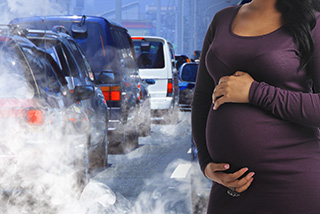
- According to a National Toxicology Program (NTP) report, TRAP exposure also increases a pregnant woman’s risk for dangerous changes in blood pressure, known as hypertensive disorders, which are a leading cause of pre-term birth, low birth weight, and maternal and fetal illness and death.
Respiratory Disease
- Air pollution can affect lung development and is implicated in the development of emphysema, asthma, and other respiratory diseases, such as chronic obstructive pulmonary disease (COPD).
- Increases in asthma prevalence and severity are linked to urbanization and outdoor air pollution. Children living in low-income urban areas tend to have more asthma cases than others. Research published in 2023 tied two air pollutants, ozone and PM2.5, to asthma-related changes in children’s airways.
- In a study of 50,000 women across the country, long-term exposure to PM2.5, PM10, and nitrogen dioxide were linked to chronic bronchitis.
- In 2020, a major public health challenge was confluence of the COVID-19 pandemic and wildfires across the western U.S. Building on a well-established connection between air pollution and respiratory-tract infections, a study linked exposure to wildfire smoke with more severe cases of COVID-19 and deaths.
Whom does air pollution affect the most?
Air pollution affects everyone’s health, but certain groups may be harmed more. Almost 9 out of 10 people who live in urban areas worldwide are affected by air pollution.
NIEHS-funded research indicates there are racial or ethnic and socioeconomic disparities in air pollution emissions. Air pollution emissions have decreased over past decades but the changes vary by demographics. This research found that people with annual incomes above $70,000 generally experience greater declines in industry, energy, transportation, residential, and commercial-related emissions than do people with lower incomes.
Children
The NIEHS-funded Children’s Health Study at the University of Southern California is one of the largest studies of the long-term effects of air pollution on children’s respiratory health. Among its findings:
- Higher air pollution levels increase short-term respiratory infections, which lead to more school absences.
- Children who play several outdoor sports and live in high ozone communities are more likely to develop asthma.
- Children living near busy roads have an increased chance of developing asthma.
- Children who were exposed to high levels of air pollutants were more likely to develop bronchitis symptoms in adulthood.
- Living in communities with higher pollution levels can cause lung damage.
Other studies on women and children
- Breathing PM 2.5, even at relatively low levels, may alter the size of a child’s developing brain, which may ultimately increase the risk for cognitive and emotional problems later in adolescence.
- In a large-scale study that looked at more than 1 million birth records, prenatal PM2.5 exposure was associated with an increased risk of cerebral palsy. While this finding adds to knowledge about environmental risk factors for cerebral palsy development and how to reduce the chance of it developing, further studies are needed. Prenatal exposure to PAHs was associated with brain development effects, slower processing speed, attention-deficit and hyperactivity disorder (ADHD) symptoms, and other neurobehavioral problems in urban youth.
- Prenatal exposure to air pollution may play a role in the development of ADHD-related behavior problems in childhood.
- Prenatal exposure to particulate matter was associated with low birth weight.
- Women exposed to high levels of fine particulate matter during pregnancy, particularly in the third trimester, may have up to twice the risk of having a child with autism.
- Second and third trimester exposure to PM2.5 might increase the chance of those children having high blood pressure in early life.
- A large study of more than 300,000 women found long-term exposure to air pollution, especially ozone and PM2.5, during and after pregnancy increases the risk of postpartum depression.
- The study with data on more than 5 million babies assessed associations between prenatal exposure to wildfire smoke and the risk of preterm birth. The researchers found that exposure to high levels of wildfire particulate matter during any period of pregnancy was associated with a greater chance of preterm birth.

Older adults
- Alzheimer’s disease and related dementias are a public health challenge for aging populations. NIEHS-funded researchers at the University of Washington identified a link between air pollution and dementias. This well-conducted study adds considerable evidence that ambient air fine particles increase risk of dementias. Conversely, a multi-year study published in 2022 shows improved air quality is associated with lower risk of dementia in older women. The researchers also stated this decline in dementia risk was equivalent to taking nearly 2 1/2 years off the age of the women studied.
- A large, nationally representative study looked at PM2.5 from many sources and incident dementia. Emissions from agriculture, traffic, coal combustion, and wildfires, in particular, were associated with increased rates of dementia.
- Air pollution was linked to a greater chance of developing several neurological disorders, including Parkinson’s disease, Alzheimer’s disease, and other dementias. Hospital admissions data from 63 million older adults in the U.S., obtained over 17 years (2000-2016), was analyzed along with estimated PM2.5 concentrations by zip code to conduct the study. Another study with data from 10-year long exposures also found a relationship between CO and PM2.5 and an increased chance of developing Parkinson’s disease.
- Osteoporosis affects women more than men. A large study associated high levels of air pollutants with bone damage, particularly in the lumbar spine, among postmenopausal women. This study expands previous findings linking air pollution and bone damage.
- Nutrients may counter some harmful effects from air pollution. A 2020 study found omega-3 fatty acids, obtained by eating certain fish, may protect against PM2.5-associated brain shrinkage in older women.

Rural dwellers
- NIEHS supported a translational research project, Addressing Air Pollution and Asthma (989KB), that may lead to improved health for children suffering from asthma. They found that certain agricultural practices contribute to poor air quality and asthma among children. The team combined high-efficiency particulate air (HEPA) cleaners and a home-based education program to reduce children’s exposure to pollutants in the home.
- Exposure to smoke from agricultural burns for as little as two weeks per year may worsen children’s respiratory health outcomes, according to research supported by NIEHS. The study was conducted in response to community concerns about children’s heath in Imperial Valley, a rural, agricultural area in southern California. Such agricultural burning is done to clear post-harvest crop remnants. This form of clearing is inexpensive, and farmers in the area do not have other economical methods for disposing of waste.
- In the rural U.S., large-scale animal feeding operations might compromise regional air quality through emission of pollutants, such as ammonia gas. A study found acute lung function problems in children with asthma in such areas.
NIEHS and community involvement
NIEHS supports community participation in the research process and encourages collaborative approaches that build capacity in communities to address environmental health concerns. Community-engaged research and citizen science are two types of collaborative research approaches.
For example, NIEHS grant recipients developed community-level tactics and public policies for reducing exposure to TRAP:
- Using high-efficiency particulate air (HEPA) filtration.
- Building land-use buffers and vegetation barriers.
- Improving urban design with gardens, parks, and street-side trees.
- Creating active-travel options, such as bicycling and walking paths.
Why improving air quality matters

- Air pollution and birth outcomes are linked as global public health concerns. Researchers analyzed indoor and outdoor air pollution data from all inhabited continents along with key pregnancy outcomes. Their findings indicate efforts to reduce PM2.5 exposure could lead to significant reductions in the number of low-birth weight and pre-term birth infants worldwide. Air pollution reduction would be especially beneficial for children born in low- and middle-income countries.
- Among children in Southern California, decreases in ambient nitrogen dioxide and PM 2.5 were associated with fewer cases of asthma.
- Bronchitis symptoms declined as pollution levels dropped in the Los Angeles region.
- Improving air quality may improve cognitive function and reduce dementia risk, according to studies supported in part by NIH and the Alzheimer’s Association.
- When fossil-fuel power plants close, nearby air pollution is reduced. A study found the incidence of preterm births went down within 5 kilometers of retired coal and oil-powered plant locations.

© 2026 Part of DENAMICA. All rights reserved.