

Renal Artery Stenosis
- Home
- Kidneys and Urinary System
- Renal Artery Stenosis
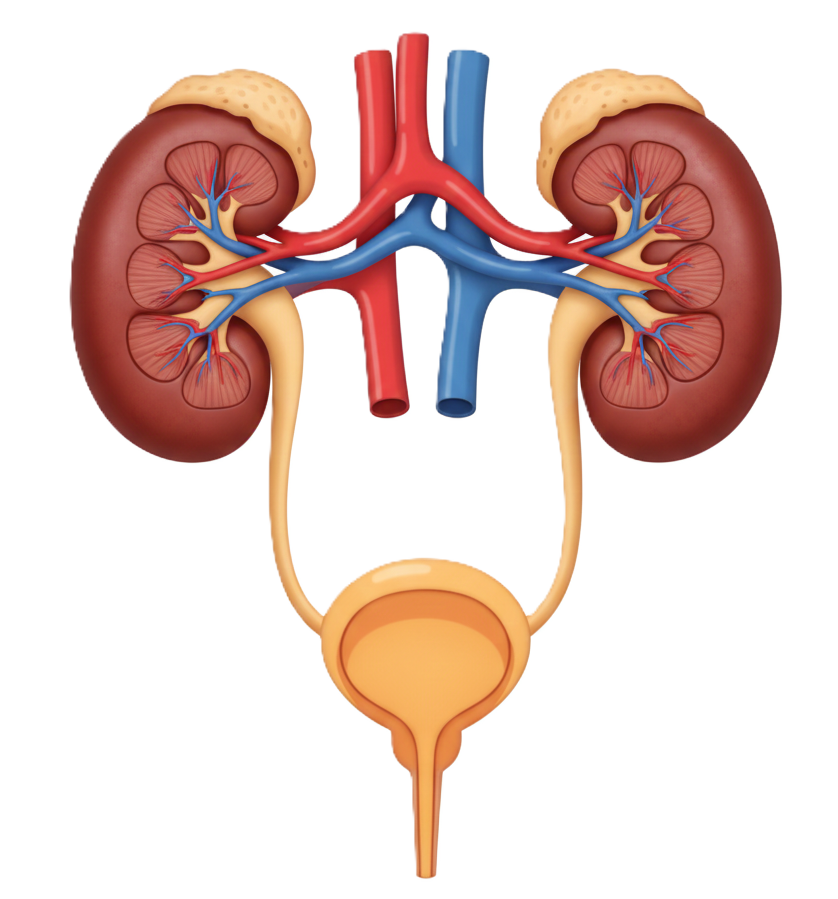
Renal artery stenosis is when one or more arteries that carry blood to the kidneys narrow. These are called the renal arteries.
Having narrowed renal arteries means the kidneys don’t get enough oxygen-rich blood. The kidneys need enough blood flow to help filter waste products and remove excess fluids. Less blood flow to the kidneys may injure kidney tissue and raise blood pressure throughout the body.
- Buildup on kidney arteries, also called renal arteries. Fats, cholesterol and other substances, called plaques, can build up in and on the kidney artery walls. This is called atherosclerosis. As the buildup grows, the plaque can harden. That lowers blood flow and causes kidney scarring. In time, the plaque narrows the artery. Atherosclerosis happens in many areas of the body. It’s the most common cause of renal artery stenosis.
- Fibromuscular dysplasia. In fibromuscular dysplasia, the muscle in the artery wall doesn’t grow as it should. This often begins in childhood. The renal artery can have narrow sections and wider sections. This looks like beads in images of the artery. The renal artery can narrow so much that the kidney doesn’t get enough blood. This can lead to high blood pressure at a young age. This can happen in one or both kidneys. Experts don’t know what causes fibromuscular dysplasia. But the condition is more common in people assigned female at birth. It may be present at birth, called congenital.
Renal artery stenosis often doesn’t cause symptoms until it’s advanced. A healthcare professional may find the condition while testing for something else. Or your healthcare professional may suspect the condition if you have:
- High blood pressure that begins suddenly or gets worse without a known cause.
- High blood pressure that begins before age 30 or after age 55.
As renal artery stenosis advances, other signs and symptoms may include:
- High blood pressure that’s hard to manage.
- A whooshing sound as blood flows through a narrowed vessel, called a bruit. A member of your healthcare team hears the sound through a stethoscope placed over your kidneys.
- Fluid buildup and swelling in the body’s tissues.
Treatment for renal artery stenosis may involve lifestyle changes, medicine and a procedure to restore blood flow to the kidneys. If your arteries are not blocked, you may not need treatment.
- Lifestyle changes
- Medication
- Procedures
If your blood pressure is too high, lifestyle changes may help manage your blood pressure. This includes limiting salt, eating healthy foods and moving more.
Medicine can often treat high blood pressure linked to renal artery stenosis. It may take time and patience to find the right medicine or mix of medicines.
Medicines that often treat high blood pressure linked with renal artery stenosis and may keep kidney disease from getting worse include:
- Angiotensin-converting enzyme inhibitors, also called ACE inhibitors, and angiotensin II receptor blockers, also called ARBs. These medicines relax blood vessels and keep them from narrowing.
- Diuretics. Also called water pills, these help the body get rid of salt and water.
- Beta blockers and alpha-beta blockers. These either make the heart beat slowly with less force or they widen, called dilate, the blood vessels. The effect depends on which medicine you take.
- Calcium channel blockers. These medicines help relax blood vessels.
Some people may have a procedure to restore blood flow through the renal artery. Called renal angioplasty, this improves blood flow to the kidney.
This procedure may be for people who don’t do well on medicine alone, who can’t take medicine, who often retain fluids or who have heart failure that’s hard to treat.
Procedures to treat renal artery stenosis may include:
- Renal angioplasty and stenting. This procedure involves widening the narrowed renal artery and putting a tube called a stent inside the blood vessel. The stent holds the walls of the vessel open and lets blood flow better. If you have a condition called fibromuscular dysplasia, your healthcare team may widen the kidney artery without adding a stent.
Renal artery bypass surgery. During a bypass procedure, a surgeon adds another blood vessel to the renal artery to make a new route for blood to reach the kidneys. This may mean joining the renal artery to a vessel from elsewhere in the body, such as the liver or spleen.
Surgeons do this procedure mainly if angioplasty doesn’t work or when there’s a need for more surgical procedures.
Most often, renal artery stenosis results from narrowed kidney arteries. Risk factors for narrowed arteries in the kidneys and other parts of the body include:
- Older age.
- High blood pressure.
- High cholesterol.
- Diabetes.
- Obesity.
- Smoking and other tobacco use.
- A family history of early heart disease.
- Lack of exercise.
Possible complications of renal artery stenosis include:
- High blood pressure.
- Chronic kidney disease or kidney failure. Kidney disease can happen if high blood pressure is not managed over time. Kidney failure needs treatment with dialysis or a kidney transplant.
- Fluid retention in the legs. This causes swollen ankles or feet.
To diagnose renal artery stenosis, your healthcare professional may start with:
- A physical exam. This includes listening through a stethoscope over the kidneys for sounds that may mean the artery to the kidney is narrowed.
- A review of your medical history.
- Blood and urine tests to check how your kidneys work.
- Blood and urine tests to measure the levels of hormones that keep blood pressure managed.
Your healthcare professional might order the following imaging tests:
- Doppler ultrasound. High-frequency sound waves help a healthcare professional see the arteries and kidneys and check how they work. This procedure also helps find if the blood vessels are blocked and measure how bad the blockage is.
- CT scan. This is a type of imaging that uses X-ray techniques to make detailed images of the body. It then uses a computer to make cross-sectional images, also called slices, of the renal arteries. You may get a shot of dye, called an injection, to show blood flow.
- Magnetic resonance angiography. Also called MRA, this uses radio waves and strong magnetic fields to make detailed images of the renal arteries and kidneys. A shot of dye into the arteries outlines blood vessels during imaging.
Renal arteriography. This special type of X-ray exam helps find the blockage in the renal arteries. Sometimes, a healthcare professional uses this to open the narrowed part with a balloon or small tube, called a stent.
Before the X-ray, a member of your healthcare team puts a dye into the renal arteries through a long, thin tube, called a catheter. This is to outline the arteries and show blood flow more clearly. This test mainly is for people who are likely to need to have a stent widen an artery.
As a part of your treatment plan for renal artery stenosis, your healthcare professional may suggest these lifestyle changes:
- Get to and stay at a healthy weight. When weight goes up, so does blood pressure. If you’re overweight, losing weight may help to lower your blood pressure.
- Use less salt in your diet. Salt and salty foods cause your body to retain fluid. This may increase your blood pressure.
- Be physically active. Being physically active may help you lose weight, lower your risk of heart disease, and lower your cholesterol and your blood pressure. Check with your healthcare professional before starting an exercise program.
- Don’t use tobacco. Tobacco harms blood vessel walls and speeds up the process of hardening of the arteries. If you smoke, ask your healthcare team to help you quit.
For renal artery stenosis, you may start by seeing your main healthcare professional. Your healthcare professional may send you to a doctor who specializes in conditions that affect the kidneys, called a nephrologist, or a heart and blood vessel specialist, called a cardiologist.
Here’s some information to help you get ready for your appointment.
- What you can do?
- What to expect from your doctor?
Ask a family member or friend to go with you to help you gather what you learn.
Make a list of:
- Your symptoms, and when they began. Include symptoms that don’t seem linked to the reason you made the appointment.
- Make a list of all medicines, vitamins and supplements that you take, including dosages.
- Key medical information, including past or current smoking or use of other tobacco products.
- Questions to ask your healthcare professional.
For renal artery stenosis, basic questions to ask include:
- What’s the most likely cause of my symptoms?
- What tests do I need? How do I prepare for them?
- Is this condition likely to go away or to last?
- What treatments are there? Which do you suggest?
- I have other health conditions. How can I best manage these conditions together?
- What’s a good level for my blood pressure? What can I do to help bring it down?
- Do you have any printed material that I can have? What websites do you suggest?
Be sure to ask all the questions you have.
Your healthcare professional is likely to ask you questions, such as:
- Do you smoke or use any type of tobacco or have you ever?
- Does anything seem to make your symptoms better or worse?
- Do you know what your blood pressure most often is?
- Have you had tests to measure how your kidneys work?
- Does anyone in your family have a history of high blood pressure or kidney disease?
References
- Renal artery stenosis. National Kidney and Urologic Diseases Information Clearinghouse. https://www.niddk.nih.gov/health-information/kidney-disease/renal-artery-stenosis. Accessed Dec. 13, 2024.
- Ferri FF. Renal artery stenosis. In: Ferri’s Clinical Advisor 2025. Elsevier; 2025. https://www.clinicalkey.com. Accessed Dec. 13, 2024.
- Safian RD. Renal artery stenosis. Progress in Cardiovascular Diseases. 2021; doi:10.1016/j.pcad.2021.03.003.
- White WB. Treatment of unilateral atherosclerotic renal artery stenosis. https://uptodate.com/contents/search. Accessed Dec. 13, 2024.
- Nimmagadda R. Allscripts EPSi. Mayo Clinic. Dec. 24, 2024.

Ad
Women have unique health issues. And some of the health issues that affect both men and women can affect women differently.
Check the latest Healthcare NEWS!
Nothing more important than keeping yourself updated with the latest in Health!
Go to NEWS-
Find a healthcare provider near you
-
Call for support
-
Feel free to message us!
About Us
Curafile is a Medical Cyclopedia, biggest Healthcare Curated Network Globally, serves citizens, service providers in one place.
- Estonia - Qatar
Jordan - Saudi Arabia