

Sun Safety
- Home
- Sun Safety
Sun Safety
- Defintion
- Lower your Risks
- Sunscreen Labels
- Risk Factors
- Protect Your Eyes
- Spray Sunscreens Can Be Flammable
Sun safety is always in season. It’s important to protect your skin from sun damage throughout the year, no matter the weather.
Why? Exposing your skin to the sun year-round means you are exposing it to ultraviolet radiation, which can cause sunburn, skin aging (such as skin spots, wrinkles, or “leathery skin”), eye damage, and skin cancer.
All sunscreens help protect people from sunburn, only broad-spectrum sunscreens with a sun protection factor (SPF) of at least 15 help protect us from skin cancer and early skin aging caused by the sun.
Lower Your Risk for Sunburn, Skin Cancer, and Early Skin Aging
Sun damage to the body is caused by invisible ultraviolet (UV) radiation. Sunburn is a type of skin damage caused by the sun. Tanning is also a sign of the skin reacting to potentially damaging UV radiation by producing additional pigmentation that provides it with some, but often not enough, protection against sunburn.
Spending time in the sun unprotected increases your risk of skin cancer and early skin aging. People of all skin colors are at risk for this damage. You can reduce your risk by:
- Limiting your time in the sun, especially between 10 a.m. and 2 p.m., when the sun’s rays are most intense.
- Wearing clothing to cover skin exposed to the sun, such as long-sleeve shirts, pants, sunglasses, and broad-brim hats.
- Using broad-spectrum sunscreens with an SPF value of 15 or higher regularly and as directed. (Broad-spectrum sunscreens offer protection against both UVA and UVB rays, two types of the sun’s ultraviolet radiation.)
Consult a health care professional before applying sunscreen to infants younger than 6 months.
In general, the FDA recommends using broad-spectrum sunscreen with an SPF of 15 or higher, even on cloudy days. In addition:
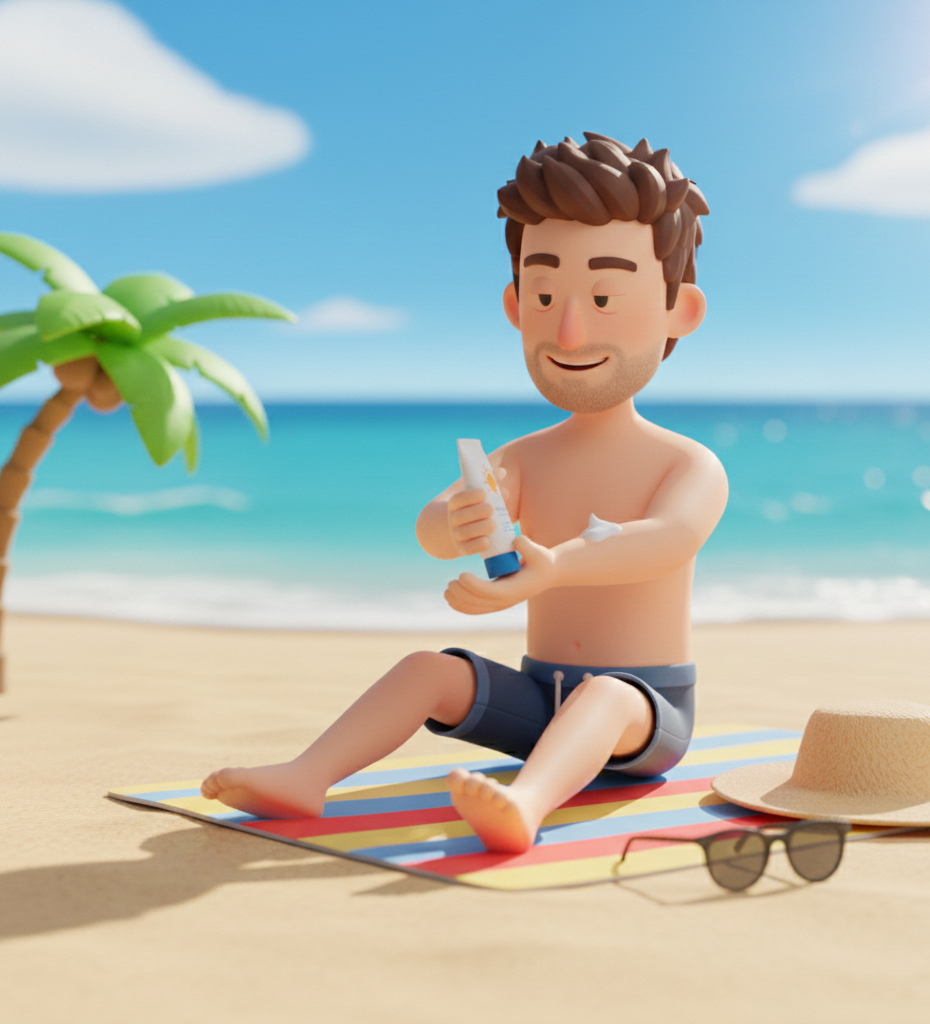
- Apply sunscreen liberally to all uncovered skin, especially your nose, ears, neck, hands, feet, and lips.
- Reapply at least every two hours. Apply more often if you’re swimming or sweating. (An average-size adult or child needs at least one ounce of sunscreen, about the amount it takes to fill a shot glass, to evenly cover the body.)
- If you don’t have much hair, apply sunscreen to the top of your head or wear a hat.
- No sunscreen completely blocks UV radiation. So other protections are needed, such as protective clothing, sunglasses, and staying in the shade.
- No sunscreen is waterproof. Check the instructions on your sunscreen for information about its water resistance and reapplication instructions if you are sweating or going in the water.
It is important to read the label carefully to ensure you get the most potential benefit from sunscreen use.
- Only products that pass the FDA’s broad-spectrum requirements, and therefore protect against UVA exposure, can be labeled “broad spectrum.”
- Sunscreens that are not broad spectrum or are broad spectrum but lack an SPF of at least 15 must carry a warning: “Skin Cancer/Skin Aging Alert: Spending time in the sun increases your risk of skin cancer and early skin aging. This product has been shown only to help prevent sunburn, not skin cancer or early skin aging.”
- Water resistance claims, for 40 or 80 minutes, tell you how much time you can expect to get the labeled SPF-level of protection while swimming or sweating.
- Manufacturers may not make claims that their sunscreens are “waterproof” or “sweat proof.”
- Products may not be identified as “sunblocks” or claim instant protection or protection for more than two hours without reapplying.
Risk Factors for Harmful Effects of UV Radiation
People of all skin colors are potentially at risk for sunburn and other harmful effects of UV radiation, so always protect yourself. Be especially careful if you have:
- Pale skin.
- Blond, red, or light brown hair.
- Been treated for skin cancer.
- A family member who has had skin cancer.
If you take medications, ask your health care professional about sun-care precautions. Some medications may increase sun sensitivity. Even on an overcast day, up to 80%of the sun’s UV rays can get through the clouds. Stay in the shade as much as possible.
Sunlight reflecting off sand, water, or even snow further increases exposure to UV radiation and raises your risk of developing eye problems. Certain sunglasses can help protect your eyes.
When choosing sunglasses:
- Choose sunglasses with a UV400 rating or “100% UV protection” on the label. These sunglasses block more than 99% of UVA and UVB radiation and provide the most protection against UV rays.
- Do not mistake dark-tinted sunglasses as having UV protection. The darkness of the lens does not indicate its ability to shield your eyes from UV rays. Many sunglasses with light-colored tints – such as green, amber, red, and gray – can offer the same UV protection as very dark lenses.
- Check to see if your tinted glasses have UV protection. If you are unsure, your eye care professional may be able to check for you. When you wear tinted glasses, your pupils dilate and can increase exposure of your retinas to UV light. Without UV protection, you are putting yourself at risk to harmful effects associated with solar radiation.
- Be aware that children should wear sunglasses that indicate the UV protection level. Toy sunglasses may not have UV protection.
- Consider large, wraparound-style frames, which may provide more UV protection because they cover the entire eye socket.
- Pricier sunglasses don’t ensure greater UV protection.
- Even if you wear UV absorbing contact lenses, wear quality sunglasses that offer UV protection.
- Even when you wear sunglasses, wearing a wide-brim hat and sunscreen can help further protect you from sun exposure.
Many spray sunscreen products contain flammable ingredients, like alcohol. Be careful when using these flammable products. Read and follow the warning label, and don’t use these sprays near an open flame, especially around children.
In addition, some spray sunscreens have been recalled because of benzene contamination and shouldn’t be used. Find out here if your sunscreen has been recalled.
References
Tips to Stay Safe in the Sun: From Sunscreen to Sunglasses (fda) (www.fda.gov/consumers/consumer-updates/tips-stay-safe-sun-sunscreen-sunglasses)
| Read More |
|---|

Ad
Women have unique health issues. And some of the health issues that affect both men and women can affect women differently.
Book your appointment TODAY!
Search on the closest Doctor to your location and book based on specialty. EARN 10 POINTS more with CuraPOINT.
BOOK-
Find a healthcare provider near you
-
Call for support
-
Feel free to message us!
About Us
Curafile is a Medical Cyclopedia, biggest Healthcare Curated Network Globally, serves citizens, service providers in one place.
- Estonia - Qatar
Jordan - Saudi Arabia