

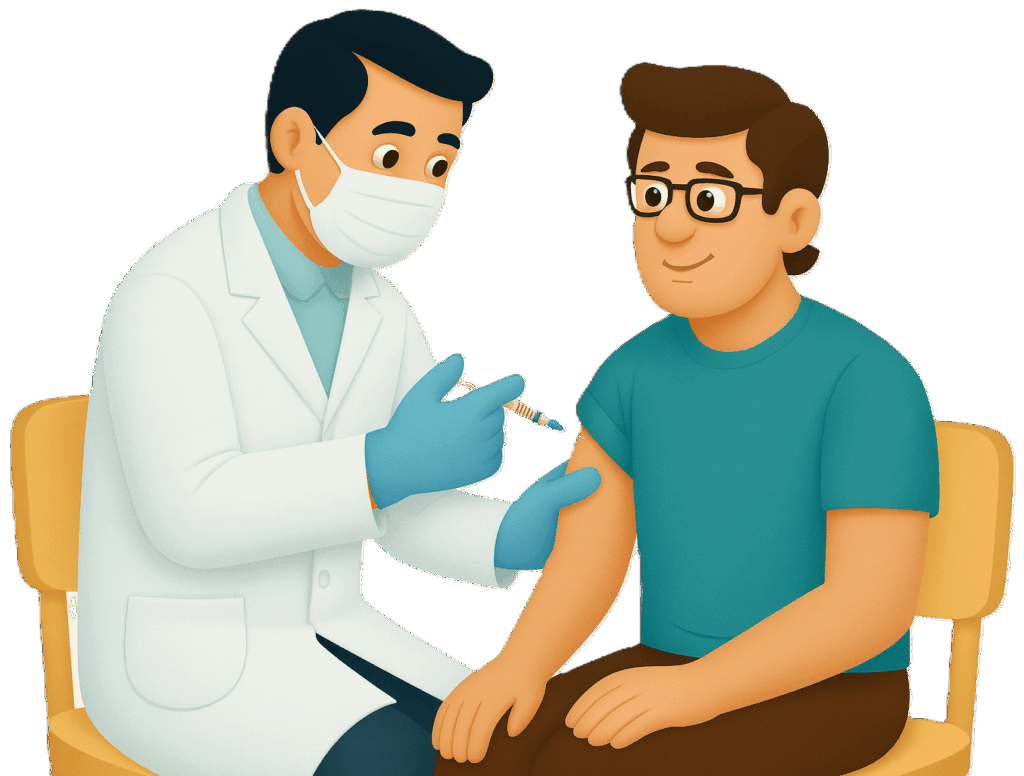
You may think that because you’re not a kid anymore, you don’t have to worry about getting shots. But adults need them too. Here’s what to know about vaccines for adults.
- What factors might affect my vaccine recommendations?
- How do I know if my vaccinations are up to date?
- What vaccines do adults need?
- Vaccine Myths
- Vaccine Side Effects
- How To Get The Vaccine
- Vaccine Safety ?
recommends vaccines for adults based on the following:
- Age.
- Health history.
- Travel destinations.
- Sexual activity.
- Lifestyle.
- Occupation.
- Vaccinations you’ve had before.
To gather information about vaccinations you’ve had, talk to your parents or other caregivers, if possible. Ask if they have records of the vaccinations you received when you were a child. You also can check with your healthcare professional’s office to see if they have your vaccination records on file.
In some situations, you may need to check with healthcare organizations where you received care when you were younger. Or it may be helpful to check with your schools or employers who required vaccinations. You also could contact your state health department to see if it has a registry that includes adult immunizations.
If you can’t find your records, your healthcare professional might be able to do blood tests to see if you are immune to certain diseases that vaccines can prevent. You may need to get some vaccines again.
Talk to your healthcare professional about your specific needs. Vaccines you may need as an adult include:
- COVID-19 The coronavirus disease 2019 (COVID-19) vaccine can help prevent you from getting COVID-19 or from becoming seriously ill or dying due to COVID-19.
- Flu To prevent the flu — also called influenza — the CDC recommends annual flu vaccinations for everyone age 6 months and older. The flu can cause serious health problems in older adults. Adults 50 and older and pregnant people should get the flu vaccine as a shot, not as a nasal spray.
Hepatitis B The CDC recommends all adults ages 19 to 59 receive the hepatitis B vaccine. The vaccine also is recommended for adults 60 and older who have risk factors for hepatitis B.
This vaccine is not specifically recommended for people 60 and older who don’t have known risk factors. But if you are in that group, you may receive the hepatitis B vaccine if you want it. Hepatitis B is a disease that affects the liver.
Human papillomavirus (HPV) The CDC recommends the HPV vaccine for children at ages 11 or 12. But if you didn’t receive the HPV vaccine at that time, you can get it later as a teen or as a young adult. It’s recommended for everyone through age 26.
The HPV vaccine also may be useful for some adults ages 27 through 45. If you’re in that age group and you haven’t received the HPV vaccine, talk to your healthcare professional to see if it might be right for you. HPV is a common virus that can cause cancer.
- Pneumococcal The CDC recommends the pneumococcal vaccines — there are two — for adults age 65 and older. Younger adults at increased risk of pneumococcal disease also might need a dose of the vaccine. Pneumococcal disease causes infections, such as pneumonia, meningitis and bloodstream infections.
- Respiratory syncytial virus (RSV) The CDC recommends the RSV vaccine for adults 60 and older who are at a higher risk of serious health problems, such as pneumonia, if they get RSV. The CDC also recommends the vaccine to pregnant people between weeks 32 and 36 of pregnancy if those weeks fall during September through January. The pregnancy recommendation applies to most areas of the U.S., but where you live makes a difference. Ask your healthcare professional if you need the RSV vaccine during pregnancy.
- Shingles To prevent shingles, the CDC recommends the vaccine Shingrix for healthy adults age 50 and older. It’s given in two doses. While not life-threatening, shingles can be very painful.
Tetanus, diphtheria, pertussis (Tdap). One dose of Tdap is routinely given at age 11 or 12. If you’ve never had a Tdap vaccine, the CDC recommends getting it as soon as possible. One dose of Tdap vaccine also is recommended during each pregnancy, ideally between weeks 27 and 36.
Tdap can protect you from lockjaw, which also is called tetanus; whooping cough, which also is called pertussis; and diphtheria, which can lead to breathing problems. A Tdap booster shot is recommended every 10 years.
COVID-19 vaccines:
- Do not contain any live virus, and they cannot give you COVID-19
- Do not affect or interfere with your genes (DNA)
- Do not affect or interfere with pregnancy, nor do they make you infertile
While COVID-19 vaccines will not make you sick, they may cause certain side effects and flu-like symptoms. This is normal. These symptoms are a sign that your body is making antibodies against the virus.
Side effects can vary from person to person. Common side effects include:
- Pain, redness, or swelling on the arm where you got the shot
- Tiredness
- Headache
- Muscle pain
- Chills
- Fever
- Nausea
- Swollen lymph nodes
Some side effects from the shot may affect your ability to do daily activities, but any side effects will go away in a few days. Any side effects from the vaccine are far less dangerous than the potential for serious illness or death from COVID-19.
There are several ways you can look for vaccination providers near you.
- Ask your health care provider if they offer COVID-19 vaccines.
- Check your local pharmacy’s website or call the pharmacy to see if vaccination appointments are available.
- Contact your local health department to find additional vaccination locations in your area.
The safety of vaccines is the top priority, and COVID-19 vaccines have passed rigorous safety standards before approval. Millions of people have received the vaccine, and no long-term side effects have been reported. They continue to be closely monitored to ensure they are safe and effective.
There have been reports of some people who have had an allergic reaction to the current vaccines. So it is important to follow certain precautions:
- If you have ever had a severe allergic reaction (anaphylaxis) to a particular type of COVID-19 vaccine, you should not get that vaccine. You may be able to get another type of COVID-19 vaccine.
- If you have a non-severe allergic reaction after getting the first shot of the COVID-19 vaccine, you may be able to get another dose in some cases. Your provider may refer you to an allergy and immunology provider for care before considering getting the vaccine.
- If you only had a skin rash on the arm in which you got the shot (COVID-19 arm), you should still get additional shots.
If you have had an allergic reaction, even if not severe, to other vaccines or injectable therapies, you should ask your provider if you should get a COVID-19 vaccine. Your provider will help you decide if it is safe to get vaccinated.
Serious health events from COVID-19 vaccines, such as an allergic reaction, are rare. Adverse events after COVID-19 vaccination are very rare.
Rare cases of myocarditis (inflammation of the heart muscle) and pericarditis (inflammation of the outer lining of the heart) have been reported in children and teens ages 5 years and older after getting the COVID-19 vaccine.
This reaction has tended to occur more often in male adolescents and young adults ages 12 to 39 years. However, it has also occurred in females, in other age groups, after other doses, and after receiving the Novavax vaccine.
- It occurs more often after getting a second dose, most often within 7 days after vaccination. Studies show that this rare risk may be reduced by waiting 8 weeks between the first and second dose.
- With proper care and rest, most people who had the reaction got better quickly without any lasting effects.
- For people who had this rare reaction, it is important to talk with a cardiologist (heart doctor) about how and when to return to exercise and sports.
Symptoms of myocarditis and pericarditis include:
- Chest pain
- Shortness of breath
- Fast-beating heart, fluttering, or pounding heart
If your child or teenager has any of these symptoms, get medical help right away.
All these associations are so rare that they should not cause hesitation in receiving any of these vaccines.
CDC recommends that people may still get vaccinated if they have a history of:
- Severe allergic reactions not related to vaccines or injectable medicines — such as food, pet, venom, environmental, or latex allergies
- Allergies to oral medicines or a family history of severe allergic reactions
References
- Adult immunization schedule by age: Recommendations for ages 19 years or older, United States, 2024. Centers for Disease Control and Prevention. https://www.cdc.gov/vaccines/schedules/hcp/imz/adult.html. Accessed March 11, 2024.
- Keeping your vaccine records up to date. Centers for Disease Control and Prevention. https://www.cdc.gov/vaccines/adults/vaccination-records.html. Accessed March 12, 2024.
- Benefits of getting a COVID-19 vaccine. Centers for Disease Control and Prevention. https://www.cdc.gov/coronavirus/2019-ncov/vaccines/vaccine-benefits.html. Accessed March 12, 2024.
- Live attenuated influenza vaccine [LAIV] (the nasal spray flu vaccine). Centers for Disease Control and Prevention. https://www.cdc.gov/flu/prevent/nasalspray.htm. Accessed March 12, 2024.
- Hepatitis B vaccination of adults. Centers for Disease Control and Prevention. https://www.cdc.gov/hepatitis/hbv/vaccadults.htm. Accessed March 12, 2024.
- Human papillomavirus (HPV) vaccination: What everyone should know. Centers for Disease Control and Prevention. https://www.cdc.gov/vaccines/vpd/hpv/public/index.html. Accessed March 12, 2024.
- AskMayoExpert. Pneumococcal vaccinations. Mayo Clinic; 2023.
- AskMayoExpert. Respiratory syncytial virus (RSV) vaccination (adult). Mayo Clinic; 2024.
- What everyone should know about the shingles vaccine (Shingrix). Centers for Disease Control and Prevention. https://www.cdc.gov/vaccines/vpd/shingles/public/shingrix/. Accessed March 12, 2024.
- Tetanus, diphtheria, pertussis (Tdap)VIS. Centers for Disease Control and Prevention. https://www.cdc.gov/vaccines/hcp/vis/vis-statements/tdap.html. March 12, 2024.
- Medical review (expert opinion). Mayo Clinic. March 13, 2024.
Related Topics
Other Specialities

Stay away from good habits
Book your appointment TODAY!
Search on the closest Doctor to your location and book based on specialty. EARN 10 POINTS more with CuraPOINT.
BOOK-
Find a healthcare provider near you
-
Call for support
-
Feel free to message us!
About Us
Curafile is a Medical Cyclopedia, biggest Healthcare Curated Network Globally, serves citizens, service providers in one place.
- Estonia - Qatar
Jordan - Saudi Arabia