Pregnancy

Pregnancy is the process and series of changes that take place in a women's organs and tissues as a result of a developing fetus. The entire process from fertilization to birth takes an average of 266-270 days, or about nine months.

Pregnancy Stages

First Trimester
Second Trimester
Third Trimester

You’re pregnant. Congratulations! As your pregnancy goes on, you may wonder how your baby is growing and developing. Use this information to follow along with what’s happening week by week during the first 12 weeks of pregnancy, called the first trimester.

As pregnancy moves into the second trimester, your baby may begin to seem more real. At four weeks of pregnancy, your baby was a cluster of cells. At 11 weeks, the unborn baby became a fetus. Now, the organs, nerves, and muscles are starting to work. Use this information to follow along with what’s happening week by week during the second trimester.

As you track your pregnancy, remember that to find your estimated due date, your healthcare professional counts ahead 40 weeks from the start of your last period. That means you’re actually not pregnant the first week or two of what’s counted as your pregnancy’s 40-week timeline.

The end of your pregnancy is near! By now, you’re likely eager to meet your baby face to face. But there’s still a lot happening to the baby, called a fetus, during the last weeks of pregnancy. Use this information to follow along with what’s going on during the third trimester week by week.

As you track your pregnancy, remember that to find your estimated due date, your healthcare professional counts ahead 40 weeks from the start of your last period. That means you’re actually not pregnant the first week or two of what’s counted as your pregnancy’s 40-week timeline.

Pregnancy Health & Diet

Having a baby is an exciting time that often inspires women to make healthier lifestyle choices and, if needed, work toward a healthy body weight.

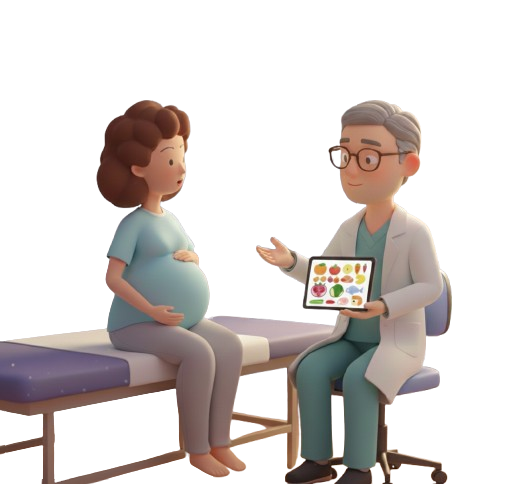
Pregnant women should eat a balanced diet.

Nutrition is about eating a healthy and balanced diet so your body gets the nutrients that it needs.

Most women should gain somewhere between 25 and 35 pounds (11 and 16 kilograms) during pregnancy.

For women who are thinking about getting pregnant, following a health care provider’s advice.

Prenatal care is the health care you get while you are pregnant.

Pregnancy Conditions

Pregnancy Diabetes(Gestational)

Gestational diabetes is high blood sugar (glucose) that starts or is first diagnosed during pregnancy.

Gestational Diabetes

Gestational diabetes is high blood sugar (glucose) that starts or is first diagnosed during pregnancy.

Gestational Diabetes - Self Care

Gestational diabetes is diabetes, defined by high blood sugar (glucose), that starts during pregnancy.

Gestational Diabetes - Self Care

Gestational diabetes is diabetes, defined by high blood sugar (glucose), that starts during pregnancy.

Gestational Diabetes Diet

Gestational diabetes is high blood sugar (glucose) that starts during pregnancy.

Gestational Diabetes Diet

Gestational diabetes is high blood sugar (glucose) that starts during pregnancy.

Pregnancy and The Flu

During pregnancy, it is harder for a woman's immune system to fight infections.

Pregnancy and The Flu

During pregnancy, it is harder for a woman's immune system to fight infections.

High Blood Pressure in Pregnancy

Newborn head molding is an abnormal head shape that results from pressure on the baby’s head during childbirth.

High Blood Pressure in Pregnancy

Newborn head molding is an abnormal head shape that results from pressure on the baby’s head during childbirth.

Urgent Maternal Warnings

Be aware of urgent maternal warning signs and symptoms during pregnancy and in the year after delivery.

Urgent Maternal Warnings

Be aware of urgent maternal warning signs and symptoms during pregnancy and in the year after delivery.

Child Birth & Postpartum

Natural Birth

Premature Labor

  • Preterm labor

    Labor that begins before week 37 is called "preterm" or "premature."

  • Premature Infant

    A premature infant is a baby born before 37 full weeks of gestation (more than 3 weeks before the due date).

  • Visiting Your Baby in The NICU

    Your baby is staying in the hospital NICU. NICU stands for neonatal intensive care unit.

  • Neonatal Weight Gain and Nutrition

    Premature babies need to receive good nutrition so they grow at a rate close to that of babies still inside the womb.

C-section (Cesarean Section)

  • C-section

    A C-section is the delivery of a baby by making an opening in the mother's lower belly area.

  • Going Home After a C-section

    You are going home after a C-section. You should expect to need help caring for yourself and your newborn.

  • Vaginal Birth After C-section

    If you had a cesarean birth (C-section) before, it does not mean that you will have to deliver the same way again.

Postpartum

  • Recovering From Birth

    Right now, you are focused on caring for your new baby. But new mothers must take special care of their bodies after giving birth and while breastfeeding, too.

  • Postpartum Depression

    Postpartum depression is moderate to severe depression in a woman after she has given birth. It may occur soon after delivery or up to a year later.

  • Losing Weight After Pregnancy

    Menopause is a stage in life when you no longer can get pregnant.

Birth Defects

  • Birth Defects

    A birth defect is a problem that happens while a baby is developing in the mother's body. Most birth defects happen during the first 3 months of pregnancy.

  • Down syndrome

    Down syndrome is a genetic condition in which a person has 47 chromosomes instead of the usual 46.

  • Spina Bifida

    Spina bifida is a birth disorder in which the spine doesn’t fully develop.

  • Cleft lip and palate

    Cleft lip and palate are birth defects that affect the upper lip and the roof of the mouth.

  • Cleft lip and palate repair

    Cleft lip and cleft palate repair is surgery to fix birth defects of the upper lip and palate (roof of the mouth).

  • Congenital Heart Defects

    Congenital heart defects (CHDs) are problems with the structure of the heart. "Congenital" means that that the problems are present at birth.

  • Clubfoot

    Clubfoot is a condition that involves both the foot and lower leg in which the foot turns inward and downward. It is a congenital condition, which means it is present at birth.

  • Clubfoot repair

    Clubfoot repair is surgery to correct a birth defect of the foot and ankle.

  • Sickle Cell Disease

    Sickle cell disease (SCD) is a group of inherited red blood cell disorders. If you have SCD, there is a problem with your hemoglobin.

Pregnancy Loss

Miscarriage

A miscarriage is the spontaneous loss of a fetus before the 20th week of pregnancy.

Miscarriage - threatened

A threatened miscarriage is a condition that indicates the potential for a miscarriage.

Pregnancy after miscarriage

Pregnancy after miscarriage can be stressful and confusing. When is the best time to get pregnant?

Stillbirth

If you lose a fetus at or after the 20th week of pregnancy, it’s called a stillbirth.

When your baby is stillborn

A stillbirth is when a baby dies in the womb during the last 20 weeks of pregnancy.