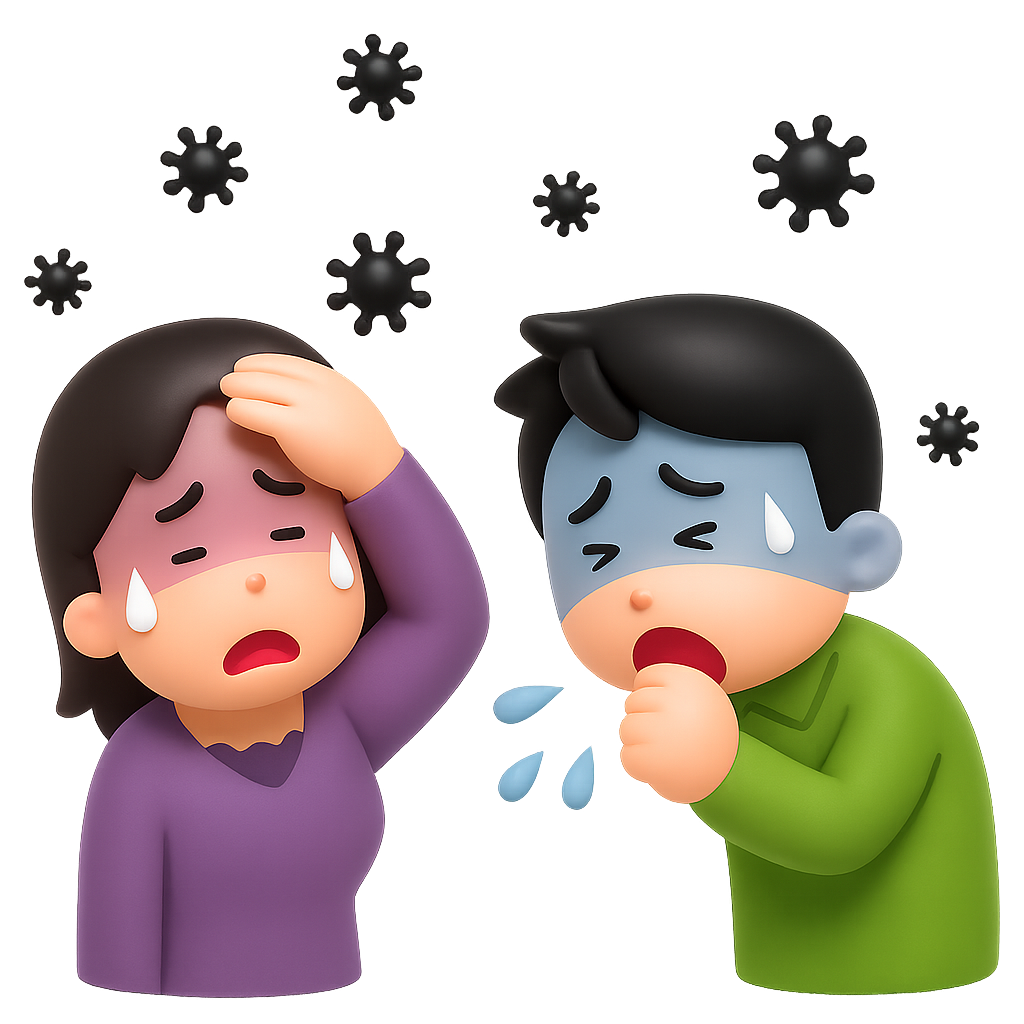
What is the difference between the flu and a common cold?
With the arrival of autumn and winter, respiratory viruses return to the forefront of the health scene, and there is much confusion between colds and influenza, although the difference between them can be crucial, especially for groups most vulnerable to complications.
Similarities and differences
Both illnesses begin with similar symptoms: a runny nose, sneezing, coughing, and possibly a slight fever. However, experts point out that the severity and rapid onset of symptoms often distinguish influenza from the common cold.
Colds: Mild to moderate symptoms, start gradually, rarely cause serious complications, and improve within days.
Influenza: sudden onset, high fever, severe muscle pain, general fatigue, and may lead to pneumonia or serious complications, especially in the elderly, children, and those with chronic diseases.
Different viruses
Colds are caused by hundreds of viruses, most notably rhinoviruses, while influenza is caused by specific viruses whose strains change annually, and this change is the reason for the need for an annual flu vaccine.
Why is influenza dangerous?
World Health Organization reports indicate that seasonal influenza causes millions of serious cases and hundreds of thousands of deaths annually worldwide.
The danger lies in:
- Its rapid spread via respiratory droplets.
- Its ability to weaken the immune system and open the door to secondary bacterial infections.
- Its greatest impact is on those who are health-wise vulnerable.
Treatment and prevention
There is no cure that directly eliminates respiratory viruses, but:
- Rest and fluids relieve the symptoms of colds.
- Antiviral drugs may reduce the severity of influenza if used early in high-risk groups.
- Antibiotics are of no use in either case, because the cause is viral and not bacterial.
As for prevention, it includes:
- Wash your hands regularly.
- Avoid social contact when symptoms appear.
- Ventilating enclosed spaces.
- Get the annual flu vaccine, especially for high-risk groups.
When should you be worried?
Doctors recommend seeing a doctor when:
- Persistent or very high fever.
- Shortness of breath or chest pain.
- The condition worsens in children or the elderly.
These symptoms may indicate complications that require medical intervention.
Distinguishing between colds and the flu does not mean downplaying any symptoms, but rather helps in dealing with them correctly, avoiding the misuse of medicines, and protecting the most vulnerable groups in society.
References
What is the difference between the flu and a common cold?, Aljazeera, https://www.aljazeera.net/health/2026/1/23/%D9%85%D8%A7-%D8%A7%D9%84%D9%81%D8%B1%D9%82-%D8%A8%D9%8A%D9%86-%D8%A7%D9%84%D8%A5%D9%86%D9%81%D9%84%D9%88%D9%86%D8%B2%D8%A7-%D9%88%D9%86%D8%B2%D9%84%D8%A7%D8%AA
Locations
Topics
- From a Harvard expert: 6 “effective” daily tips to slow down aging 1849 January 22, 2026
- Do you watch more than 3 hours of television daily? A study warns of psychological implications. 345 January 23, 2026
- The US Food and Drug Administration is requesting the removal of the “suicidal thoughts” warning from weight-loss drugs. 342 January 14, 2026
- “NC Band”… the first smart bracelet with medical standards for measuring temperature 342 January 20, 2026
- Ebvallo Atara Biotherapeutics Provides Regulatory Update on Ebvallo (tabelecleucel) 331 January 12, 2026