
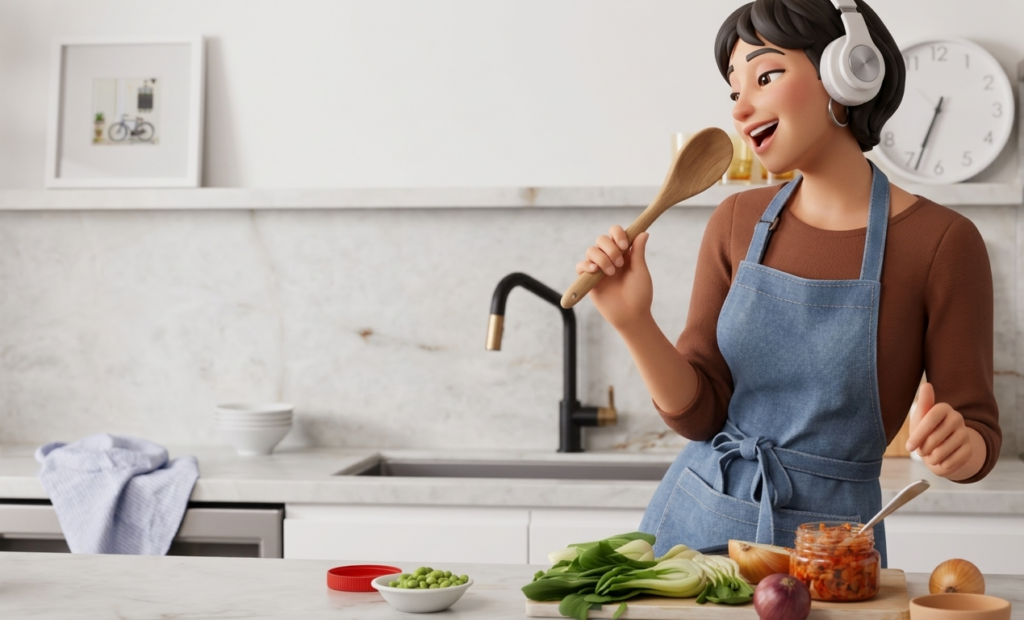
Cooking at least one meal at home weekly may cut dementia risk by up to 67%
- Past studies show that cooking meals at home can be a great strategy for good health.
- A new study found that cooking more at home may help decrease your risk for dementia.
- Researchers also found that for people with few cooking skills, cooking a meal at home from scratch at least once a week may lower dementia risk by 67%.
Past studies show that cooking meals at home can be a great strategy for good health.
Research has linked home cooking to a lower risk for certain health issues, such as type 2 diabetes, obesity, and heart disease, and may also offer mental health benefits.
Now, a new study published in the Journal of Epidemiology & Community Health says that cooking more at home may also help decrease your risk for dementia.
For this study, researchers analyzed health data from almost 11,000 adult participants ages 65 and older of the Japan Gerontological Evaluation Study.
Study participants were asked to respond to questionnaires regarding how frequently they cooked at home and their cooking skills, such as their ability to peel fruit and vegetables, grill fish, boil eggs, and make certain standard dishes such as a stir-fry or stew.
“We focused on home cooking because the 2020 Lancet Commission reportTrusted Source identified that around 40% of dementia cases could be prevented by changing lifestyle factors like diet and physical activity,” Yukako Tani, PhD, (she/her) associate professor in the Department of Public Health at the Institute of Science Tokyo in Japan, and the first and corresponding author of this study, told Medical News Today. “
Cooking at home promotes healthier eating habits, such as increased vegetable and fruit intake and less processed food consumption. It also involves physical activities like shopping and meal preparation, which are important sources of exercise for older adults, especially after retirement,” Tani continued.
At the study’s conclusion, researchers found that cooking a meal from scratch at home was associated with a 23% lower dementia risk among male participants and a 27% lower risk among female participants.
Additionally, scientists discovered that for study participants with few cooking skills, cooking a meal at home at least once a week was correlated with a 67% reduction in their dementia risk.
“This result is particularly interesting because it suggests that the act of engaging in cooking itself may provide cognitive stimulation and learning opportunities that are beneficial for brain health,” Tani explained. “This may be explained by the fact that cooking is a more cognitively novel and stimulating activity for novice cooks with low cooking skills than for advanced cooks with high cooking skills.”
“Dementia is a growing global public health concern, particularly in aging societies,” she added. “Identifying modifiable lifestyle factors is essential because they offer practical and accessible ways for individuals to reduce their risk and maintain cognitive health.”
MNT spoke with Dung Trinh, MD, an internist with MemorialCare Medical Group and the chief medical officer of Healthy Brain Clinic in Irvine, CA, about this study.
Trinh commented that his first reaction to the findings was that it’s an intriguing and credible observational finding, because it links a very practical everyday activity with lower dementia risk in a large group of older adults followed for about six years.
“Dementia is a growing public health challenge, and we still do not have enough proven strategies to fully prevent it,” Trinh said. “Studies like this matter because they explore whether modifiable, real-world behaviors might help preserve brain health.”
“The paper itself notes that a substantial share of dementia risk may be preventable or delayable through modifiable factors, so expanding that list — and testing which interventions are practical for everyday life — is an important research priority,” he added.
How can I get myself to cook at home more?
For readers who may want to start cooking and eating more meals at home — despite having limited cooking skills — MNT asked Monique Richard, MS, RDN, LDN, a registered dietitian nutritionist and owner of Nutrition-In-Sight, for her top tips.
To start, Richard advised working with a registered dietitian nutritionist (RDN) when possible, as they can help tailor meals to your preferences and abilities, simplify meal planning, and ensure your diet’s nutritional adequacy.
“This is especially important for individuals with chronic conditions, decreased appetite, or limited cooking confidence,” she continued. “As an RDN I meet clients and patients where they are at. I encourage them to start with the basics and build up from there. What can you already do? Boil water? Let’s start there — there’s a lot more possibilities than you think for the foundation, or side, of a meal. Can you scramble eggs? Build on those skills — add veggies, a side, or some herbs.”
“The goal isn’t to become a gourmet chef, but to build confidence and consistency in the kitchen, as appropriate and applicable per individual, with safety and accessibility in mind,” Richard added. “Repetition can build both skill and cognitive familiarity as a baseline, then it’s just about substituting different ingredients, trying your hand at an alternative cooking method or branching out into something a little more sophisticated.”
As there’s a strong connection between pleasure and nourishment, Richard said to start by cooking foods you actually enjoy and then learn how to make it better/healthier/more nutrient-rich with an RDN.
From there, she suggested starting with simple, “go-to” repeatable meals once or twice a week and rotating them. For example:
- Sheet pan vegetables + protein (i.e., asparagus, onions, and potatoes with salmon/cod/tilapia)
- A simple stir-fry
- Omelet or egg scramble with lots of vegetables, herbs/seasonings (one step further may ask — can a whole grain like oatmeal, toast, or rice be added as a side?)
Richard reminded readers that cooking at home doesn’t mean everything must be made from scratch, harvested from the garden, and take hours to curate — use shortcuts strategically. For example, she said it can mean simply putting a few things together and heating them to the appropriate temperature, such as:
- Pre-chopped vegetables
- Frozen produce
- Rotisserie chicken
- Canned beans
Or items that are cold and/or at room temperature, such as:
- A yogurt parfait with frozen berries and nuts
- Cereal with nuts and fruit
- A smoothie, milkshake, or slushie made with some ice/ice cream/frozen yogurt, frozen fruit, and protein powder
“Remember that it is never too late to learn something new or increase your culinary acumen, especially when these skills are so vital to autonomy, pleasure, and overall health and wellbeing,” Richard said. “Check out online videos, extension programs, neighborhood or community events, or even local college and high school programs. Cooking is one of the few daily activities that engages the brain, the body, and nutrition all at once. It literally feeds your brain and saves you dollars and cents, plus, it makes sense!”
References
Cooking at least one meal at home weekly may cut dementia risk by up to 67%, medical news today, www.medicalnewstoday.com/articles/cooking-at-least-one-meal-at-home-weekly-may-cut-dementia-risk
Locations
Topics
- From a Harvard expert: 6 “effective” daily tips to slow down aging 1869 January 22, 2026
- Study Links High Antioxidant Intake To Changes in Offspring Development 397 March 29, 2026
- An impending health threat endangering the lives of tens of millions… Is the world prepared? 395 March 29, 2026
- Despite their nutritional benefits, spinach and strawberries are the most polluted vegetables of 2026. 393 March 29, 2026
- Cooking at least one meal at home weekly may cut dementia risk by up to 67% 391 March 28, 2026