

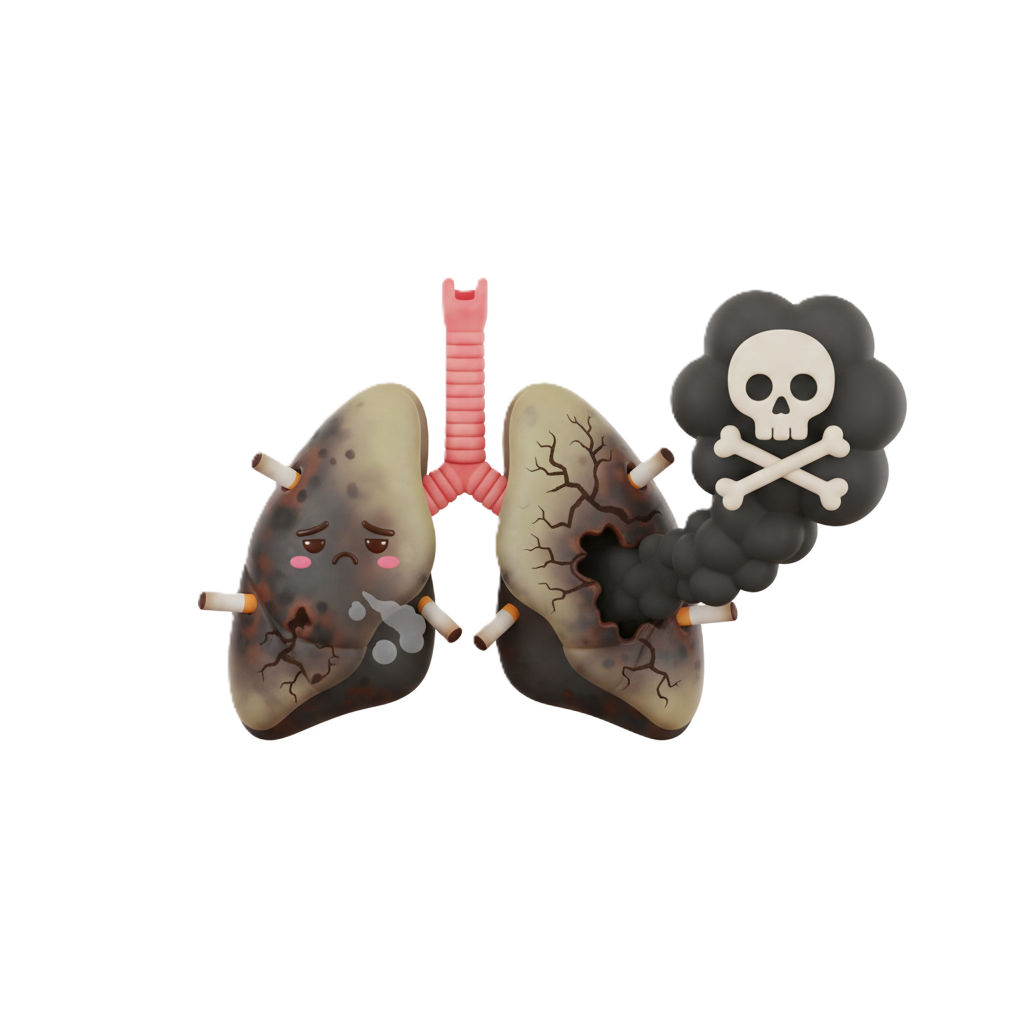
Vaping Likely Causes Cancer, Major Study Finds
Nicotine vaping is likely to cause lung and oral cancers, a comprehensive review of more than 100 studies has concluded.
According to the analysis, human and animal studies, as well as cell experiments looking at the effects of chemicals found in vape liquid, all point toward carcinogenicity. Those studies, published since 2017, record “increasing concern”, the researchers report.
We don’t have long-term, population-level data yet, so the exact risk cannot be quantified, but the early signs are strong enough that scientists are warning against repeating the mistakes made with cigarettes.
“Though smoking was once given the benefit of doubt,” write study co-authors Freddy Sitas and Bernard Stewart of the University of New South Wales in Australia in a related commentary, “the same should not now be accorded to vaping given the strength of relevant carcinogenicity data.”
Vaping emerged in the early 2000s, touted as a safer, less smelly delivery system for the addictive chemical nicotine than methods that involve inhaling the smoke of burning tobacco leaves. Instead, a device heats and vaporizes a nicotine-containing liquid, which the user then inhales.
Vaping’s popularity grew rapidly, with little information about the possible long-term damage vaping might cause.
Some public health experts nevertheless warned about the potential harms of vaping based on what was already known about the chemicals vapes contained.
Given that it took around 100 years – from the mid-1800s until 1964 – for scientists to prove a causal link between smoking and lung cancer, and another 50 years for the effects to be quantified, researchers remained on alert for new evidence as it emerged.
Yet studies often compared vaping to smoking or simply inferred a risk of cancer based on vapers tendencies to also smoke cigarettes.
Sitas, Stewart and colleagues wanted to assess “the carcinogenic impact of e-cigarettes in their own right”.
The team focused on studies that looked specifically at e-cigarettes or compared people who vape to those who don’t – excluding research that looked at dual users (who vape and smoke) or compared e-cigarettes to smoking. Their review also examined studies published since 2017 to avoid over-reliance on earlier, patchier work.
They categorized the studies into three main groups: human studies showing biomarkers of DNA damage, oxidative stress, and inflammation; experimental studies in mice showing the development of lung tumors as a direct result of vape aerosol exposure; and other lab analyses revealing the potential pathways via which compounds in vape liquid – including known carcinogens – inflict damage on cells.
The researchers also considered case reports describing heavy vapers presenting with aggressive oral cancers where traditional risk factors such as smoking or viral infection were absent or limited, including unusually severe disease in relatively young patients.
“To our knowledge, this review is the most definitive determination that those who vape are at increased risk of cancer compared to those who don’t,” says Stewart, a cancer researcher.
“Considering all the findings – from clinical monitoring, animal studies, and mechanistic data – e-cigarettes are likely to cause lung cancer and oral cancer.”
Another particular concern is how people vape in the real world. Vaping has long been touted as an aid to quit smoking, and though some evidence suggests it may help in the short term, at least more so than other smoking cessation strategies such as nicotine patches, many people do not switch completely from smoking to vaping.
Young people who never did smoke but start vaping are also three times more likely to become regular cigarette smokers, according to a 2021 meta-analysis of 25 studies.
This dual use, some evidence suggests, may be significantly more dangerous than smoking alone. A 2024 study found a four-fold higher risk of lung cancer among individuals who vaped and smoked compared to only smokers.
Although further work is needed to quantify the health risks of vaping, collecting long-term information is going to take time, particularly because many cancers can take decades to develop after initial exposure.
In the meantime, researchers must rely on earlier biological and experimental signals to assess potential harm.
While some smokers may benefit from using vapes to cut down on cigarettes, many young people try vaping without ever having smoked – introducing a new population to nicotine exposure and inhaled chemical mixtures that they may otherwise have avoided.
The new findings, the researchers hope, will help governments as they work to introduce and refine regulations.
“Early reports linked smoking to infectious diseases such as tuberculosis, followed by cardiovascular disease, stroke, and lung cancer,” says Sitas, an epidemiologist.
“E-cigarettes were introduced about 20 years ago. We should not wait another 80 years to decide what to do.”
References
Vaping Likely Causes Cancer, Major Study Finds., science alert, www.sciencealert.com/vaping-likely-causes-cancer-major-study-finds
Locations
Topics
- From a Harvard expert: 6 “effective” daily tips to slow down aging 1871 January 22, 2026
- H9N2 Bird Flu Hits Europe as First Human Case Confirmed in Italy 420 March 31, 2026
- New Alzheimer’s Treatment Strategy Reverses Cognitive Decline in Mice 420 March 31, 2026
- Vaping Likely Causes Cancer, Major Study Finds 420 March 31, 2026
- Kratom Cases Surging In U.S. 415 March 30, 2026