

Depression Screening
- Home
- Health Screening & Checkup
- Depression Screening
- What is depression screening?
- What is it used for?
- Why do I need depression screening?
- What happens during depression screening?
-
Will I need to do anything to prepare for
depression screening? - Are there any risks to depression screening?
- What do the results mean?
-
Is there anything else I need to know
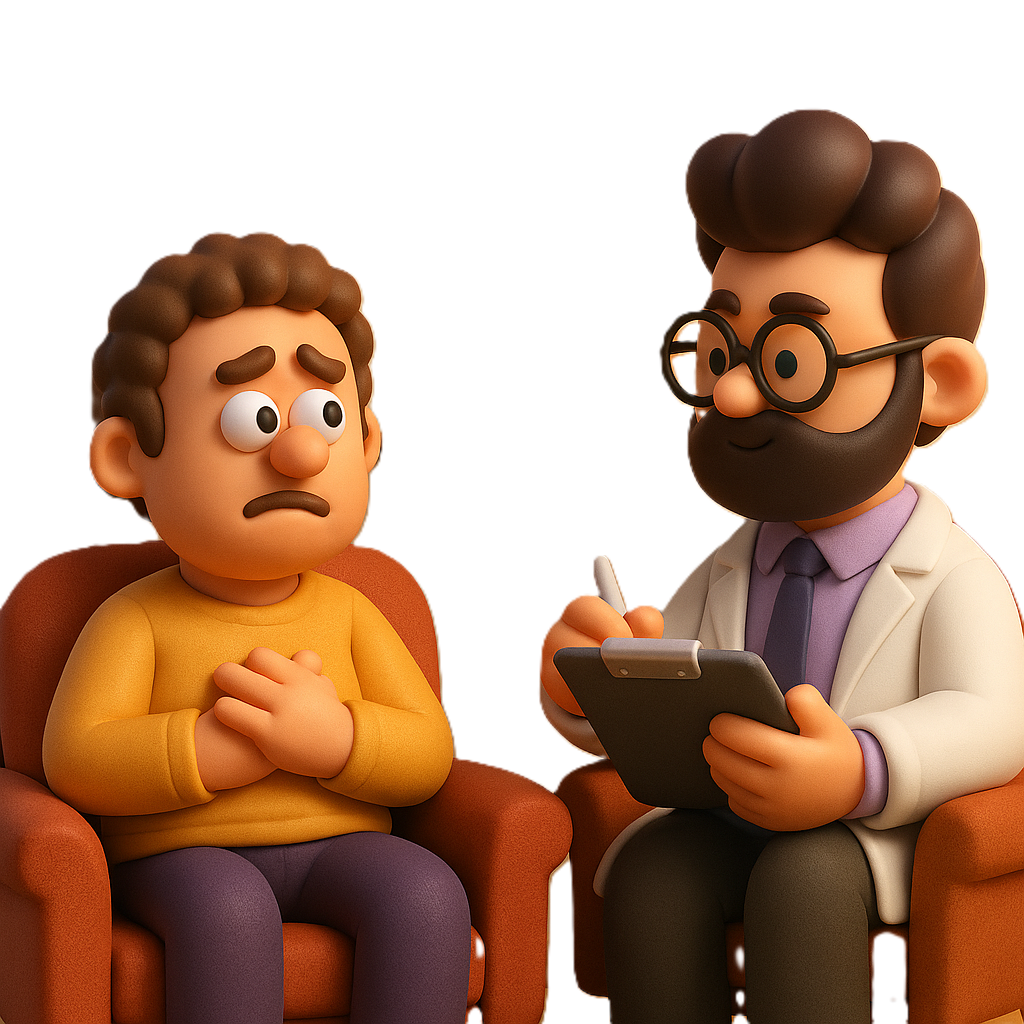
A depression screening is also called a depression test. It’s a standard set of questions that you answer to help your health care provider find out whether you have depression.
Depression is a common, serious mental health condition. Everyone feels sad at times, but depression is different than normal sadness or grief. Depression can affect how you think, feel, and behave. It makes it hard to function at home and work. You may lose interest in activities you once enjoyed. Some people with depression may feel worthless and might even think about harming themselves. Depression may also be part of other mental health conditions, such as bipolar disorder.
Because depression is a common mental health problem, depression screening is often done as part of a routine health checkup. Medical experts recommend that depression screening should be done for everyone starting at age 12. Screening can help find depression early. And treating depression early may make recovery faster. Most people with depression will get better.
Other names: depression test, Patient Health Questionnaire-9 (PHQ-9), Beck Depression Inventory (BDI), Hamilton Depression Rating Scale (HAM-D), Zung Self-Rating Depression Scale (SDS), Geriatric Depression Scale (GDS and GDS-SF)
A depression screening is used to:
- Help diagnose depression
- Understand how severe depression may be
- Help figure out what type of depression you have
There are different types of depression. The most common types are:
- Major depression, also called major depressive disorder. The symptoms typically make it difficult to work, sleep, study and eat. With major depression, you have symptoms most of the time for at least two weeks.
- Persistent depressive disorder, also called dysthymia. The symptoms are less severe than major depression, but they last much longer, usually for at least two years.
- Seasonal affective disorder (SAD). This form of depression usually happens in winter when there’s less sunlight. Most people with SAD tend to feel better in the spring and summer.
- Postpartum depression. This is major depression that happens after giving birth. It’s more severe and lasts longer than mild unhappiness and other mood changes that are often called the “baby blues.” Major depression may also begin during pregnancy. Depression that happens during or shortly after pregnancy is called “perinatal depression.” Medical experts recommend routine depression screening during pregnancy and after birth.
Depression screening is often part of a routine checkup. You may also need depression screening if you show signs of depression, which may include:
- Loss of interest or pleasure in activities you used to enjoy
- Feeling sad or anxious
- Feelings of guilt, worthlessness or helplessness
- Trouble sleeping (insomnia) or sleeping too much
- Fatigue and lack of energy
- Trouble concentrating, remembering details, or making decisions
- Changes in your weight
- Thoughts of hurting yourself or suicide
During a depression screening, you’ll answer a standard set of questions. Your provider may ask the questions, or you may fill out a questionnaire form to discuss with your provider later.
In general, the questions ask you about:
- Changes you’ve noticed in your:
- Mood
- Sleep habits
- Appetite or weight
- Energy levels
- Ability to focus your attention
- Stress levels
- Medicines you take
- Alcohol and drug use
- Your personal and family history of depression and other mental health conditions
You may also have a physical exam. There’s no lab test that can diagnose depression. But your provider may order blood tests to find out if another health condition, such as anemia or thyroid disease, may be causing depression.
During a blood test, a health care professional will take a blood sample from a vein in your arm, using a small needle. After the needle is inserted, a small amount of blood will be collected into a test tube or vial. You may feel a little sting when the needle goes in or out. This usually takes less than five minutes.
If you are being tested by a mental health provider, he or she may ask you more detailed questions about your feelings and behaviors. You may also be asked to fill out a questionnaire about these issues.
You usually don’t need any special preparations for a depression test or a blood test.
There is no risk to answering questions or having a physical exam.
There is very little risk to having a blood test. You may have slight pain or bruising at the spot where the needle was put in, but most symptoms go away quickly.
If you are diagnosed with depression, your provider will discuss your treatment options. Starting treatment as soon as possible may improve your chance of recovery. Treatment for depression may take time to work, but it can help reduce symptoms and shorten how long depression lasts.
Your provider may suggest that you see a mental health provider for your care. A mental health provider is a health care professional who specializes in diagnosing and treating mental health problems. If you are already seeing a mental health provider, a depression test may help guide your treatment.
There are many types of mental health providers who treat depression. Your primary health care provider can help you find the right support.
These are some of the professionals who have training to diagnose and treat depression:
- Psychiatrists are medical doctors who specialize in mental health. Psychiatrists can prescribe medicine.
- Psychologists generally have doctoral degrees, but they do not have medical degrees. They can’t prescribe medicine unless they have a special license. Some psychologists work with providers who can prescribe medicine. Psychologists may use one-on-one counseling and/or group therapy sessions.
- Psychiatric or mental health nurses are nurses with special training in mental health problems. Nurses who may have a master’s or doctoral degree in psychiatric-mental health nursing include, advanced practice registered nurses (APRNs), certified nurse practitioners (CNPs), and clinical nurse specialists (CNSs). In some states, certain nurses can prescribe medicines.
- Licensed clinical social workers have at least a master’s degree in social work with special training in mental health. They can’t prescribe medicine, but they may work with providers who can prescribe medicine. Providers who are licensed clinical social workers usually have LCSW or LICSW after their names.
- Licensed professional counselors (LPC) may also be called clinicians or therapists. States have different names of these licenses, such as LMFT (licensed marriage and family therapist). These professionals usually have a master’s degree in a field related to mental health. They can’t prescribe medicine, but may work with providers who can prescribe.
References
- American Psychiatric Association [Internet]. Washington D.C.: American Psychiatric Association; c2022. What Is Depression?; [reviewed 2020 Oct; cited 2022 Oct 4]; [about 9 screens]. Available from: https://www.psychiatry.org/patients-families/depression/what-is-depression
- Centers for Disease Control and Prevention [Internet]. Atlanta: U.S. Department of Health and Human Services; Tips From Former Smokers®: Mental Health Conditions: Depression and Anxiety ; [reviewed 2022 Sep 14; cited 2022 Oct 10]; [about 5 screens]. Available from: https://www.cdc.gov/tobacco/campaign/tips/diseases/depression-anxiety.html
- Chand SP, Arif H. Depression. [Updated 2022 Jul 18; cited 2022 Oct 10]. In: StatPearls [Internet]. Treasure Island (FL): StatPearls Publishing; 2022 Jan-. Available from: https://www.ncbi.nlm.nih.gov/books/NBK430847/
- Johns Hopkins Medicine [Internet]. Johns Hopkins Medicine; Health Library: Depression; [cited 2022 Oct 4]; [about 6 screens]. Available from: https://www.hopkinsmedicine.org/health/conditions-and-diseases/depression
- Mayo Clinic [Internet]. Mayo Foundation for Medical Education and Research; c1998–2022. Depression (major depressive disorder): Diagnosis and treatment; [cited 2022 Oct 4]; [about 15 screens]. Available from: https://www.mayoclinic.org/diseases-conditions/depression/diagnosis-treatment/drc-20356013
- Mayo Clinic [Internet]. Mayo Foundation for Medical Education and Research; c1998–2022. Depression (major depressive disorder): Symptoms and causes; [cited 2022 Oct 4]; [about 9 screens]. Available from: https://www.mayoclinic.org/diseases-conditions/depression/symptoms-causes/syc-20356007
- Mayo Clinic [Internet]. Mayo Foundation for Medical Education and Research; c1998–2022. Mental health providers: Tips on finding one; [cited 2022 Oct 4]; [about 5 screens]. Available from: https://www.mayoclinic.org/diseases-conditions/mental-illness/in-depth/mental-health-providers/art-20045530
- MentalHealth.gov [Internet]. Washington (DC): U.S. Department of Health and Human Services; What to Look For: Mood Disorders/Depression; [updated 2022, Mar 1; cited 2022 Oct 10]; [about 2 screens]. Available from: https://www.mentalhealth.gov/what-to-look-for/mood-disorders/depression
- Merck Manual Consumer Version [Internet]. Kenilworth (NJ): Merck & Co. Inc.; c2022. Depression; [modified 2022 Sep; cited 2022 Oct 4]; [about 11 screens]. Available from: https://www.merckmanuals.com/home/mental-health-disorders/mood-disorders/depression
- National Alliance on Mental Illness [Internet]. Arlington (VA): NAMI; c2022. Types of Mental Health Professionals; [updated 2020 Apr; cited 2022 Oct 4]; [about 3 screens]. Available from: https://www.nami.org/Learn-More/Treatment/Types-of-Mental-Health-Professionals
- National Heart, Lung, and Blood Institute [Internet]. Bethesda (MD): U.S. Department of Health and Human Services; Blood Tests; [updated 2022 Mar 24; cited 2022 Oct 4]; [about 7 screens]. Available from: https://www.nhlbi.nih.gov/health/blood-tests
- National Institute of Mental Health [Internet]. Bethesda (MD): U.S. Department of Health and Human Services; Depression; [updated 2022 Sep; cited 2022 Oct 4]; [about 3 screens]. Available from: https://www.nimh.nih.gov/health/topics/depression
- National Institute of Mental Health [Internet]. Bethesda (MD): U.S. Department of Health and Human Services; Perinatal Depression; [cited 2022 Oct 4]; [about 7 screens]. Available from: https://www.nimh.nih.gov/health/publications/perinatal-depression
- UF Health: University of Florida Health [Internet]. Gainesville (FL): University of Florida; c2022. Depression: Overview; [reviewed 2020 May 10; cited 2020 Oct 4]; [about 4 screens]. Available from: https://ufhealth.org/depression
- UW Health [Internet]. Madison (WI): University of Wisconsin Hospitals and Clinics Authority; c2022. Depression Screening;[updated 2022 Feb 9; cited 2022 Oct 4]; [about 4 screens]. Available from: https://patient.uwhealth.org/healthwise/article/en-us/aba5372
- UW Health [Internet]. Madison (WI): University of Wisconsin Hospitals and Clinics Authority; c2022. Do I Have Depression?;[updated 2022 Feb 9; cited 2022 Oct 4]; [about 3 screens]. Available from: https://patient.uwhealth.org/healthwise/article/en-us/ty6747
Related Topics

Other Specialities
Stay away from bad habits
Health Screening & Checkup
Screenings are tests that look for diseases before you have symptoms. Screening tests can find diseases early, when they're easier to treat.
Book your appointment TODAY!
Search on the closest Doctor to your location and book based on specialty. EARN 10 POINTS more with CuraPOINT.
BOOK-
Find a healthcare provider near you
-
Call for support
-
Feel free to message us!
About Us
Curafile is a Medical Cyclopedia, biggest Healthcare Curated Network Globally, serves citizens, service providers in one place.
- Estonia - Qatar
Jordan - Saudi Arabia