

High Cholesterol: A Silent Threat to Heart Health
What is cholesterol?
Cholesterol is a waxy, fatlike substance in your blood. Cholesterol is essential for good health. But too much of the bad kind of cholesterol can put you at a higher risk of heart disease or stroke.
Where does cholesterol come from?
- produced by your liver.
- From food (dietary cholesterol).
Which foods are high in cholesterol?
- Processed and cured meat
- Fatty cuts of meat
- Organ meat
- High fat diary
- Coconut and palm oil
- Fried food
- Commercially prepared pastries
Cholesterol, triglycerides, and phospholipids are transported in blood as complexes of lipids and proteins (lipoproteins)
What are bad and good cholesterol?
LDL (low-density Lipoprotein):
It carries cholesterol from the liver to different parts of the body, so it is sometimes called “bad” cholesterol because a high LDL level leads to a buildup of cholesterol in your arteries.
HDL (High density Lipoprotein):
It helps remove excess cholesterol from the bloodstream and carries it back to the liver, where it is broken down and removed from the body, so it is sometimes called the “good” cholesterol because:
Cause of high cholesterol level?
Primary causes include genetic defects resulting in hypercholesterolemia, combined hyperlipidemia, and disorders of HDL-C metabolism and an excess of lipoproteins
Secondary or acquired dyslipidemias can accompany genetic disorders and may be associated with Unhealthy diet, Lack of physical activity, Smoking or exposure to tobacco smoke, Being overweight or obese
How high cholesterol effect on heart?
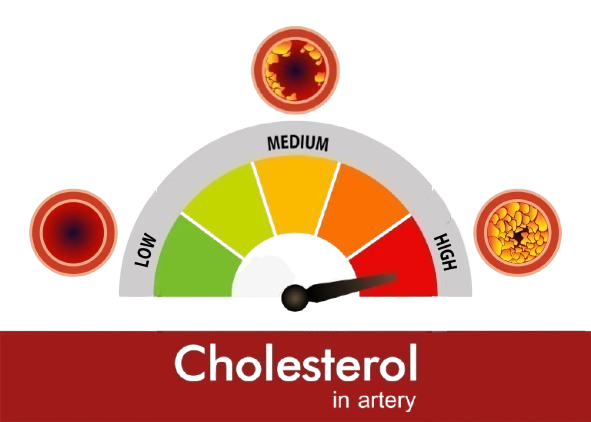
1-Plaque Formation: Excess LDL cholesterol sticks to artery walls → forms plaques (fatty deposits).
2-Artery Narrowing (Atherosclerosis): Plaques narrow and stiffen arteries → reduces blood flow to the heart muscle.
3-Blood Clots: Plaques can rupture → blood clots form → can block blood flow completely.
So, Lipid abnormalities increase the risk of coronary, cerebrovascular, and peripheral arterial disease, collectively known as atherosclerotic cardiovascular disease (ASCVD)
Why Is High Cholesterol Called a “Silent Threat”?
Because Most patients are asymptomatic for years before they develop ASCVD, which may produce symptoms including chest pain, palpitations, sweating, anxiety, shortness of breath, loss of consciousness, difficulty with speech or movement, or abdominal pain
Recommendation:
Regularly monitor BMI and weight at each visit to reach the goal of weight loss which is 5%–10% weight loss in overweight or obese persons
- Recommend moderate-to-vigorousphysical activity three to four times per week with each session lasting 40 minutes on average
- Quitsmoking
- Reduction of daily calories from saturated and trans fats.
- Increased intake of soluble fiber( peas, apples, bananas, citrus fruits, carrots),can reduce total and LDL cholesterol but has little effect on HDL-C or TG. Total daily fiber intake should be about 25 g/day.
- Encouragediet rich in vegetables, fruits, whole grains, low-fat dairy, poultry, fish, legumes, and nuts.
- Recommendedfish oil supplementation provides a consistent daily intake of omega-3 polyunsaturated fatty acids (PUFA) such aseicosapentaenoic acid (EPA) and docosahexaenoic acid (DHA)
- Limit intake of sweets, sugar-sweetened beverages, and red meat.
- ngestion of 2–3 g daily of plant sterols and stanols isolated from vegetable oils reduces LDL-C by 5%–15% (such as corn, soybean, and rapeseed oils).
References
High Cholesterol: A Silent Threat to Heart Health, Curafile, curafile.com/2026/01/13/high-cholesterol-a-silent-threat-to-heart-health/
Locations
Topics
- From a Harvard expert: 6 “effective” daily tips to slow down aging 1811 January 22, 2026
- “NC Band”… the first smart bracelet with medical standards for measuring temperature 306 January 20, 2026
- Do you watch more than 3 hours of television daily? A study warns of psychological implications. 298 January 23, 2026
- The “dangerous” Nipah virus: What are its symptoms and how can it be prevented? 295 January 27, 2026
- The US Food and Drug Administration is requesting the removal of the “suicidal thoughts” warning from weight-loss drugs. 289 January 14, 2026