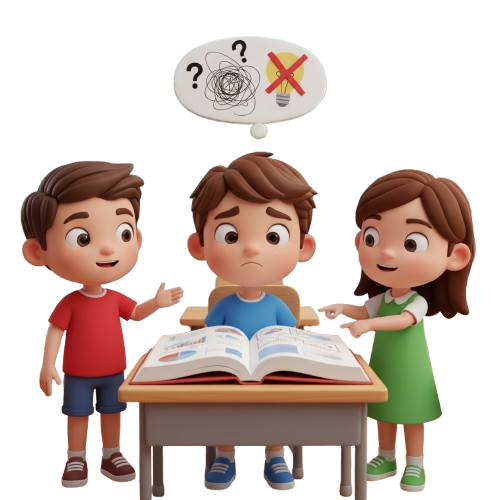
Dyslexia: When a challenge becomes a form of creativity
Dyslexia is one of the most common learning disorders. It is a neurological condition that affects an individual’s ability to process and understand written words, without being related to visual or auditory impairment , but rather to the way the brain works in interpreting linguistic symbols.
With increasing awareness of the importance of early detection, understanding dyslexia has become an educational and societal necessity to ensure a fair educational environment that provides children and adults with dyslexia with equal opportunities for success and development.
According to the Cleveland Clinic website , dyslexia is a learning disability that disrupts the brain’s processing of written language , as those affected experience difficulties with reading and related skills.
The Dyslexia Foundation in the UK defines dyslexia as a specific learning disability that primarily affects reading and writing skills , as well as information processing. Individuals with dyslexia may have difficulty processing and remembering information they see and hear, which can impact their learning and acquisition of reading and writing skills. Dyslexia can also affect other areas, such as organizational skills.
How does dyslexia affect language comprehension?
Reading begins with spoken language. In early childhood , speech begins with simple sounds . As more sounds are learned, individuals also learn how to use them to form words, phrases, and sentences. Learning to read involves associating sounds with different written symbols, which are letters.
This is where dyslexia comes in, interfering with how the brain uses spoken language to ” decode” writing . The brain has difficulty processing what is read, particularly in breaking down words into sounds or associating letters with sounds when reading.
This slowdown may have a cascading effect on other skills, such as:
- Slow reading is due to difficulty in processing and understanding words.
- Difficulties in writing and spelling.
- Problems with storing words and their meanings in memory.
- Difficulty forming sentences to convey more complex ideas.
How common is dyslexia?
Although dyslexia does not affect everyone, it is widespread enough to be widely known.
According to the World Population Review , between 5% and 10% of people in most countries of the world, which is up to 700 million people worldwide, suffer from some degree of dyslexia .
Dyslexia is the most common learning disability, affecting approximately 80% of individuals with learning difficulties . It affects people equally regardless of gender or race.
risk factors
There are factors that may increase the likelihood of developing or worsening reading difficulties , such as:
- Exposure to toxic substances found in the air and water , especially heavy metals (such as lead or manganese), nicotine, and some chemicals used as flame retardants.
- Limited access to reading materials ; the risk increases for children who grow up in families that do not encourage reading or where reading materials are less available.
- Limitations of the learning environment ; children who do not receive adequate educational support at school or in similar environments may experience exacerbated difficulties.
Symptoms of dyslexia
As the child gets older, the symptoms of dyslexia may appear as follows:
Difficulty spelling simple words.
Difficulty in learning the names of the letters.
Difficulty distinguishing between letters that are similar in shape.
Difficulty in pronunciation.
Hesitation in reading aloud.
Difficulty in pronouncing new words.
Difficulty in associating sounds with letters or parts of words.
Difficulty in learning how to connect sounds.
Mixing up the positions of the sounds in the word.
References
Dyslexia: When a challenge becomes a form of creativity, Alarabia, https://www.alaraby.com/news/%D8%B9%D8%B3%D8%B1-%D8%A7%D9%84%D9%82%D8%B1%D8%A7%D8%A1%D8%A9-%D8%AD%D9%8A%D9%86-%D9%8A%D8%AA%D8%AD%D9%88%D9%84-%D8%A7%D9%84%D8%AA%D8%AD%D8%AF%D9%8A-%D8%A5%D9%84%D9%89-%D8%A5%D8%A8%D8%AF%D8%A7%D8%B9
Topics
- From a Harvard expert: 6 “effective” daily tips to slow down aging 1774 January 22, 2026
- The “dangerous” Nipah virus: What are its symptoms and how can it be prevented? 260 January 27, 2026
- The US Food and Drug Administration is requesting the removal of the “suicidal thoughts” warning from weight-loss drugs. 258 January 14, 2026
- “NC Band”… the first smart bracelet with medical standards for measuring temperature 251 January 20, 2026
- Do you watch more than 3 hours of television daily? A study warns of psychological implications. 250 January 23, 2026