
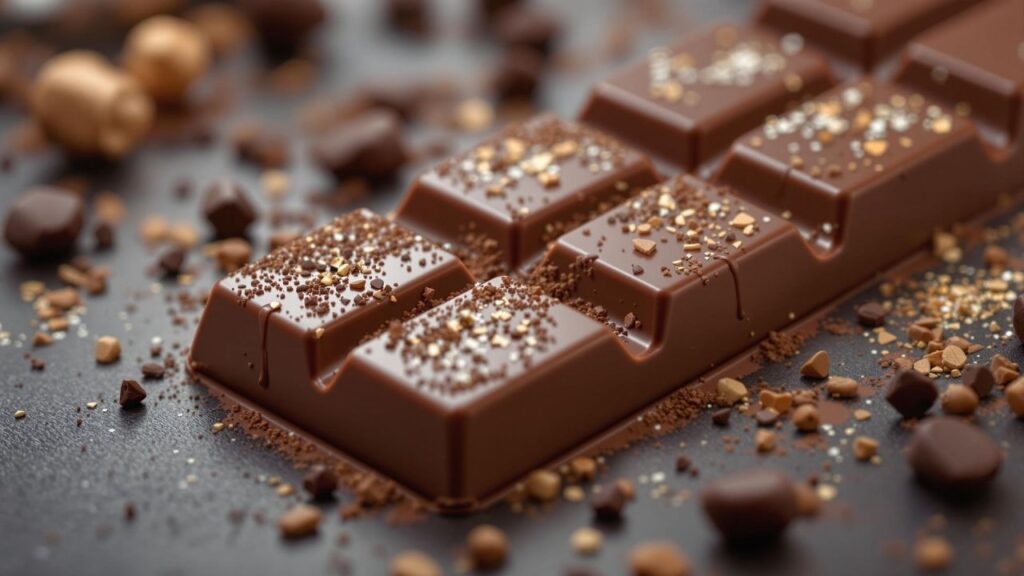
Dark chocolate or milk chocolate… which is healthier?
Tell me – there’s little more universal than the love of sweets. Whether it’s a cookie after dinner, ice cream on a summer afternoon, or a handful of candy to energize us during the workday, most of us find comfort in eating something sweet. And among the most popular sweets worldwide is chocolate.
But not all chocolates are created equal. While many milk chocolates contain large amounts of added sugars and other ingredients, “dark chocolate has a much higher percentage of cocoa, giving it a richer, more concentrated flavor and more health benefits,” says Amy Goodson, a registered dietitian at The Sports Nutrition Playbook.
According to USA Today, this is why dark chocolate has gained its scientifically backed reputation as the best for health, while emphasizing the importance of moderation.
What is dark chocolate?
Anne Weintraub, a registered dietitian and consultant, explains that dark chocolate is made primarily “from cocoa solids, cocoa butter, a small amount of sugar, and little or no milk.”
A lower milk content in dark chocolate results in a deeper, more bitter taste, in addition to a higher concentration of cocoa.
Dark chocolate typically contains at least 50% cocoa, although many high-quality varieties range between 70% and 85%.
Judson says, “The higher the percentage of cocoa, the stronger the flavor and the higher the concentration of beneficial compounds.”
How does dark chocolate benefit health?
Dark chocolate is rich in flavonoids, which are a type of antioxidant found in plants.
Judson says, “These compounds help protect the body’s cells from inflammation and damage caused by free radicals, which are associated with aging and chronic diseases.”
Studies have also shown that the flavanol compounds found in cocoa support heart health “by improving blood flow and helping to regulate blood pressure,” explains Weintraub.
Judson adds: “Some research suggests that the flavanol compounds found in cocoa may slightly improve oxygen delivery to muscles, which supports endurance.”
Winthrop points out that dark chocolate may also benefit the brain because it contains compounds that improve mood by supporting the production of brain chemicals that give a feeling of happiness, such as serotonin.
There is evidence that dark chocolate “may also improve concentration and memory”.
Dark chocolate is more nutrient-dense than many people think.
It contains iron, magnesium, copper, and manganese. Iron supports oxygen transport in the blood, magnesium is essential for muscle and nerve function, while copper and manganese aid in metabolism and antioxidant defense.
What is a healthy portion of dark chocolate?
Despite its many benefits, dark chocolate still contains fat and sugar, and its calorie count typically ranges between 150 and 170 calories per portion (28 grams).
Judson says: “A serving of approximately 28 grams per day is appropriate for most adults who want to enjoy the health benefits of dark chocolate without the added calories or sugar.”
It is also important to remember that dark chocolate contains caffeine and theobromine, “which are natural stimulants, so those prone to anxiety or sensitivity to caffeine should be careful about consuming large portions.”
Dark chocolate is also rich in oxalates, so people prone to kidney stones are usually advised to consume it in moderation.
The same warning applies to patients with high blood pressure, as dark chocolate may interact with some blood pressure medications.
References
Dark chocolate or milk chocolate… which is healthier, khaberni, https://www.khaberni.com/news/775028-%D8%A7%D9%84%D8%B4%D9%88%D9%83%D9%88%D9%84%D8%A7-%D8%A7%D9%84%D8%AF%D8%A7%D9%83%D9%86%D8%A9-%D8%A7%D9%85-%D8%A8%D8%A7%D9%84%D8%AD%D9%84%D9%8A%D8%A8-%D8%A7%D9%8A%D9%87%D9%85%D8%A7-%D8%A7%D9%83%D8%AB%D8%B1-%D8%B5%D8%AD%D8%A9%D8%9F
Topics
- From a Harvard expert: 6 “effective” daily tips to slow down aging 1774 January 22, 2026
- The “dangerous” Nipah virus: What are its symptoms and how can it be prevented? 260 January 27, 2026
- The US Food and Drug Administration is requesting the removal of the “suicidal thoughts” warning from weight-loss drugs. 258 January 14, 2026
- “NC Band”… the first smart bracelet with medical standards for measuring temperature 251 January 20, 2026
- Do you watch more than 3 hours of television daily? A study warns of psychological implications. 250 January 23, 2026