

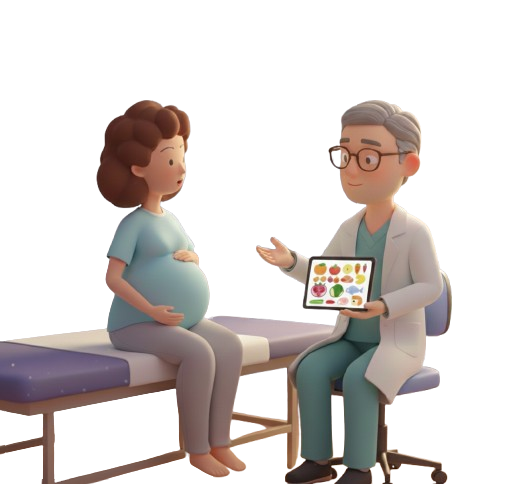
Why does a pregnant woman need iodine and what is the safe limit?
Iodine is one of the essential vital elements in the human body, as it plays a pivotal role in maintaining healthy balance. Its main importance lies in its involvement in the production of thyroid hormones (T3 and T4), which are responsible for regulating metabolism, supporting growth, and controlling many other vital functions.
Therefore, any imbalance in its levels, whether an increase or a decrease, may have a negative impact on public health.
Why does a pregnant woman’s need for iodine increase?
A woman’s iodine needs increase significantly during pregnancy due to a rise in thyroid hormone production of up to 50%, in addition to a 30% to 50% increase in urinary iodine loss. While there is medical consensus on the necessity of addressing severe deficiencies, the effectiveness of iodine supplements in cases of mild to moderate deficiency during pregnancy has been a subject of debate for years.
Global recommendations and safe limits
Both the World Health Organization and the American Endocrine Society recommend that pregnant women take iodine supplements with a daily dose of at least 250 micrograms, noting that this amount is about 100 micrograms more than the requirement for non-pregnant women.
They also stressed the need for iodine levels in urine not to exceed 250 micrograms per liter, especially during the first months of pregnancy.
In contrast, a study conducted in China on 7,190 pregnant women, between the fourth and eighth weeks of pregnancy, showed that excessively high iodine levels during this period may lead to subclinical hypothyroidism.
Risks of excess
The health risks are not limited to iodine deficiency; the damage also extends to cases of excessive intake.
This may lead to immune disorders in the mother’s thyroid function, affecting the balance of hormones during pregnancy.
According to an Italian study published in 2021 in the journal Minerva Endocrinologica, this hormonal imbalance may negatively affect the normal development of the nervous system in the fetus.
When is iodine intake necessary during pregnancy?
Obtaining iodine from the first trimester of pregnancy is crucial, especially in cases of severe deficiency. During this stage, the fetus relies entirely on the mother’s thyroid hormones until its own thyroid gland fully develops in the late third trimester. From then on, the fetus obtains its required iodine through the mother’s diet or supplements.
The recommendations indicate the possibility of taking oral iodine supplements daily at a dose not exceeding 250 micrograms, or resorting to a high concentrated dose of iodine-fortified oil once every 6 to 12 months, whether for pregnant or breastfeeding women.
Breast milk: the most effective medium
International researchers from Switzerland and other countries have concluded that providing infants with iodine through breast milk is more effective than giving them supplements directly.
A randomized clinical trial involving 241 breastfeeding women in Morocco, suffering from moderate to severe iodine deficiency, showed that taking a single high-concentration dose (400 mg) of iodine-fortified oil immediately after birth improved iodine levels in their infants through transfer via breast milk.
Multiple studies have shown that severe iodine deficiency in mothers during pregnancy can have serious health consequences for the fetus. Brain and nervous system development depends primarily on thyroid hormones. Nerve tissue begins to form as early as the second month of pregnancy, a process that requires adequate iodine.
Therefore, severe deficiency may impair physical and mental development, and increase the risk of developing cretinism.
Cognitive disorders and a decline in mental abilities
Severe iodine deficiency is associated with cognitive and perceptual disorders in children, as a result of its direct effect on brain development.
A scientific review conducted by Spanish researchers, which examined the effects of iodine deficiency during the early months of pregnancy, confirmed an increased risk of developing neurological disorders that may later lead to learning difficulties.
In line with these findings, the researchers recommended that iodine replacement should begin early in pregnancy, or even before it occurs, while emphasizing the importance of consulting specialists to take into account individual health differences.
Iodine and intelligence: A scientifically proven relationship
The effects of iodine deficiency extend to children’s intelligence levels. Researcher Lawrence Green, in his book “Iodine Deficiency Brain Damage,” demonstrated lower IQ scores in children with severe deficiency compared to their peers, based on a study conducted in a remote village in Ecuador.
These results highlight the importance of early prevention to compensate for iodine deficiency, in order to avoid complications that are difficult to treat later.
Proven benefits and potential side effects
A systematic review published in the Cochrane database showed that iodine supplementation during pregnancy was associated with a 34% reduction in fetal mortality. It also reduced the likelihood of mothers developing hyperthyroidism after childbirth by 68%.
Conversely, an increase in some digestive side effects, such as nausea and vomiting, was observed, with an increase of up to 15 times compared to women who did not take these supplements, which calls for balancing the benefits and risks under medical supervision.
References
Why does a pregnant woman need iodine and what is the safe limit?, aljazeera, www.aljazeera.net/health/2026/4/10/لماذا-تحتاج-الحامل-إلى-اليود-وما-الحد
Locations
Topics
- From a Harvard expert: 6 “effective” daily tips to slow down aging 1889 January 22, 2026
- Cases of drug-resistant infection that causes diarrhea are rising: What to know 646 April 14, 2026
- A Distinct New Type of Diabetes Is Now Officially Recognized 645 April 15, 2026
- Effectiveness of GLP-1s Like Ozempic, Wegovy May Depend on Your Genetics 643 April 14, 2026
- Recommendations Developed for Prevention of Pediatric Atopic Dermatitis 643 April 14, 2026
